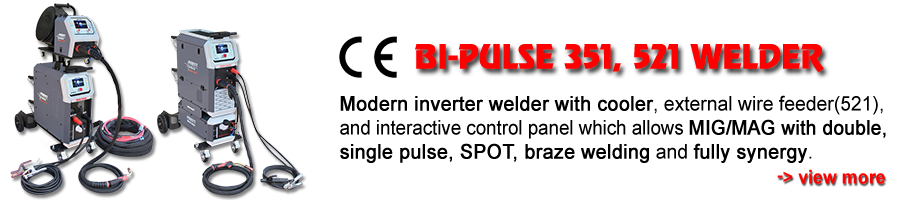
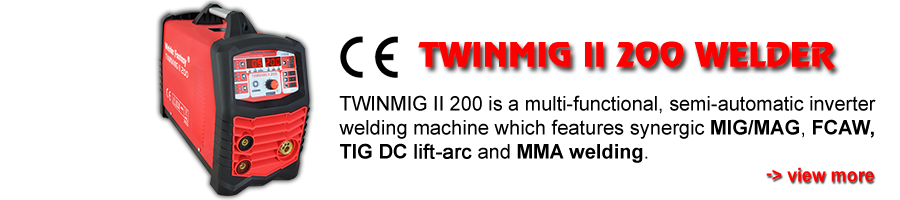
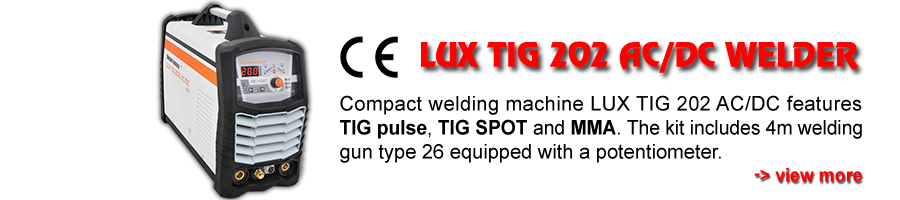
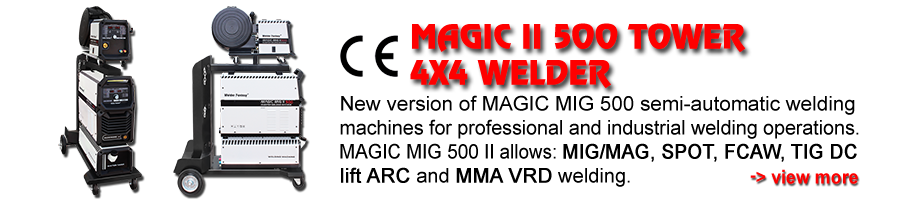
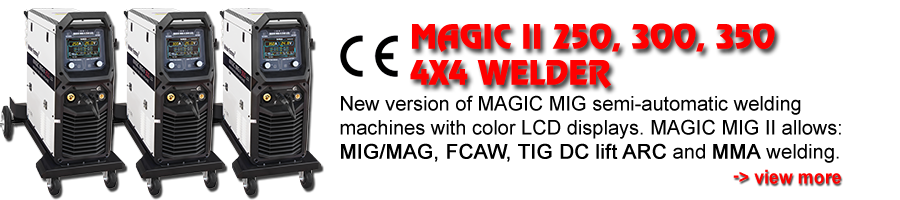
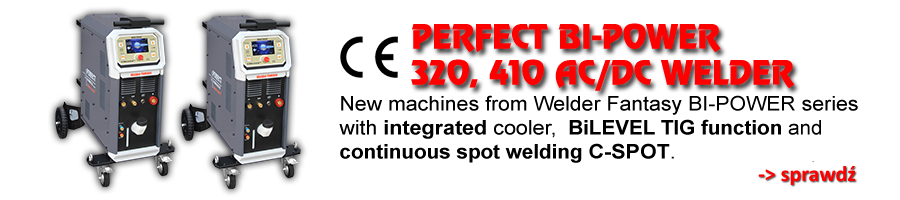
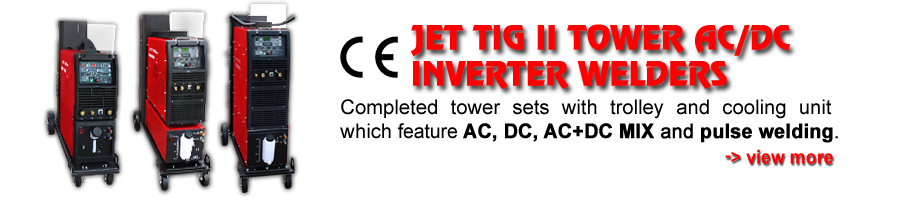
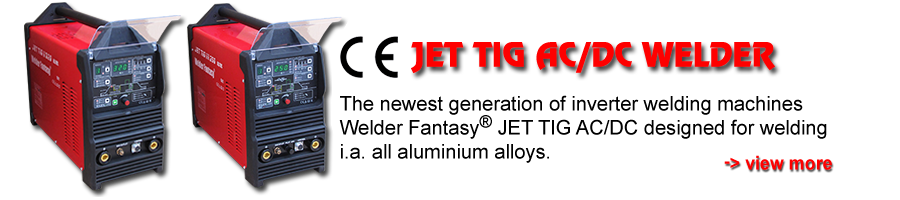
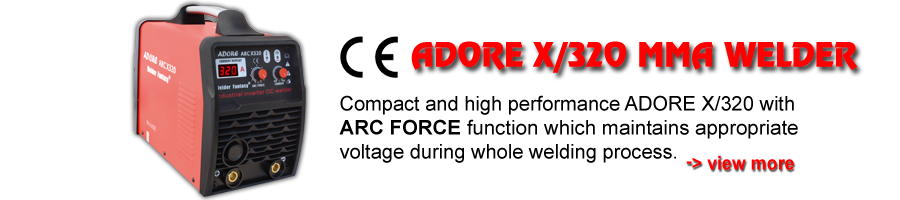
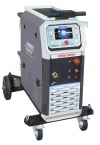
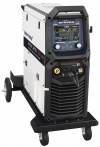
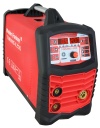
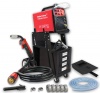
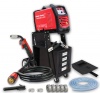
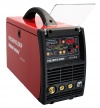
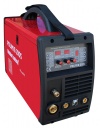
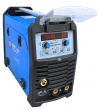
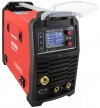
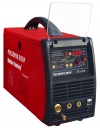
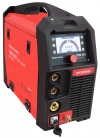
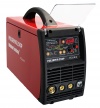
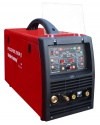
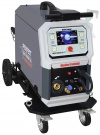
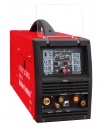
If you are looking for a compact MIG/MAG welder with TIG function, you will find here machines ideal for working with different materials, increasing your efficiency and comfort. Our welders stand out with their durability and user-friendly operation, which makes them an excellent choice for everyone.
Operation principle of MIG/MAG and TIG methods
1. MIG/MAG welding
- Electrode: A wire electrode is used, which is automatically fed from the welding torch.
- Electric arc: An electric arc is formed between the wire and the welded material, melting the wire and material, creating a weld pool.
- Shielding gas: The gas flow (inert in MIG, active in MAG) protects the weld pool from reacting with the atmosphere.
- Weld: The weld pool solidifies, creating a permanent joint.
2. TIG welding
- Electrode: A non-consumable tungsten electrode is used, which does not melt during welding.
- Electric arc: The electric arc generated by the electrode heats and melts the welding material.
- Shielding gas: An inert gas (e.g., argon) is used, which protects the heated material and weld from oxidation.
- Filler material addition: The material to fill the weld pool is supplied externally in the form of a rod, e.g., a wire of 1m length.
TIG function in MIG/MAG welder
A welder with TIG function allows for versatile applications – from quick welding of thicker materials (MIG/MAG) to precise and aesthetic welding of thin elements (TIG).
In a welder with TIG function, the TIG Lift method is usually used, which involves igniting the arc by touching the electrode to the material, rather than using a high-frequency spark (HF). Only a few models have the HF function, e.g., Welder Fantast Multiperfect BI-PULSE 251
The TIG method is used, among others, for stainless steel, titanium, copper, or aluminum, as well as for welding thin sheets and pipes.
To choose a MIG/MAG welder with TIG function, one should determine the purpose of the device (e.g., for home, workshop, professional work), consider the required amperage range and thickness of the welded materials, and also check the duty cycle of the device for different current intensities. Additional features, such as Hot Start or Anti-Stick, ease of use (clear panel), and the quality of the wire feeder are also important.