Description of the construction and operation of pneumatic orbital sanders:
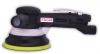
The pneumatic orbital sander is powered by compressed air, which drives a vane motor. The motor converts the energy of the air into rotational motion, and then into the eccentric motion of the sanding disc.
The key element is the eccentric mechanism, which causes the sanding disc to rotate around its own axis while simultaneously moving in a pendulum (oscillating) motion.
A sanding disc of various sizes and types is attached to the sander, depending on the needs.
The sander has a housing with a handle that provides a secure grip and control over the device during operation.
Many orbital sanders have a dust extraction system that connects to a vacuum cleaner, improving work comfort and reducing the amount of dust in the environment.
Applications:
Pneumatic orbital sanders are used in various fields, such as:
- Bodywork and painting workshops: For sanding and smoothing putty, primers, and paint.
- Industry: For processing various materials, including metal and wood.
- Carpentry: For sanding and finishing wooden surfaces.
- Finishing work: For sanding walls, floors, and other surfaces.
Advantages of pneumatic orbital sanders:
- Lightweight and ergonomic:
- Pneumatic sanders are generally lighter than electric ones, making work easier and reducing operator fatigue.
- Durability and reliability:
The absence of electrical components that could fail makes pneumatic sanders more durable and reliable.
No sparks and the ability to work in areas with high humidity or potential fire hazards.
- Precision and quality of sanding:
The eccentric motion ensures a smooth and even finish on surfaces.
- Flexibility of applications:
The ability to work on various surfaces, including flat, concave, and convex ones.
Allows for maintaining cleanliness in the workplace and improves work comfort.
When choosing a pneumatic orbital sander, several key criteria should be considered to match the tool to specific needs. Air demand, ergonomics, dust extraction system, and disc diameter are basic aspects to pay attention to. Additionally, it is worth considering the specifics of the planned work, such as the type of surfaces being processed and the required level of finish.
Eccentric sanders, combining oscillating and rotational motion, are more versatile and suitable for various applications, including polishing. Before purchasing, it is advisable to compare the parameters of different models and check user reviews to choose the sander best suited to individual needs.