Types of leather work gloves:
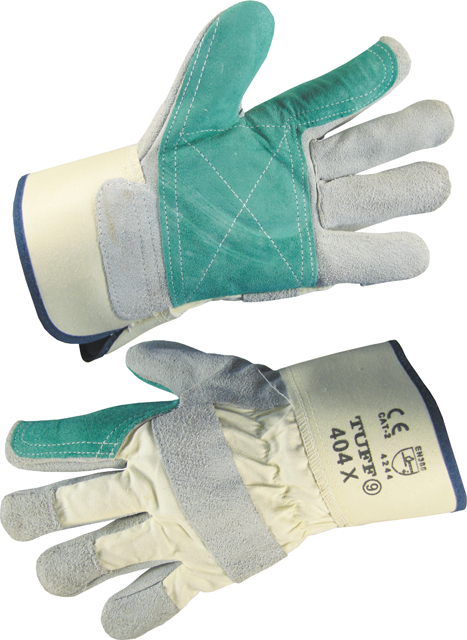
- Reinforced leather gloves:
These are canvas or textile gloves, reinforced in critical areas (e.g., fingers, thumb) with leather. They work well in tasks requiring good hand protection while also providing flexibility and precision.
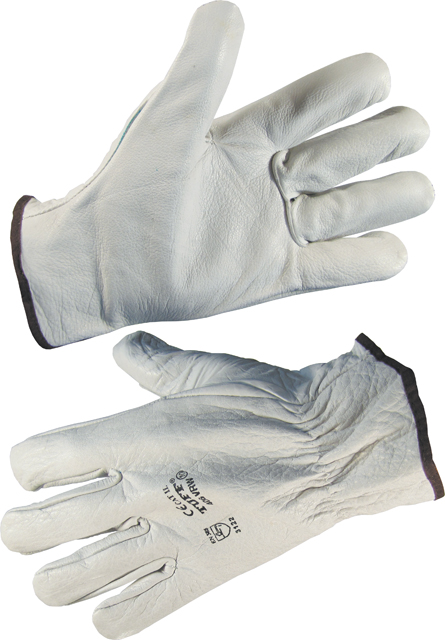
Made almost entirely of leather, they can be made from cowhide or goat leather, offering high resistance to abrasion and mechanical damage. They are popular in welding work but also in tasks requiring a good grip and protection from high temperatures.
- Canvas gloves with leather elements:
These are gloves made from canvas (cotton) with additional leather inserts in areas prone to damage. They are a cheaper alternative to full leather gloves but may not provide the same level of protection.
Specialized leather gloves made from thick leather, often reinforced, protecting hands from high temperatures, sparks, and splatter during welding.
Additional factors when choosing work gloves:
Cowhide is durable, goat leather is more flexible and conforms to the hand, while pigskin is soft and elastic.
- Thickness of the leather:
Thicker leather provides better protection but may limit movement precision.
- Certificates and standards:
It is worth paying attention to certificates and safety standards that confirm the quality and protection of the gloves.
Gloves should fit well to the hand to ensure comfort and precision of movement.
Some gloves have additional features such as waterproofing, insulation, or puncture-resistant reinforcements.
Examples of applications for protective gloves:
Reinforced or full leather gloves with good grip, abrasion resistance, and mechanical damage protection.
Welding gloves made from thick leather, protecting against high temperatures and sparks.
Leather gloves with good ventilation, resistant to abrasions and damage.
Leather gloves with good grip, abrasion resistance, and protection against minor injuries.