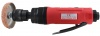
Construction of a pneumatic tire roughener:
- Housing: Usually made of metal, protecting the mechanism and providing a secure grip.
- Pneumatic motor: Drives the roughening head, powered by compressed air.
- Roughening head: Equipped with a rasp or grinding disc with abrasive material (e.g., carbide, grinding stone).
Operation:
- Preparation: The tire is mounted on a stand or tire changer.
- Roughening: The roughening head is applied to the tire surface, and the pneumatic motor sets it in rotational motion.
- Grinding: The rasp or grinding disc removes the old layer of rubber, creating a rough surface.
- Cleaning: If necessary, the surface can be cleaned of dust and rubber residues.
- Repair: After preparing the surface, further repair work can be carried out, e.g., applying a patch.
Applications of pneumatic tire rougheners:
- Tire repair: Removing the old tread and preparing the substrate for a new layer of rubber.
- Tread renewal: Grinding the worn tread to apply a new one.
- Preparation for vulcanization: Grinding the tire surface at the damage site before applying a patch.
Advantages:
Effective preparation of the tire for repair, Increased adhesion of the new layer of rubber, Fast and efficient operation, Ability to work in various vulcanization workshops.