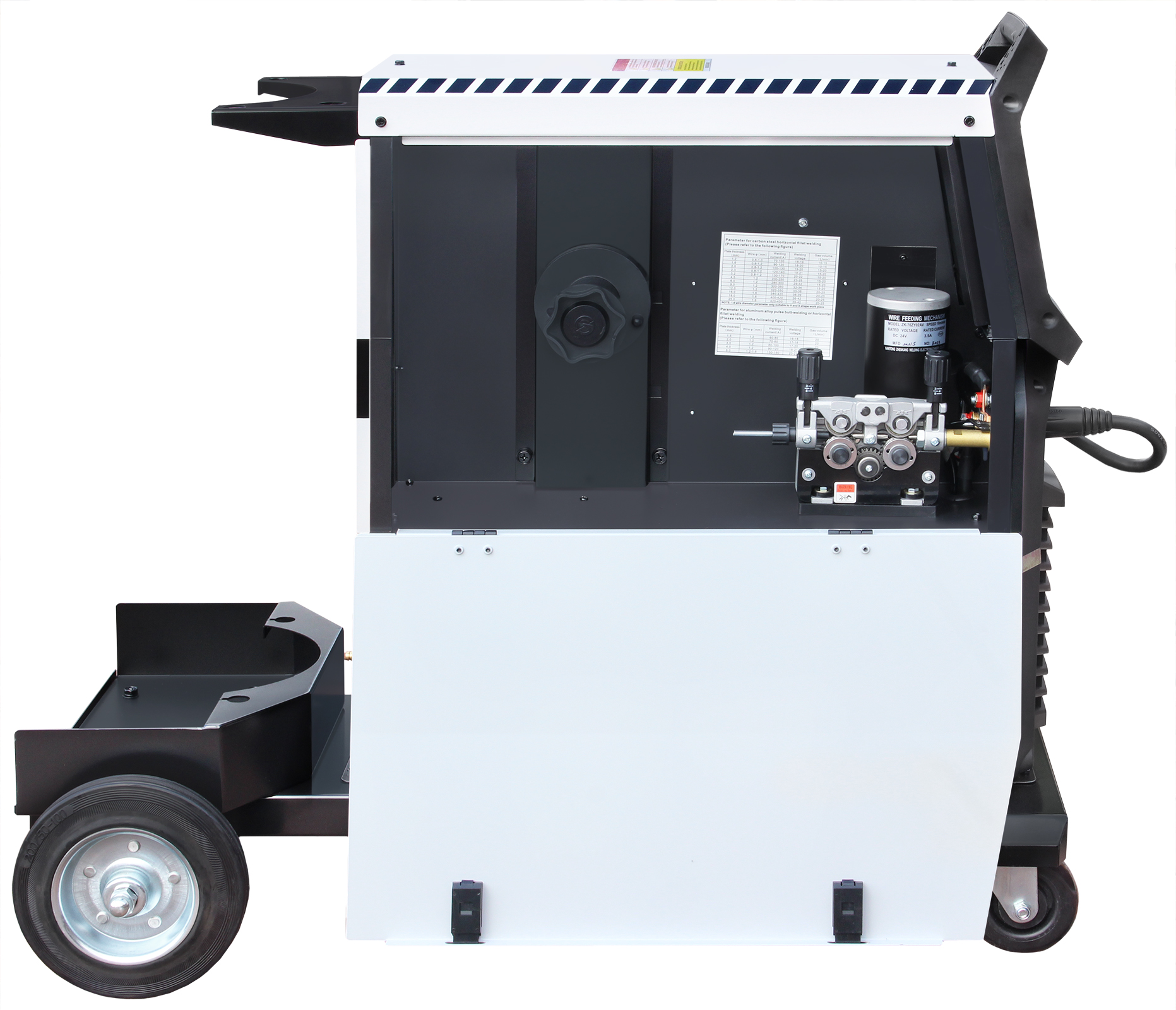
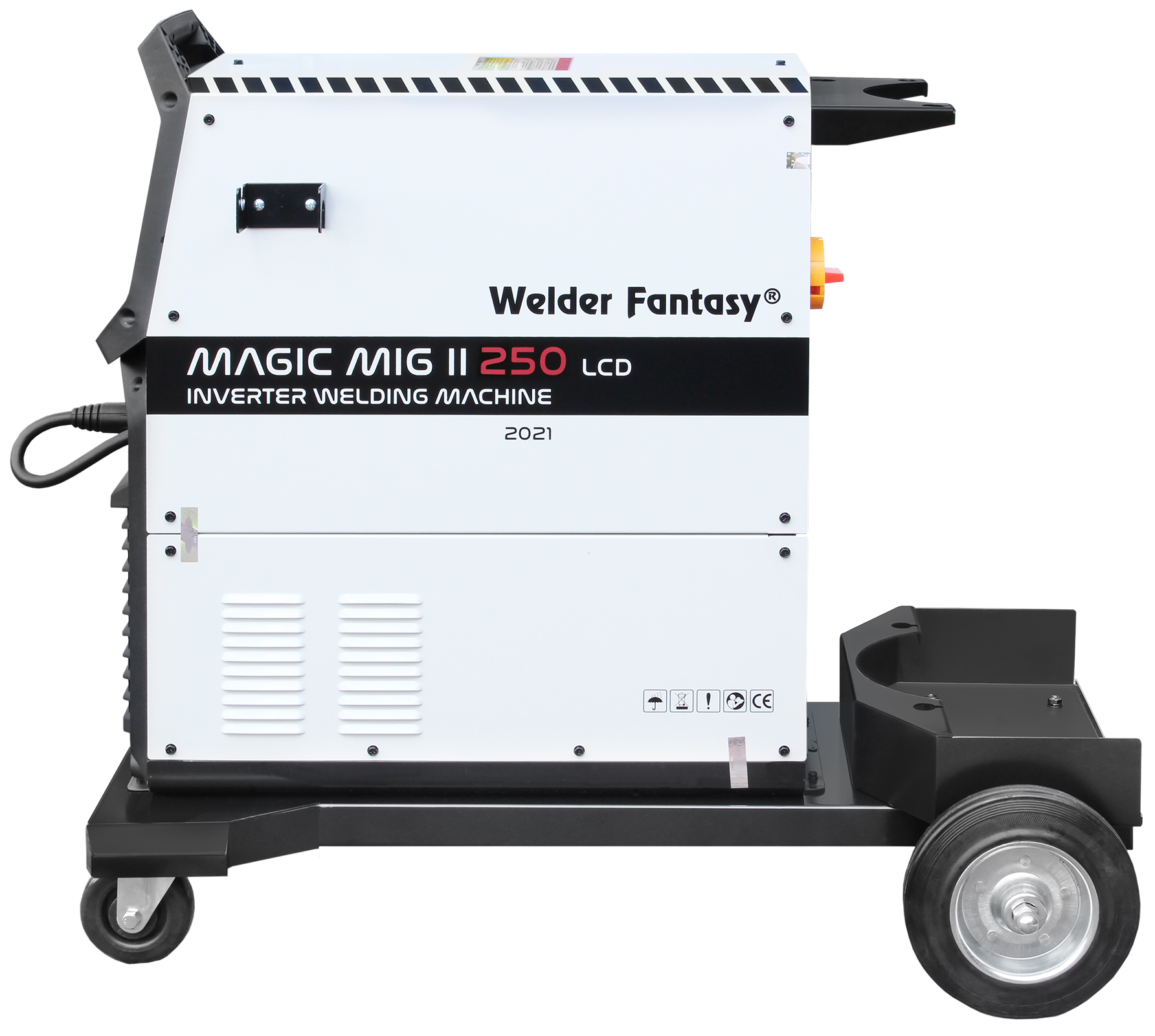
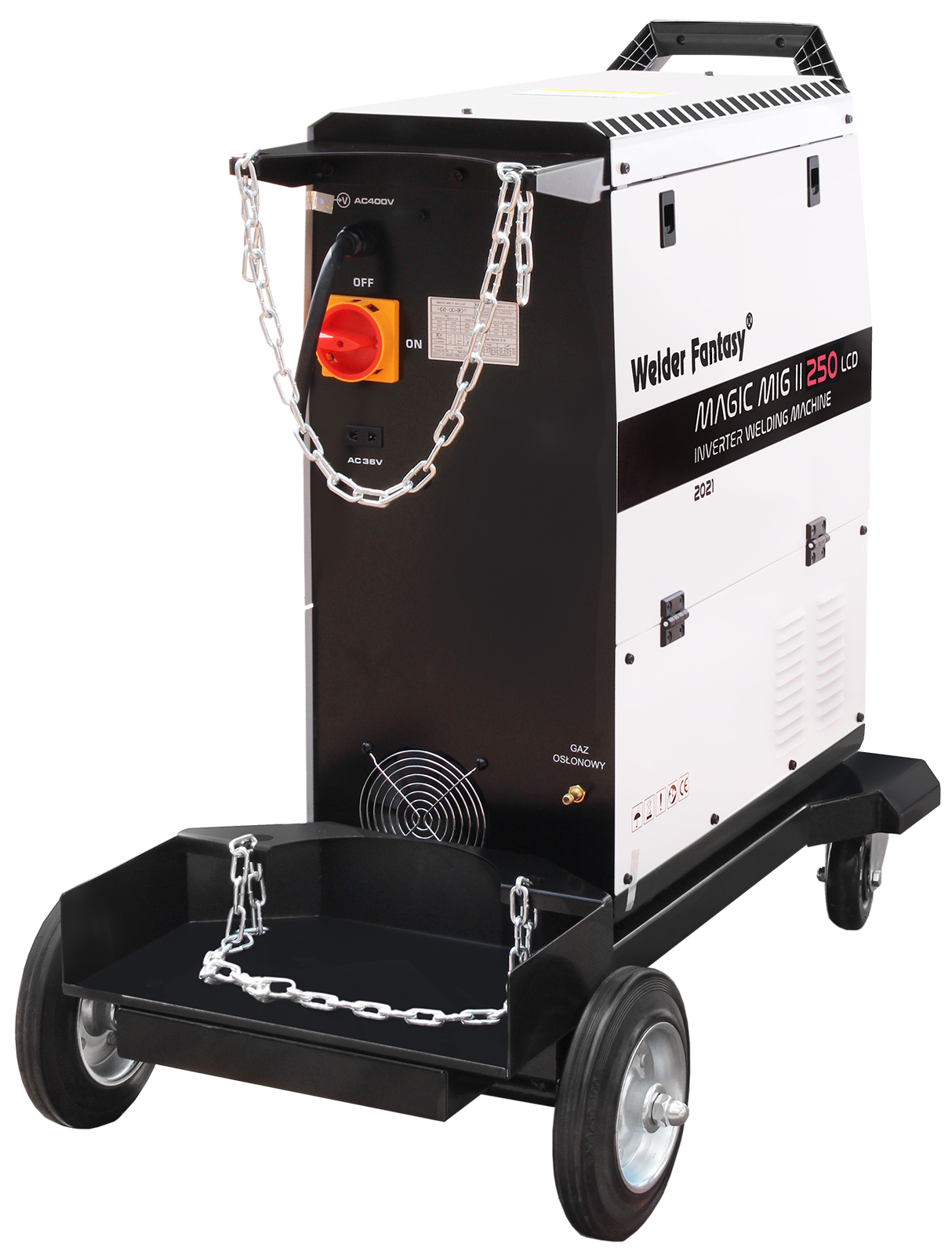
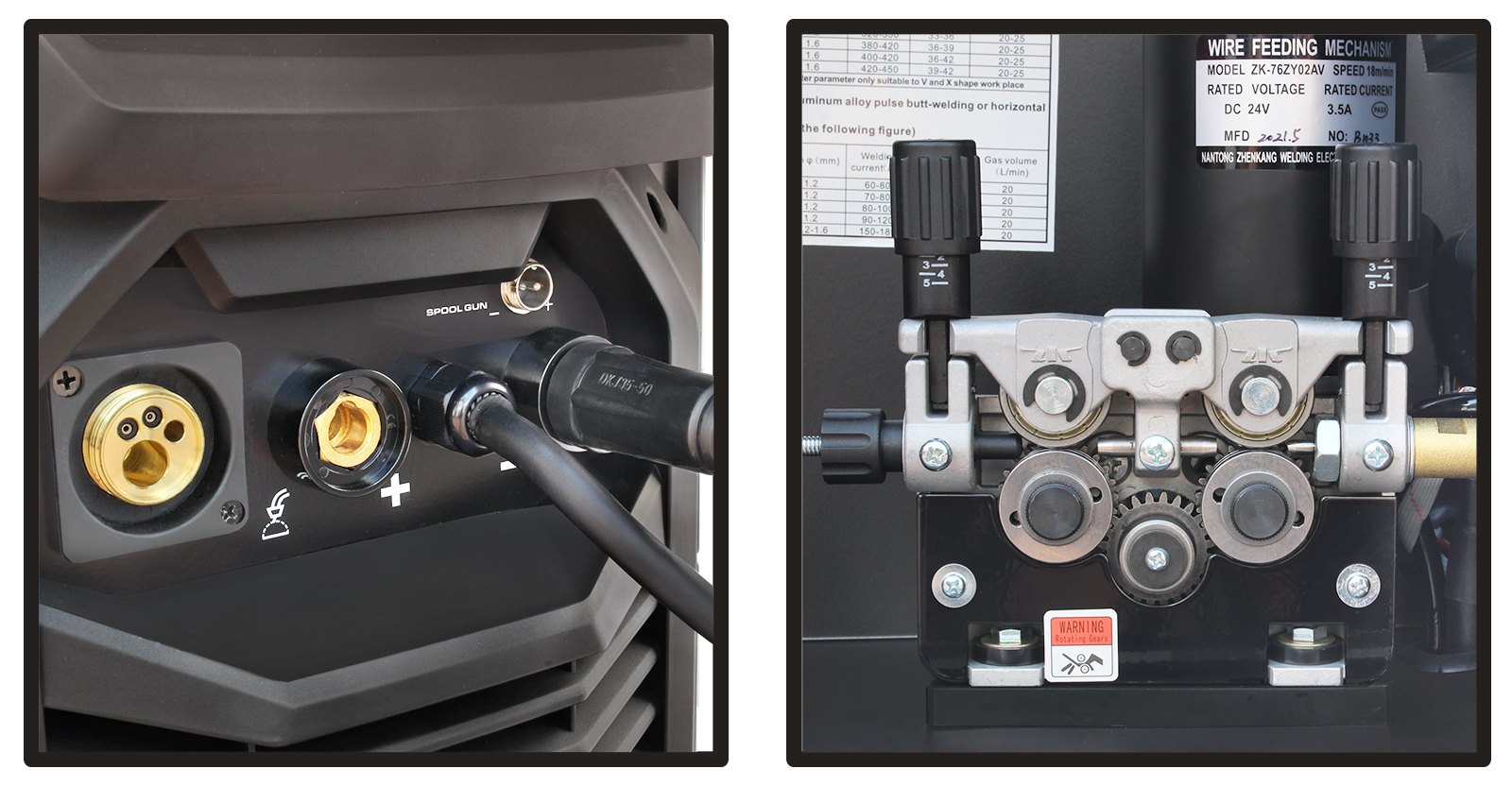
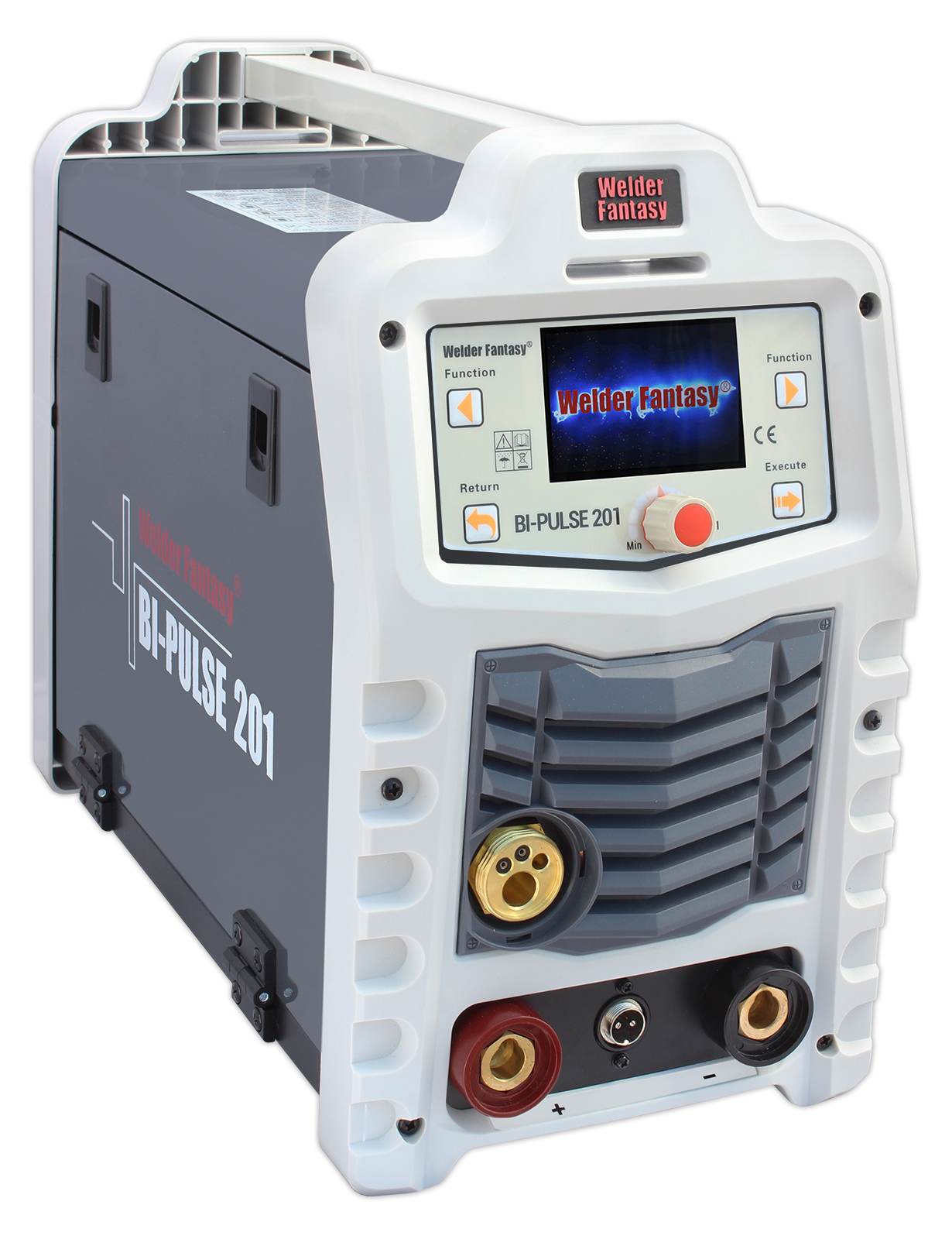
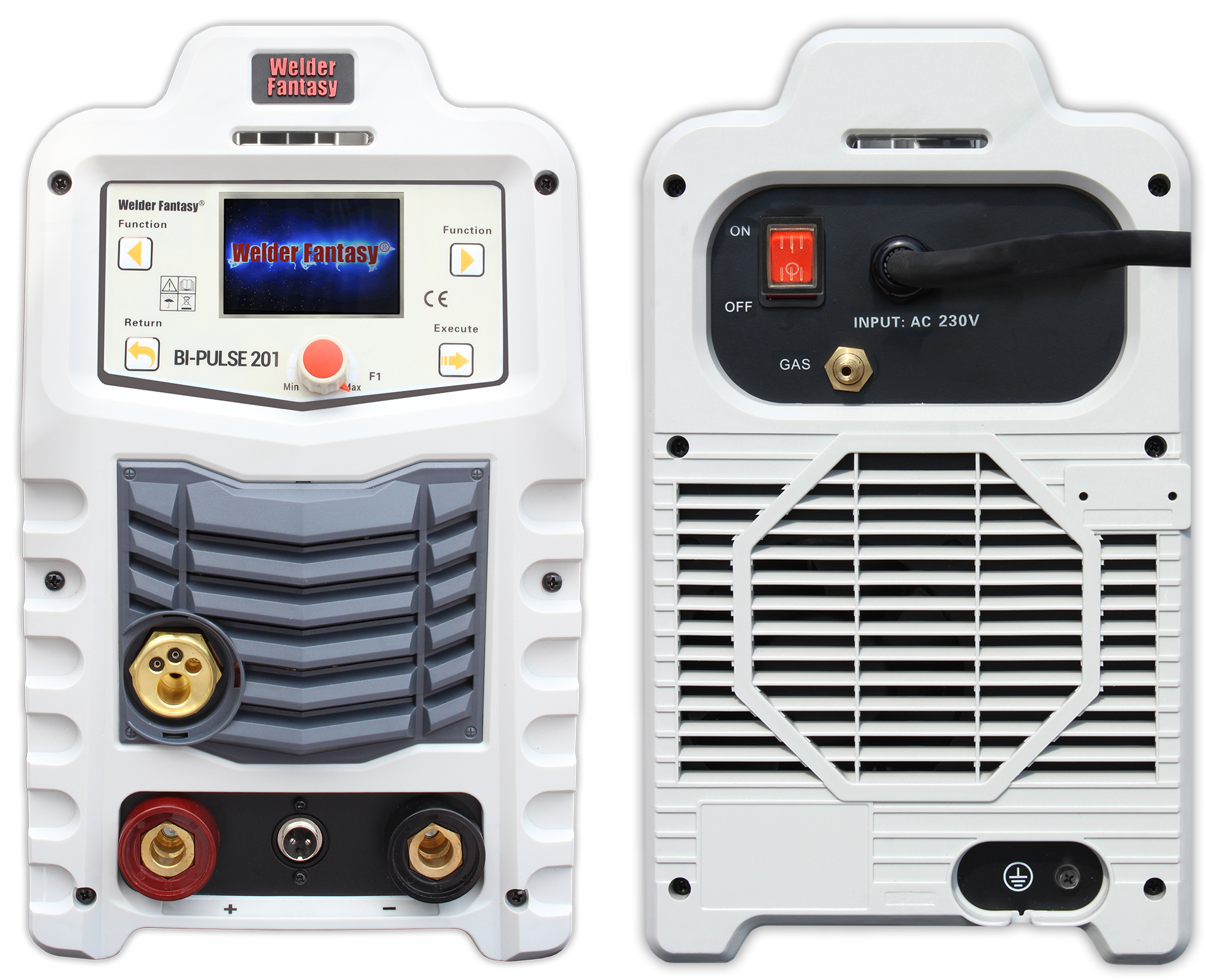
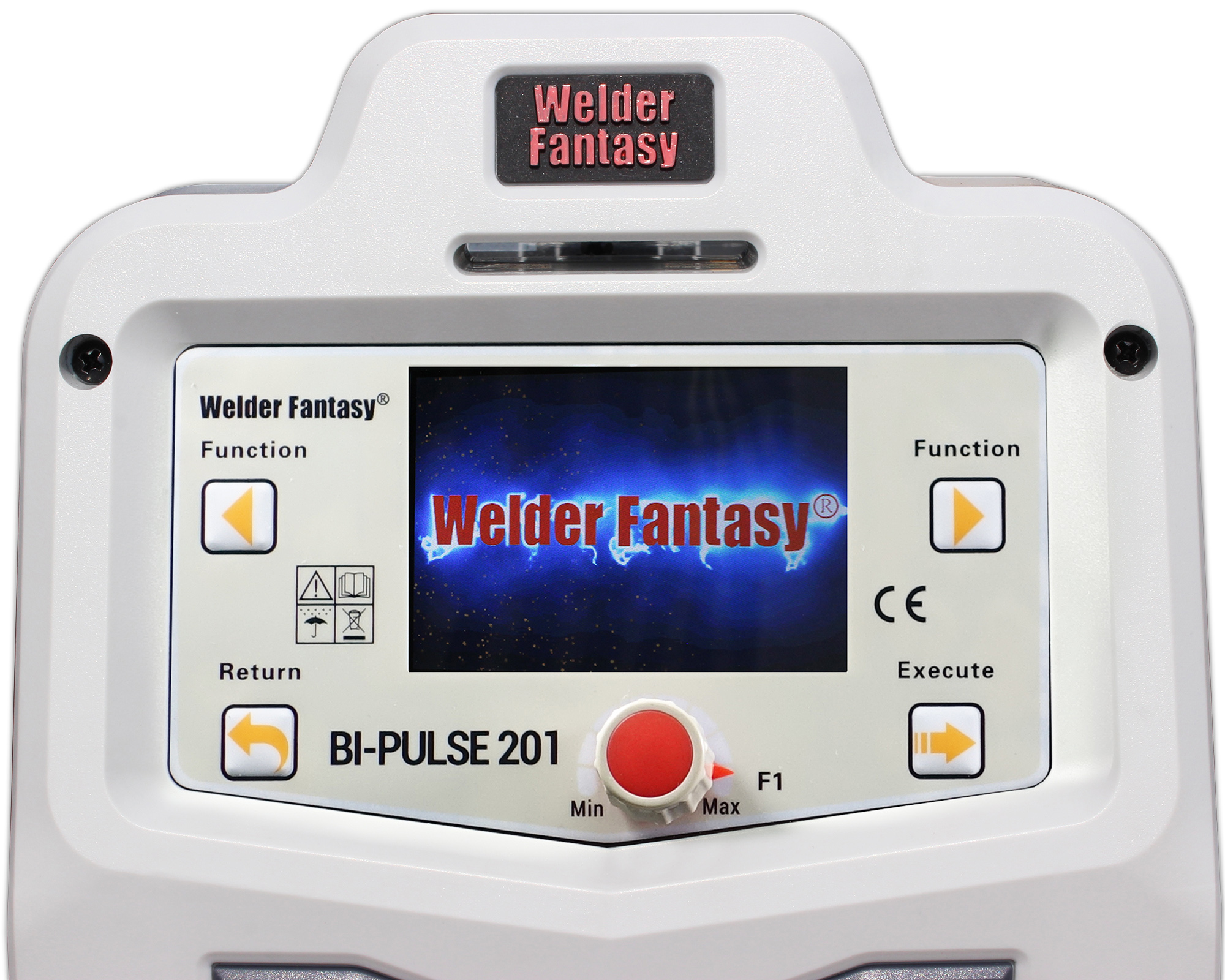
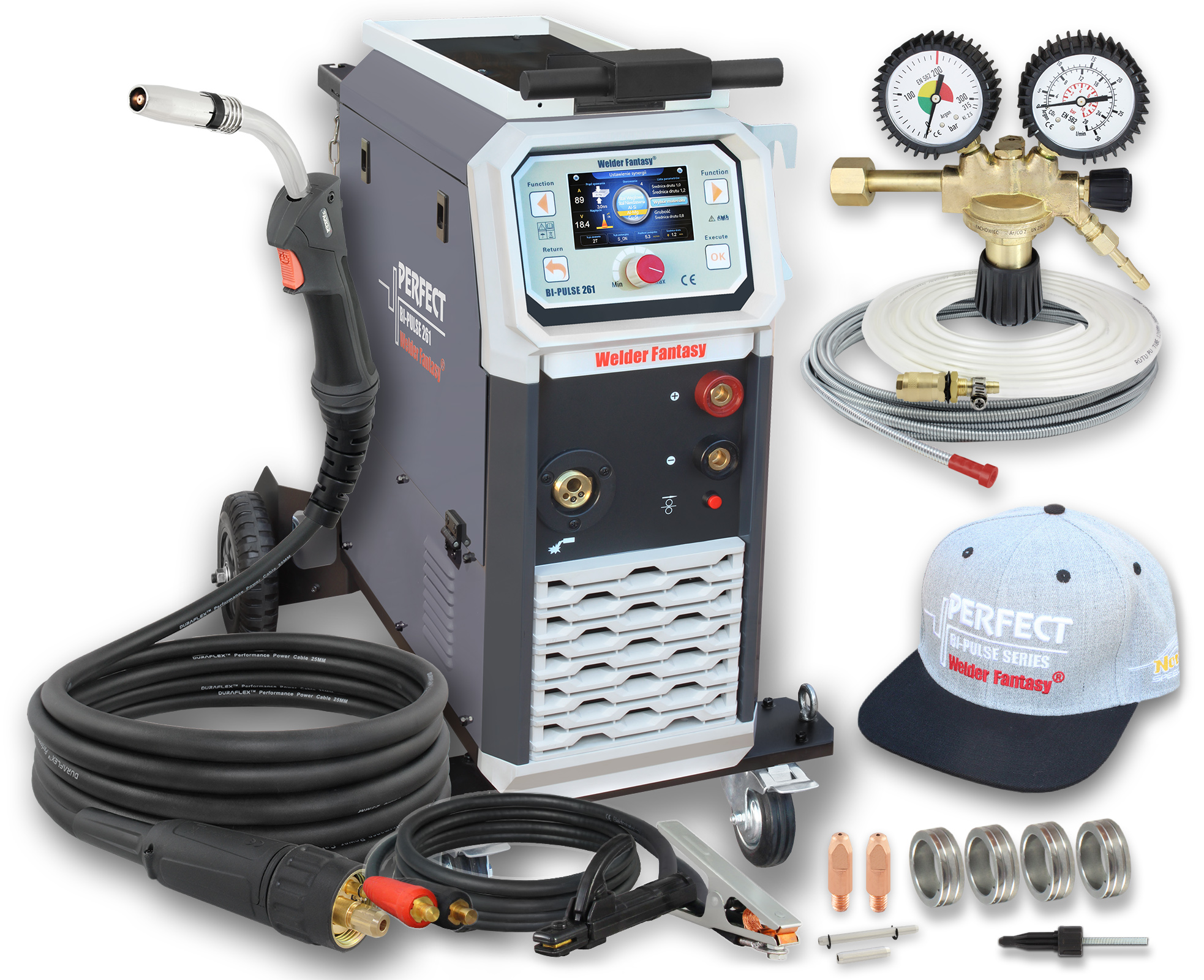
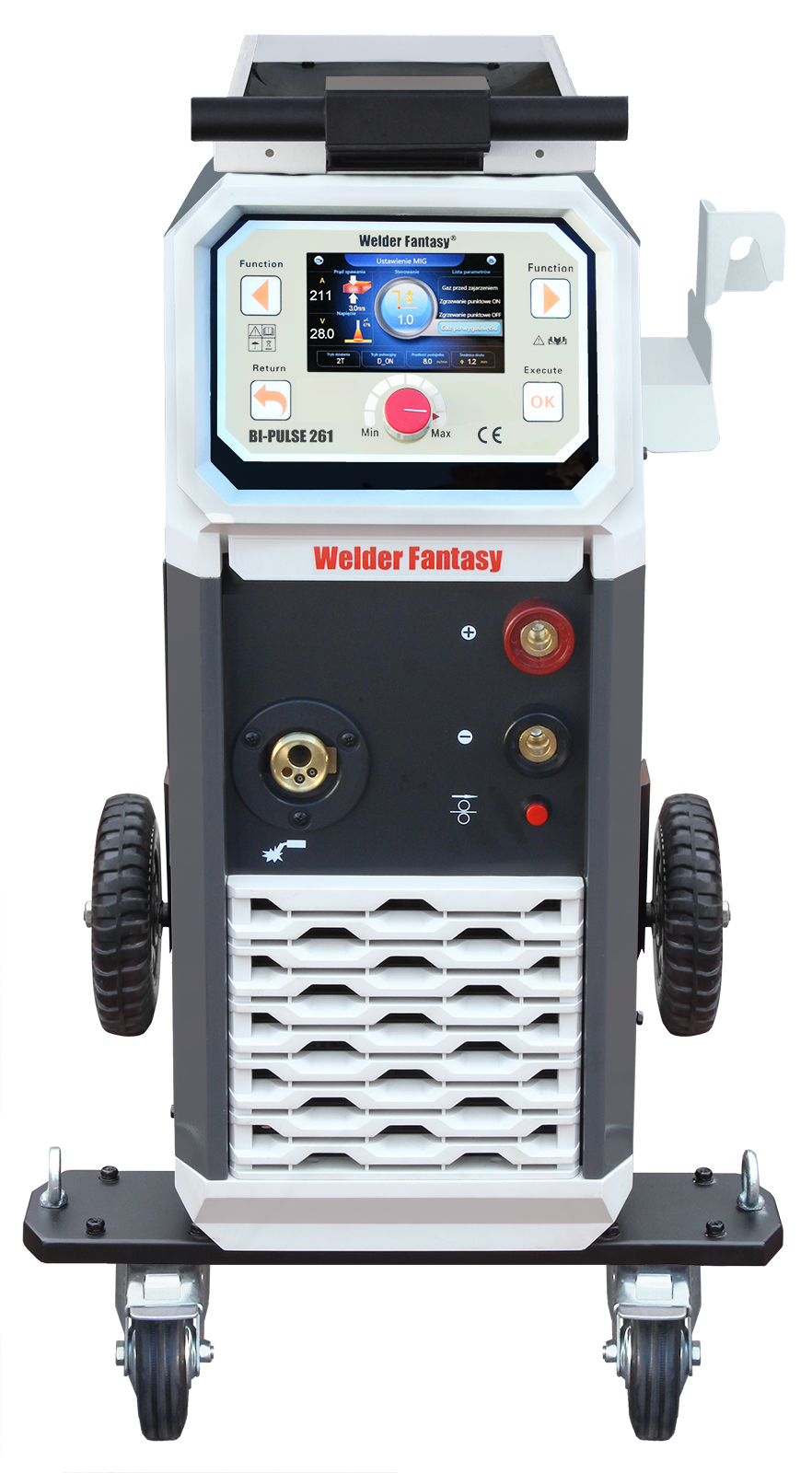
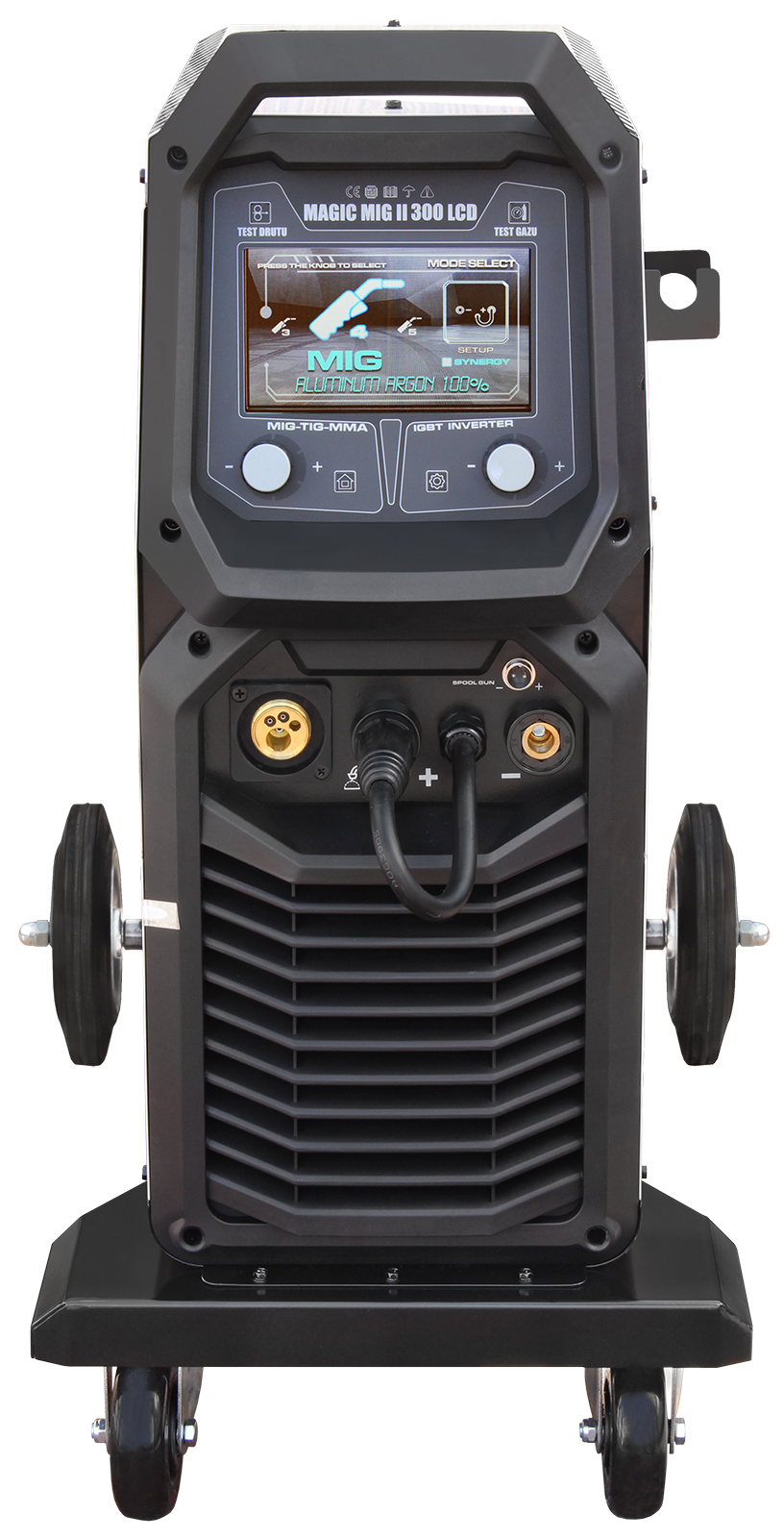
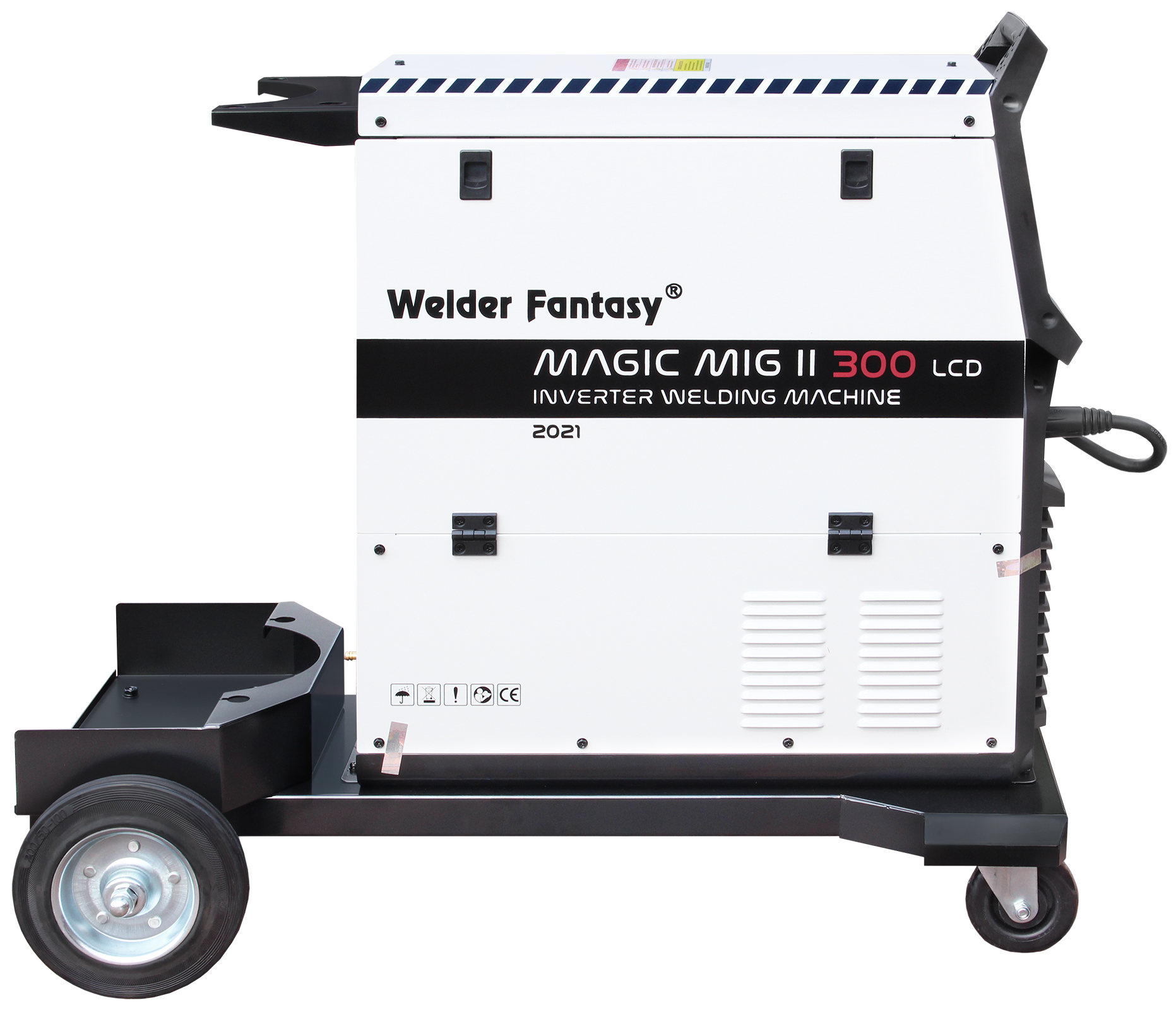
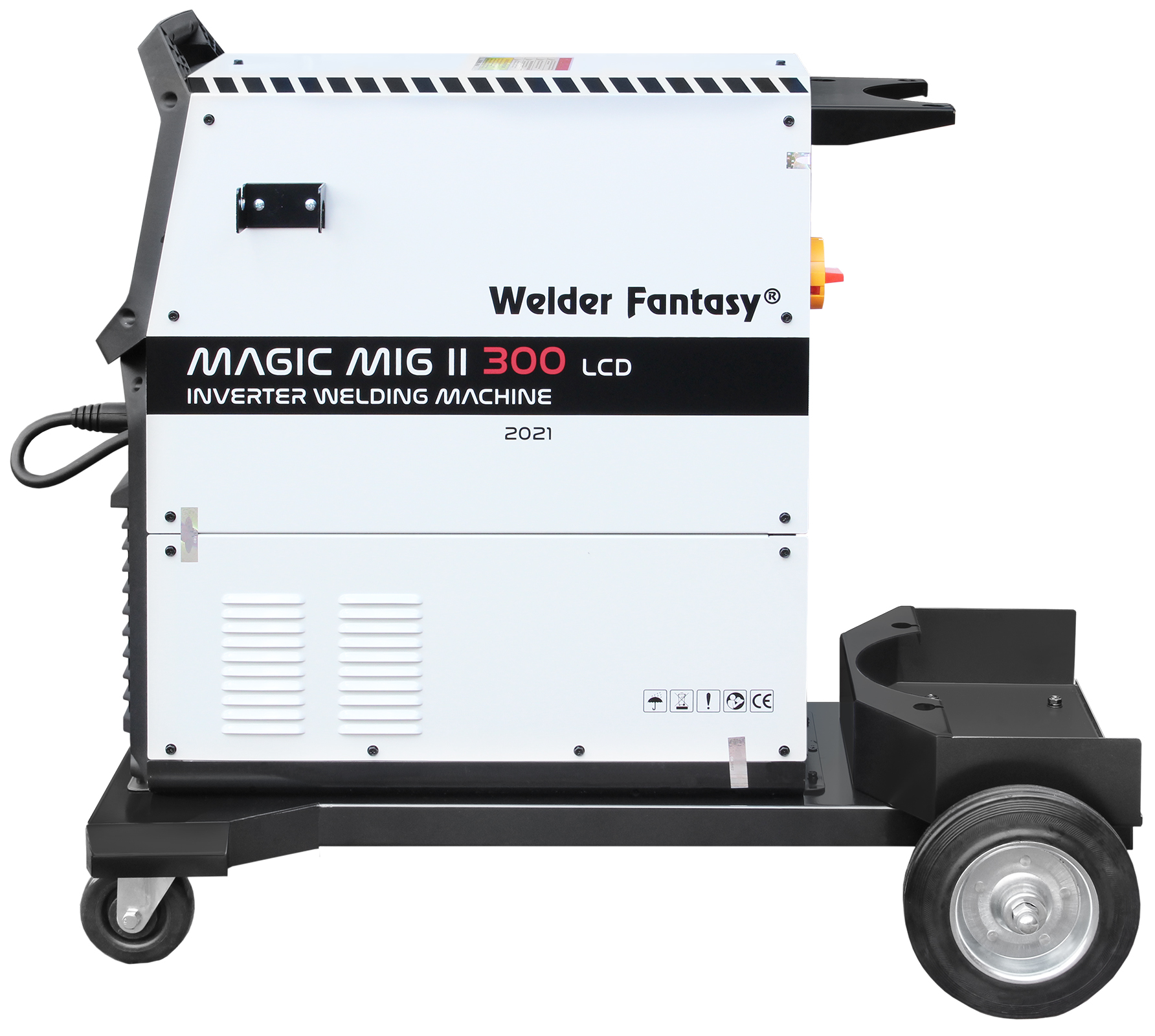
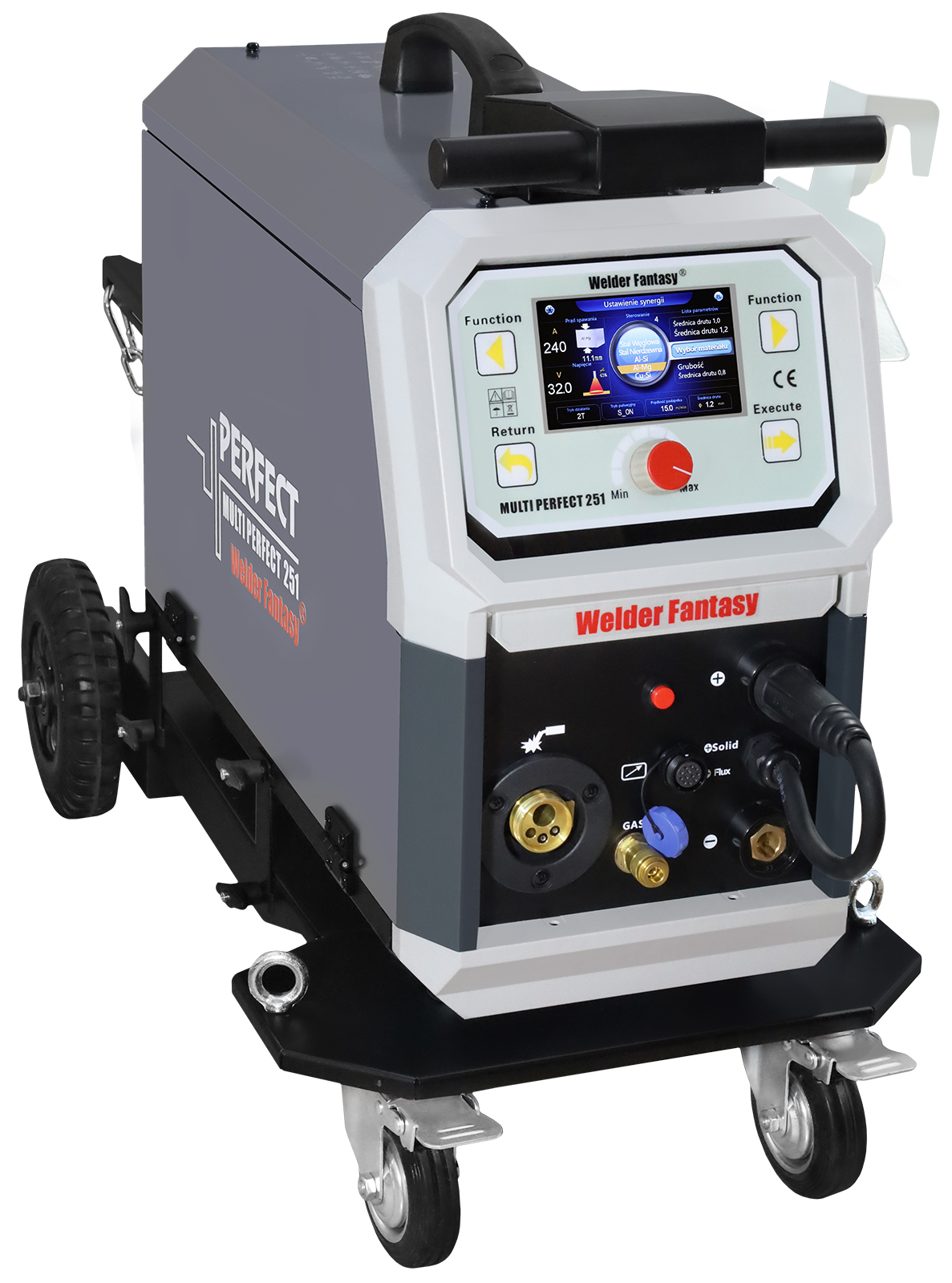
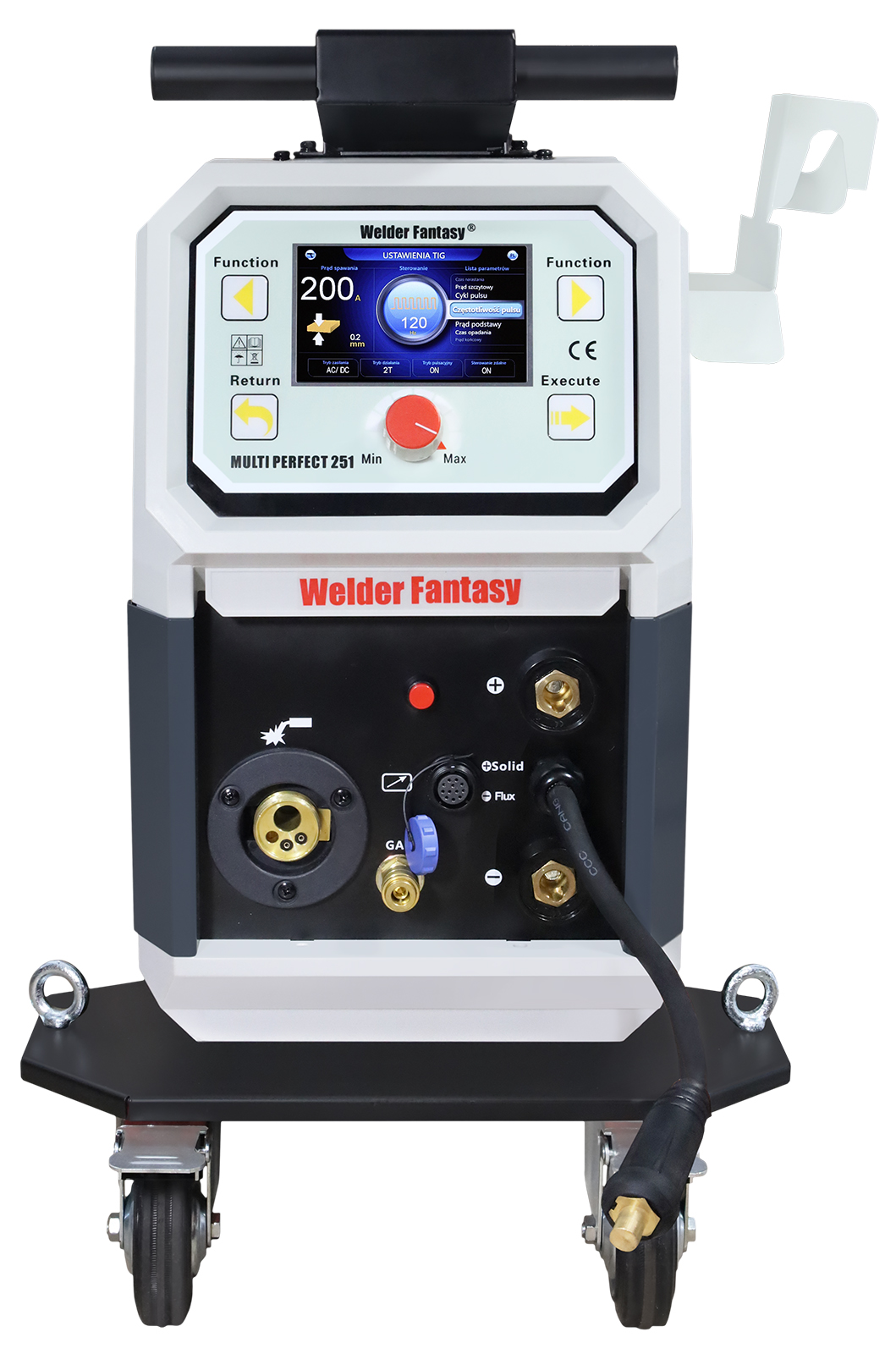
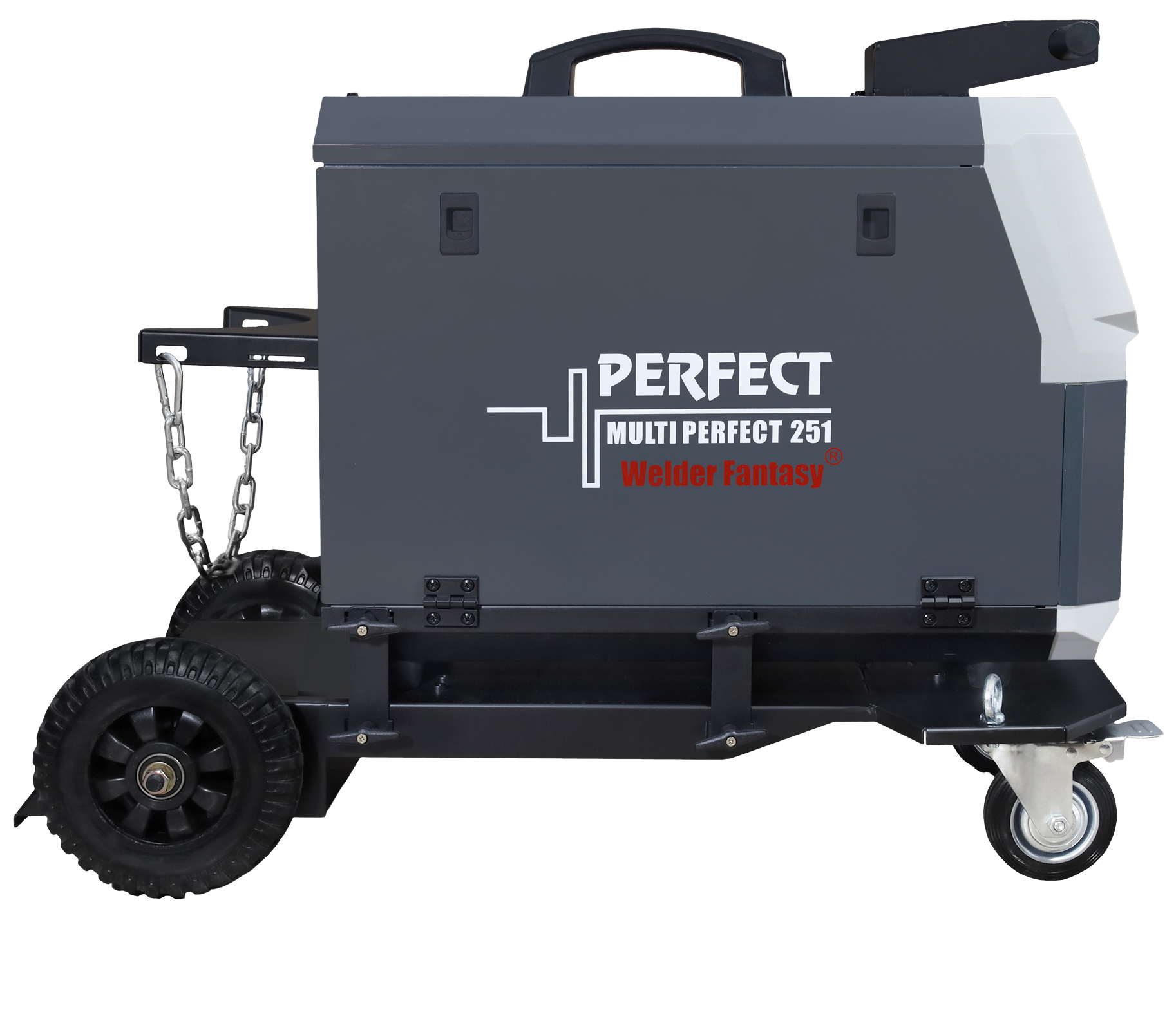
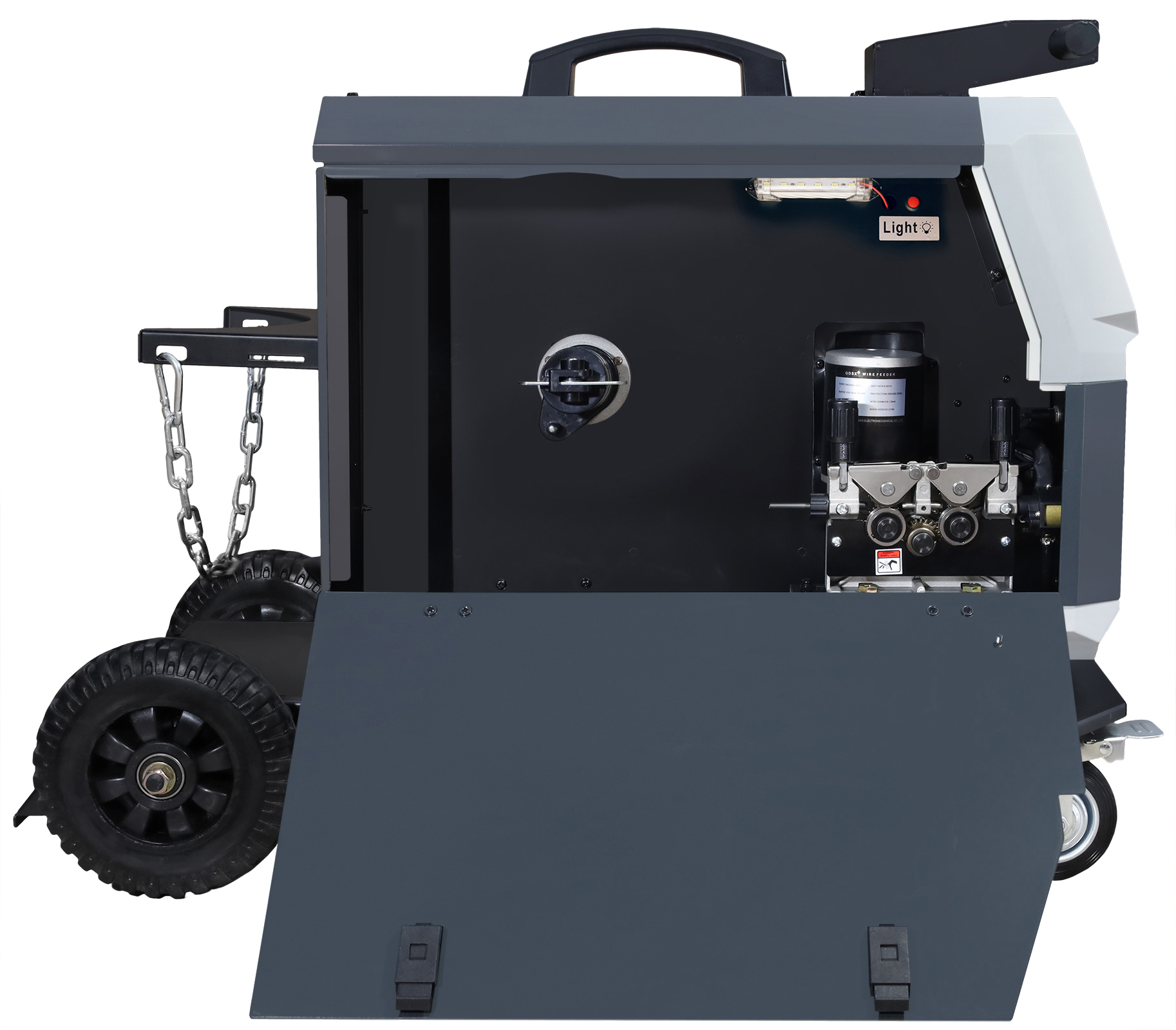
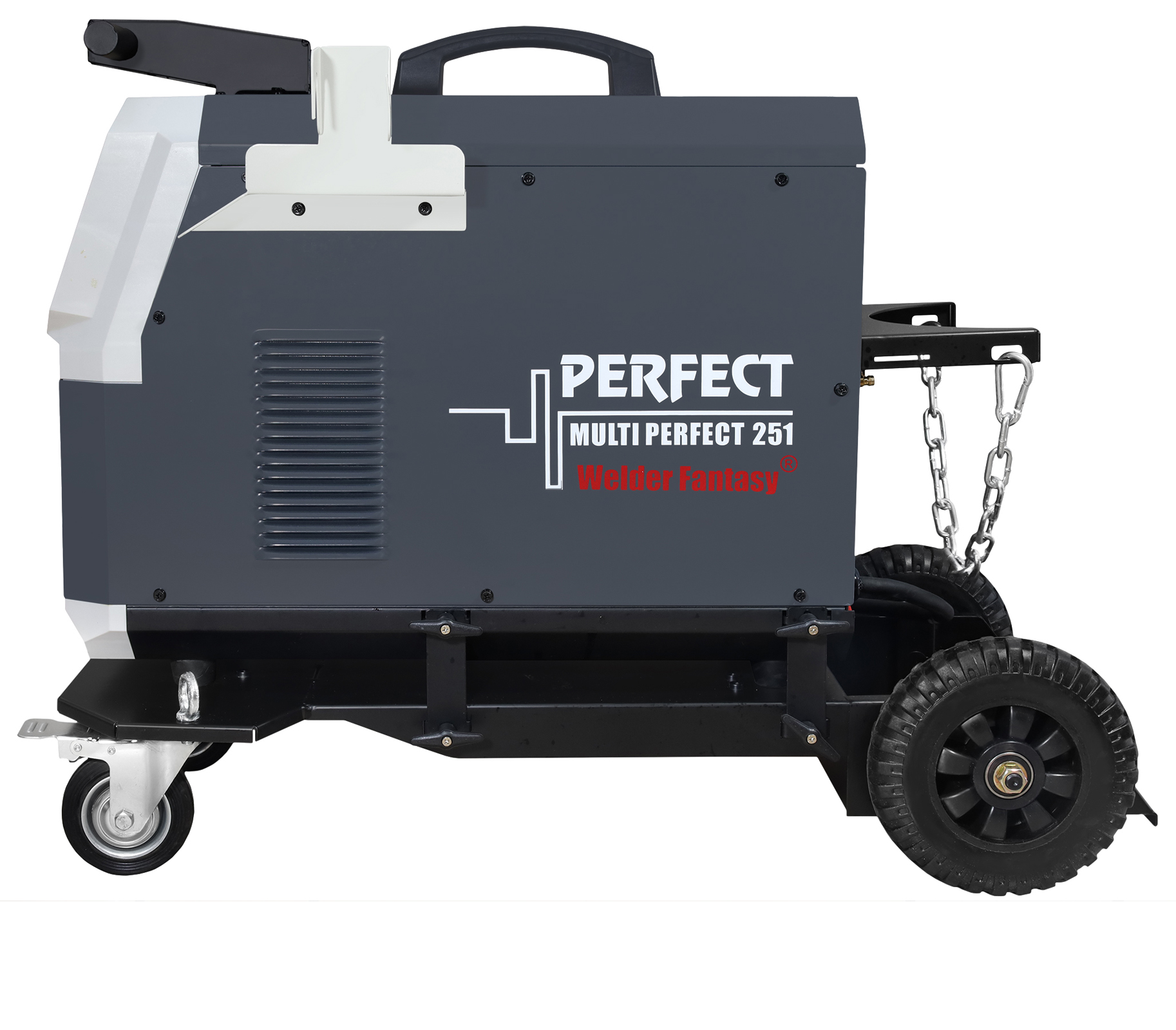
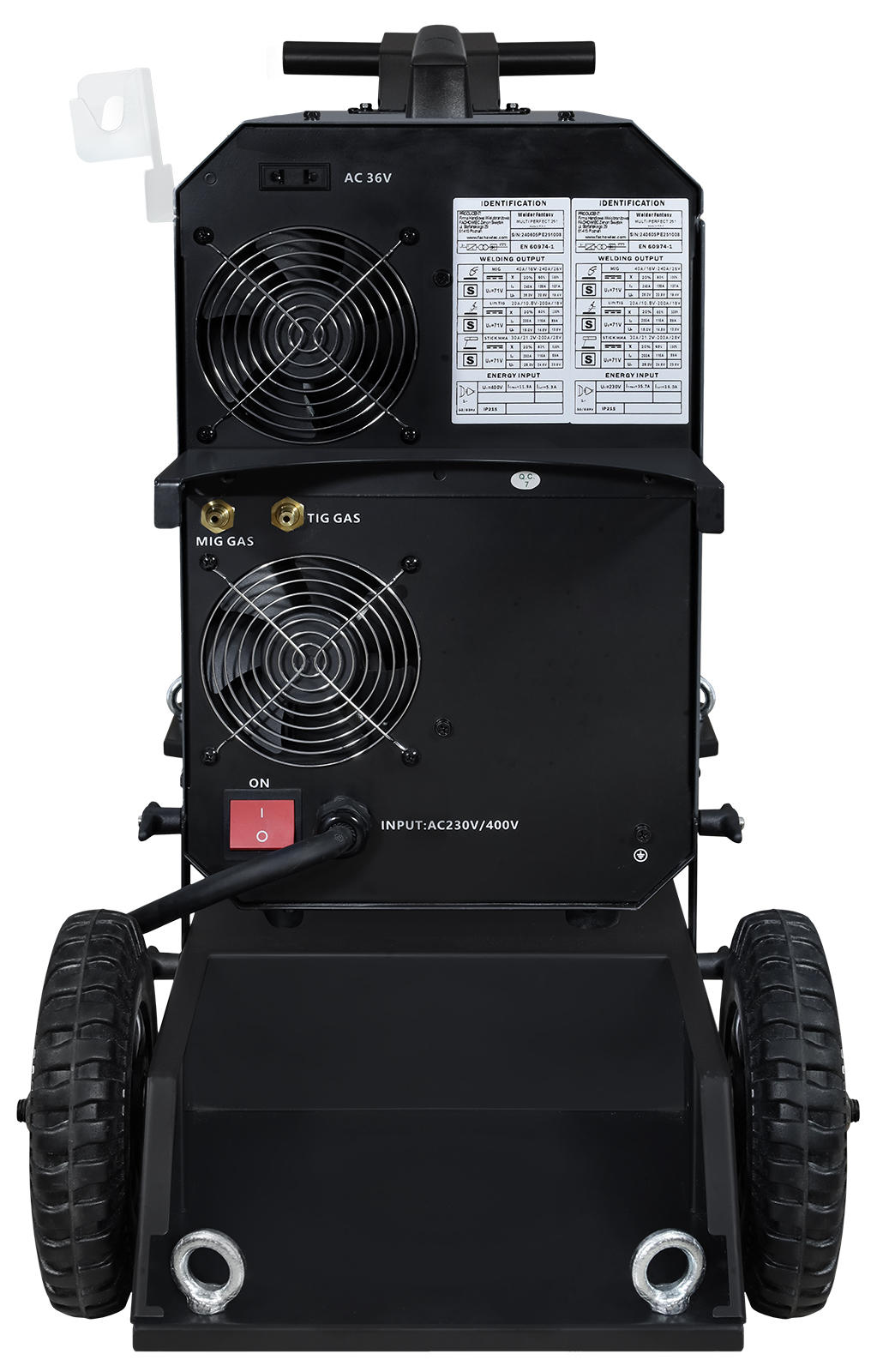
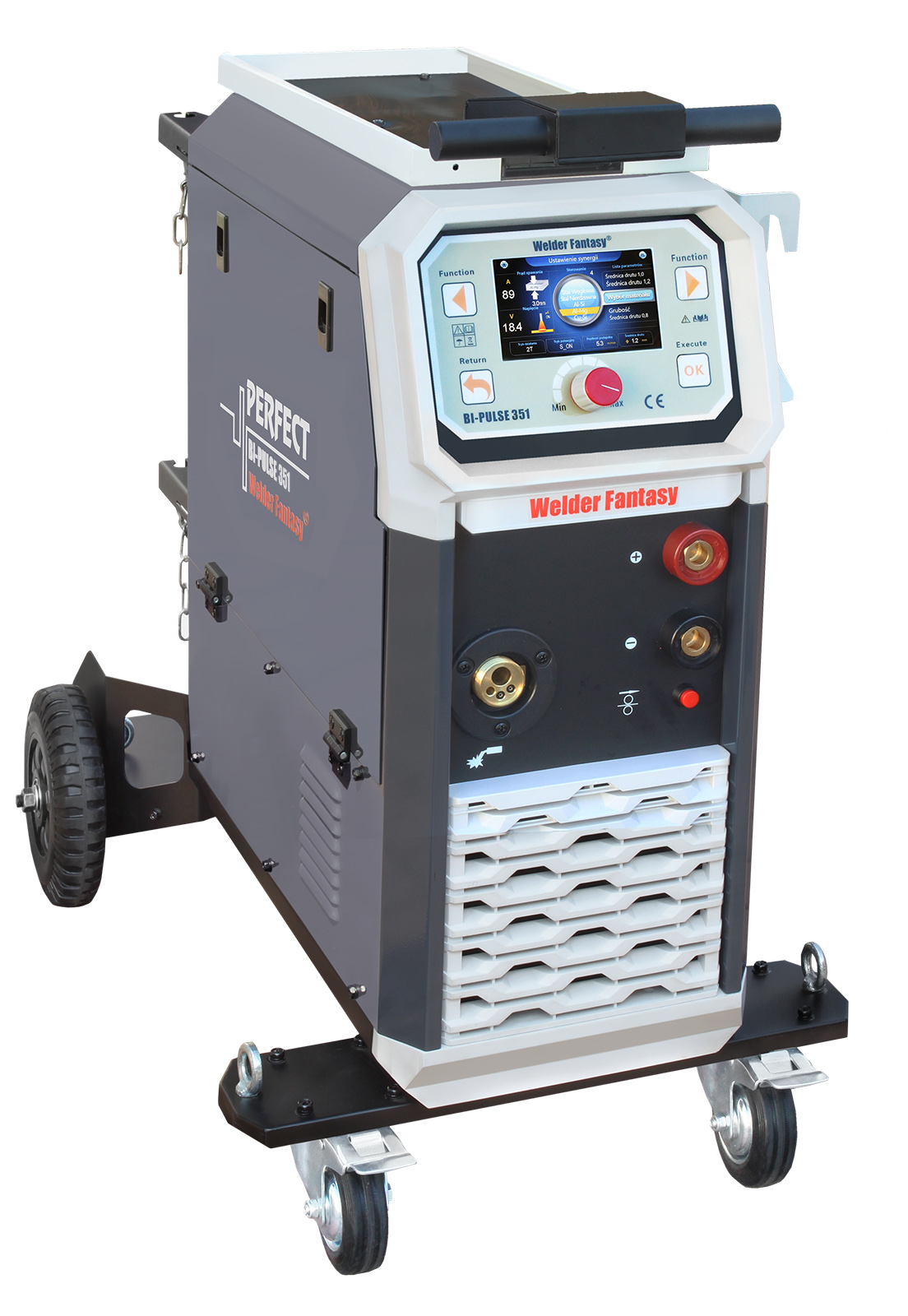
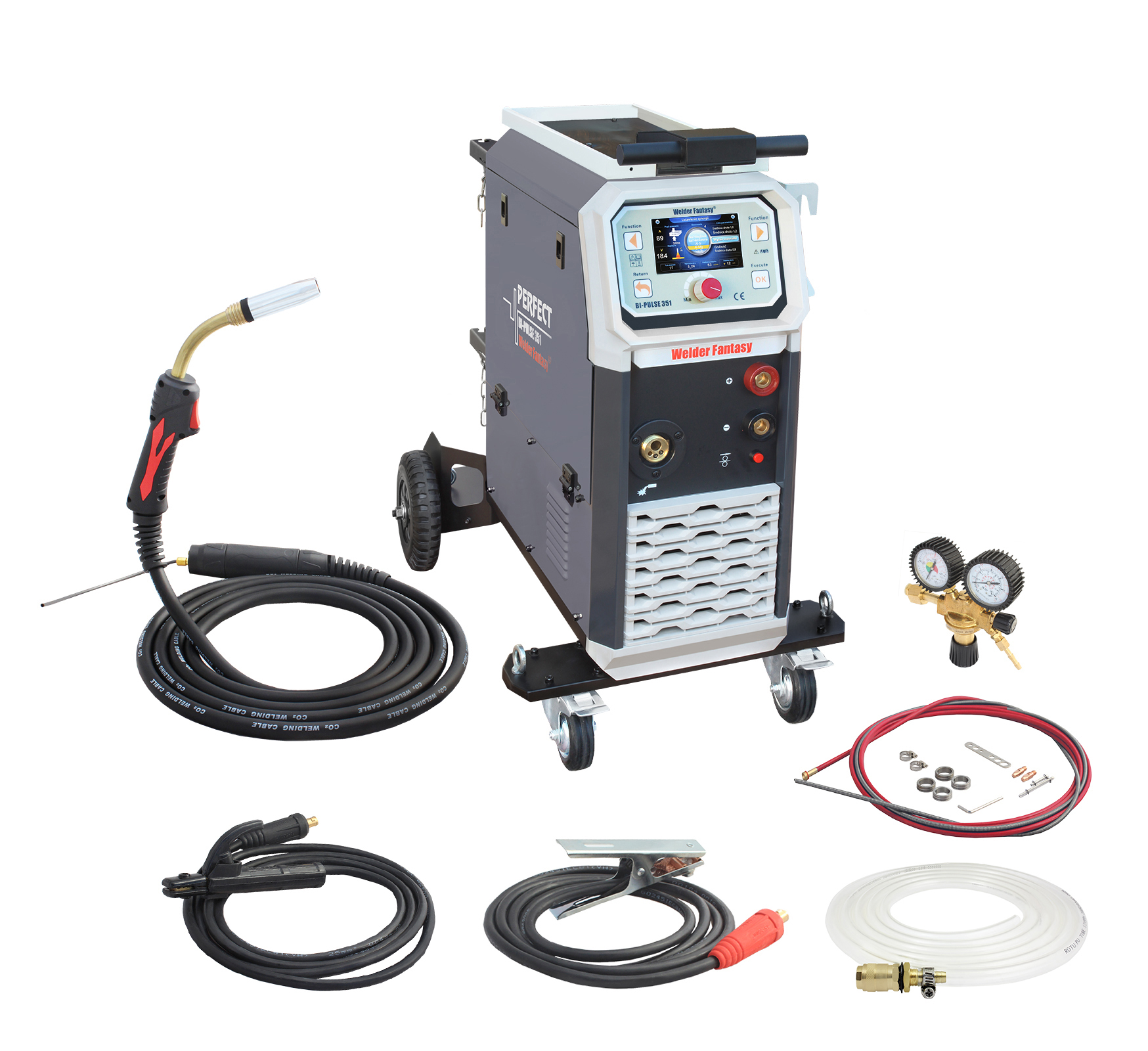
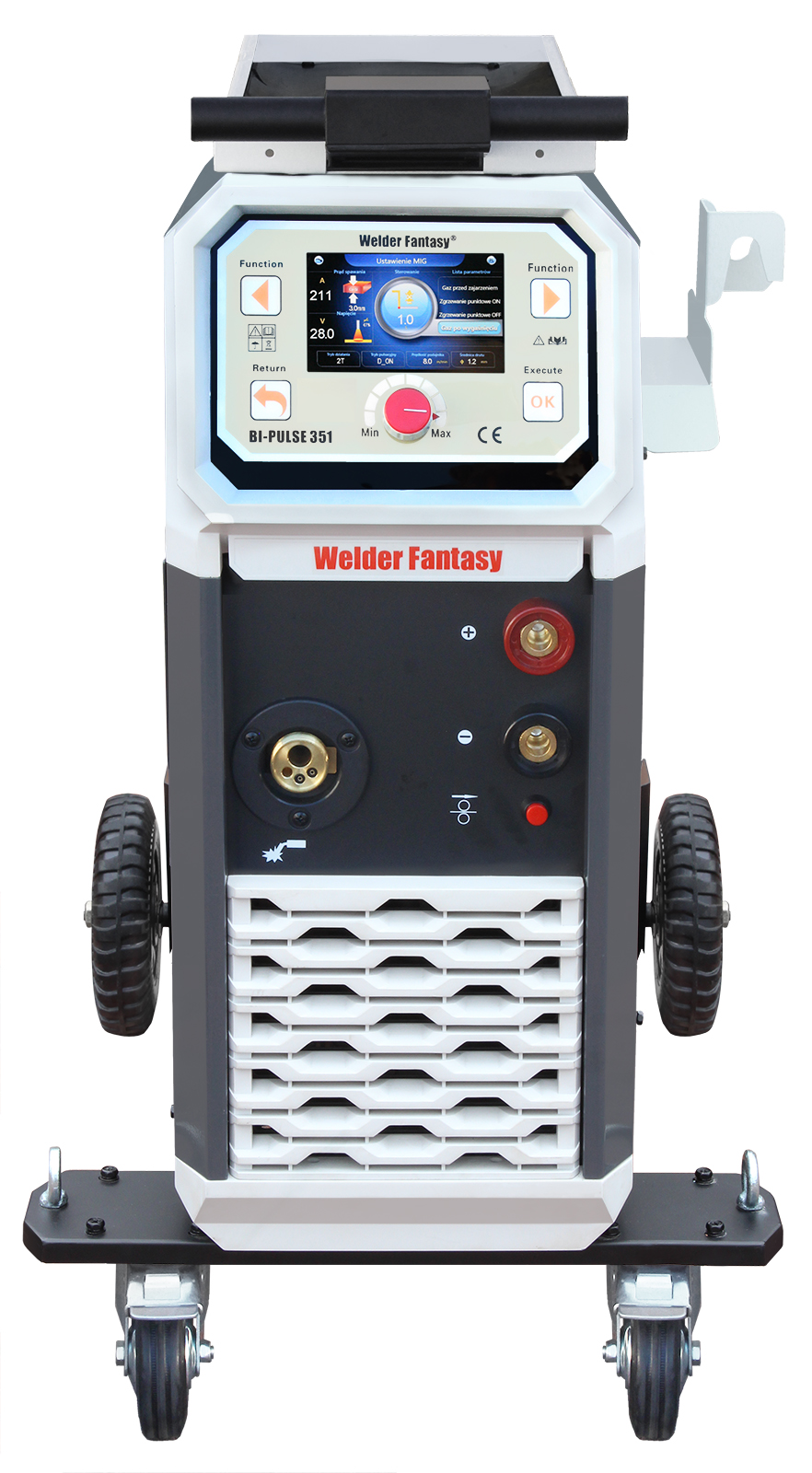
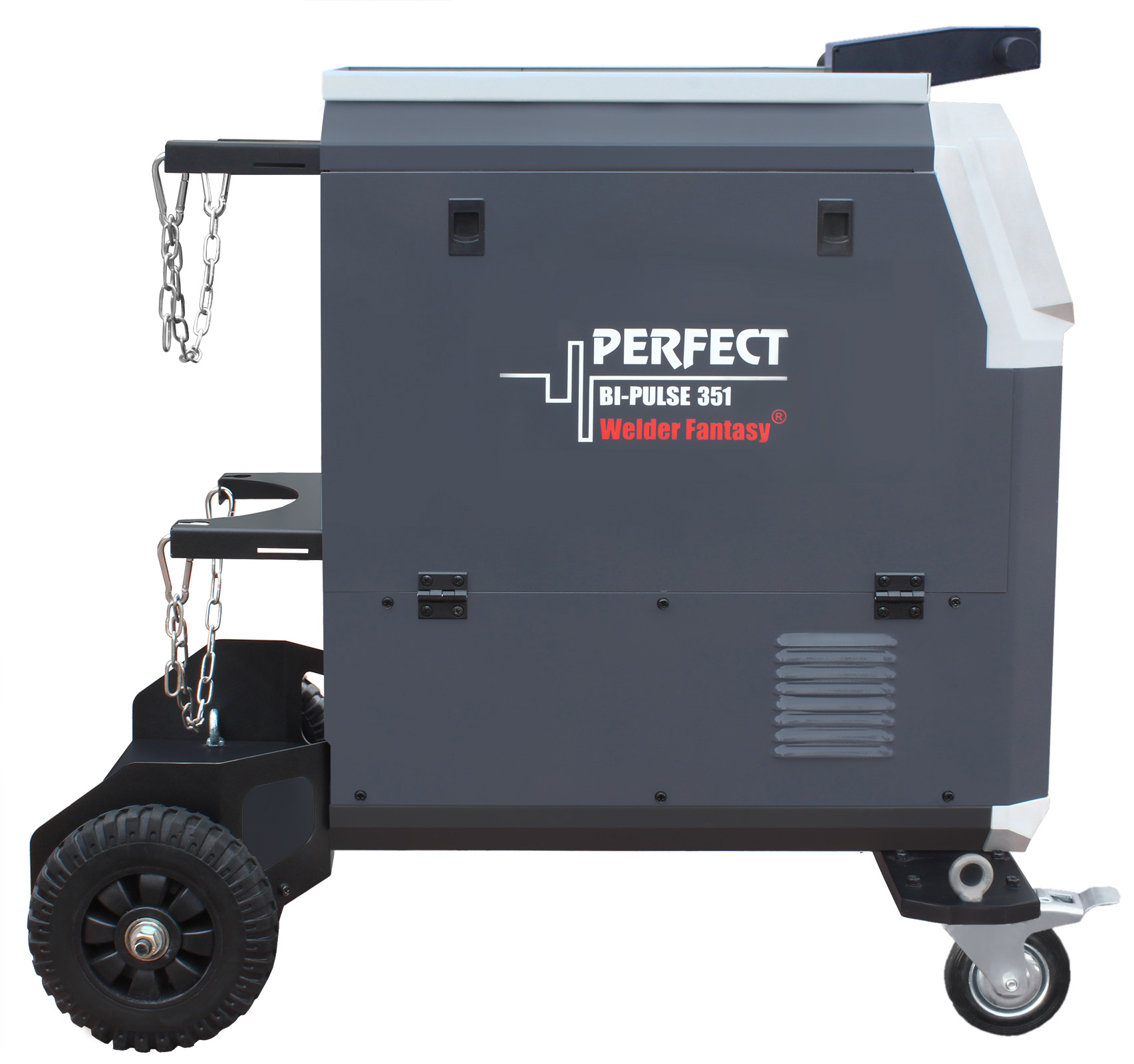
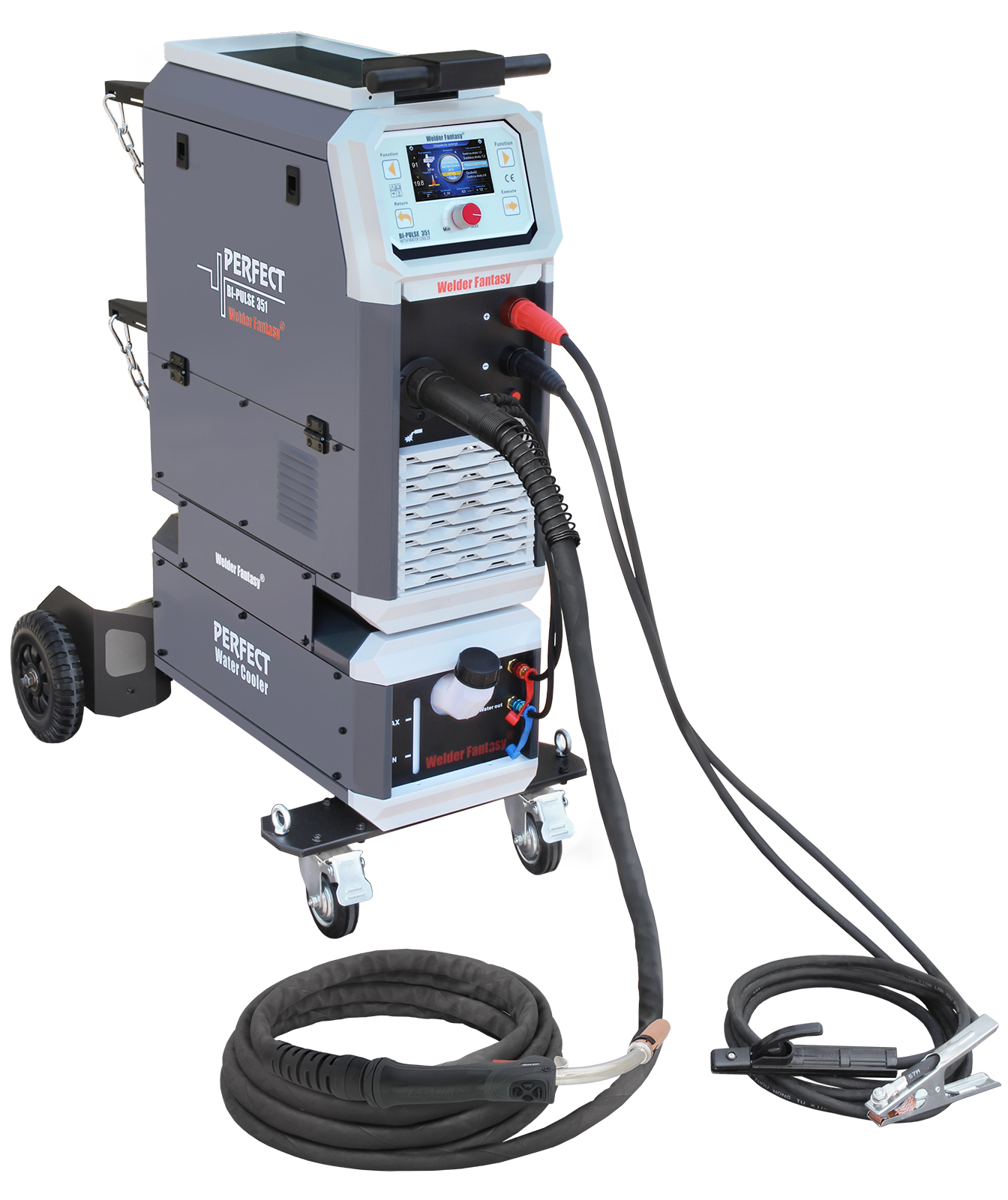
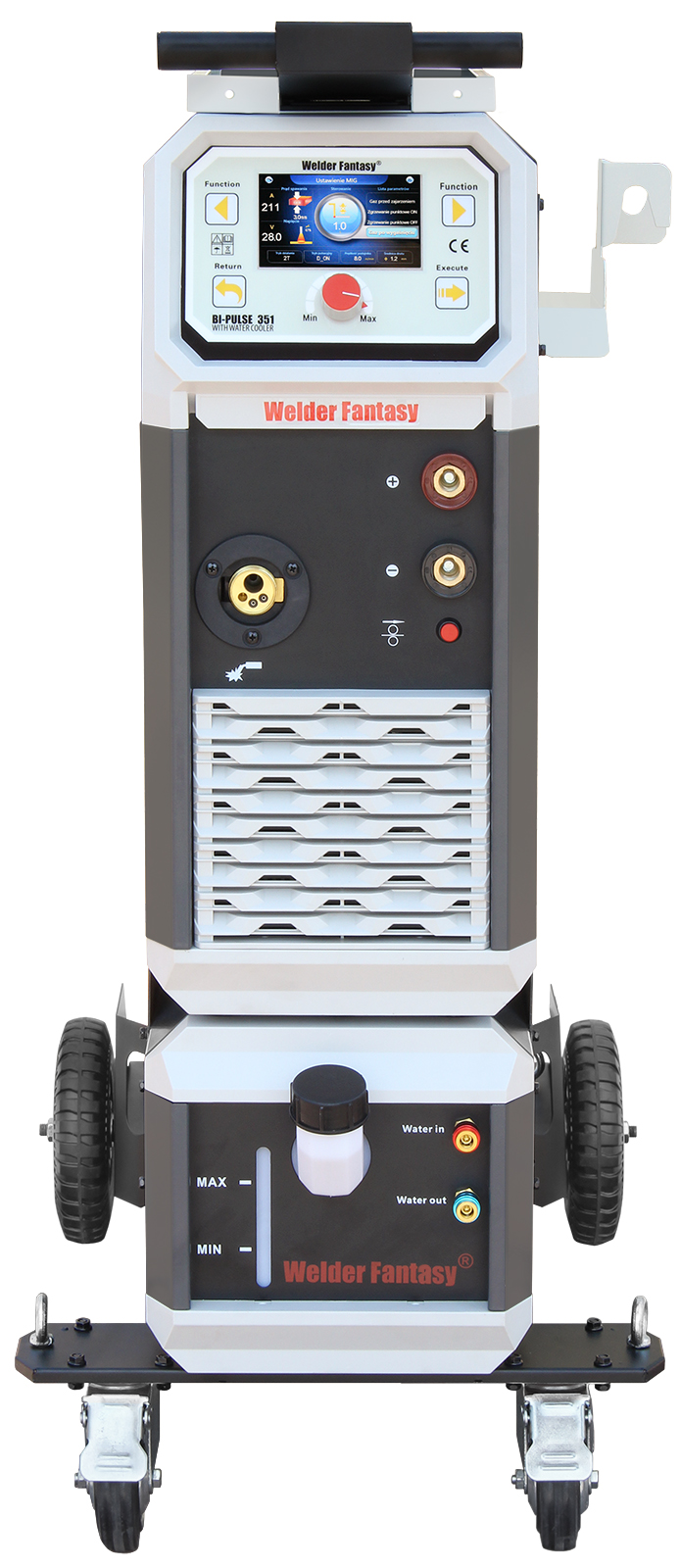
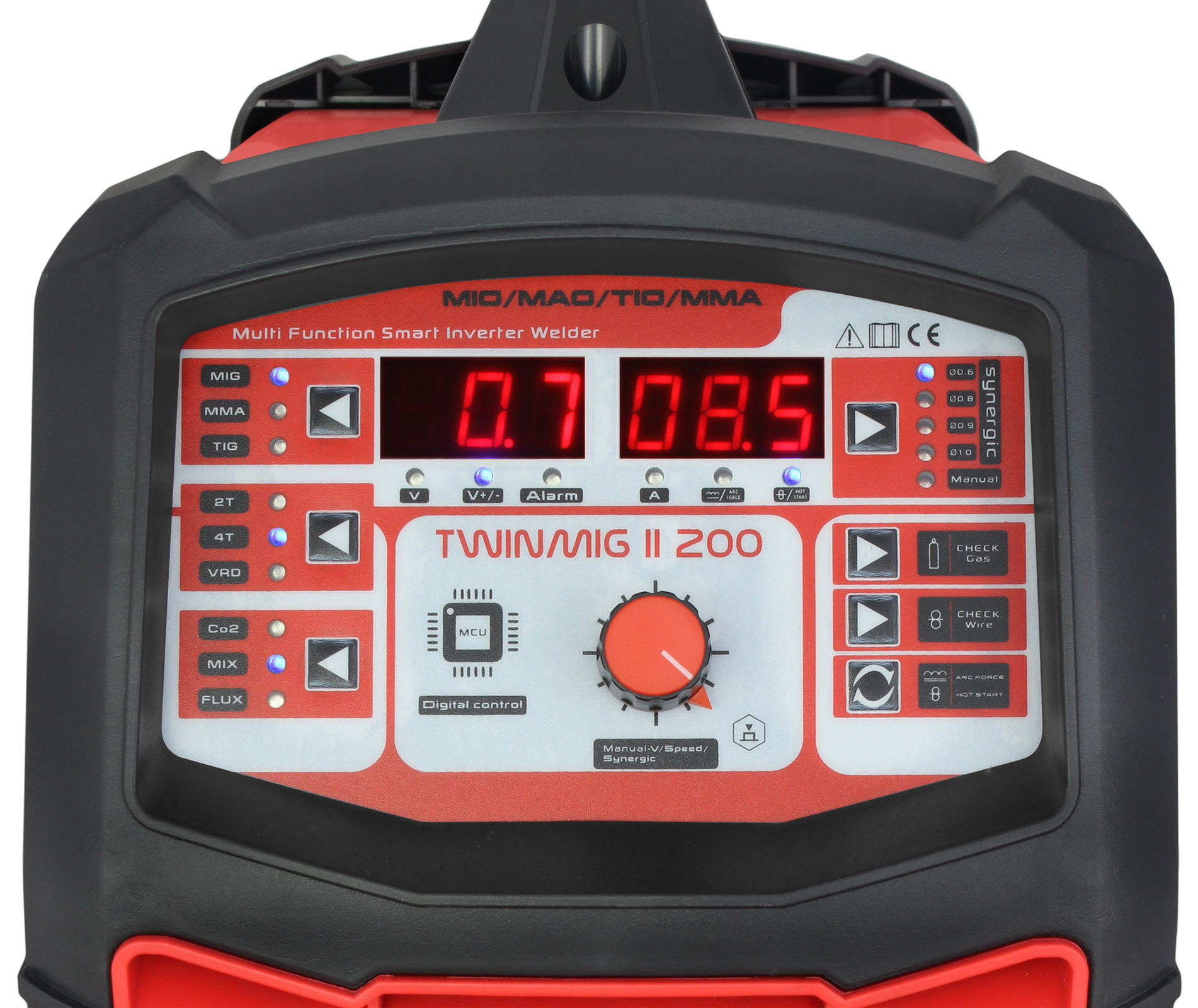
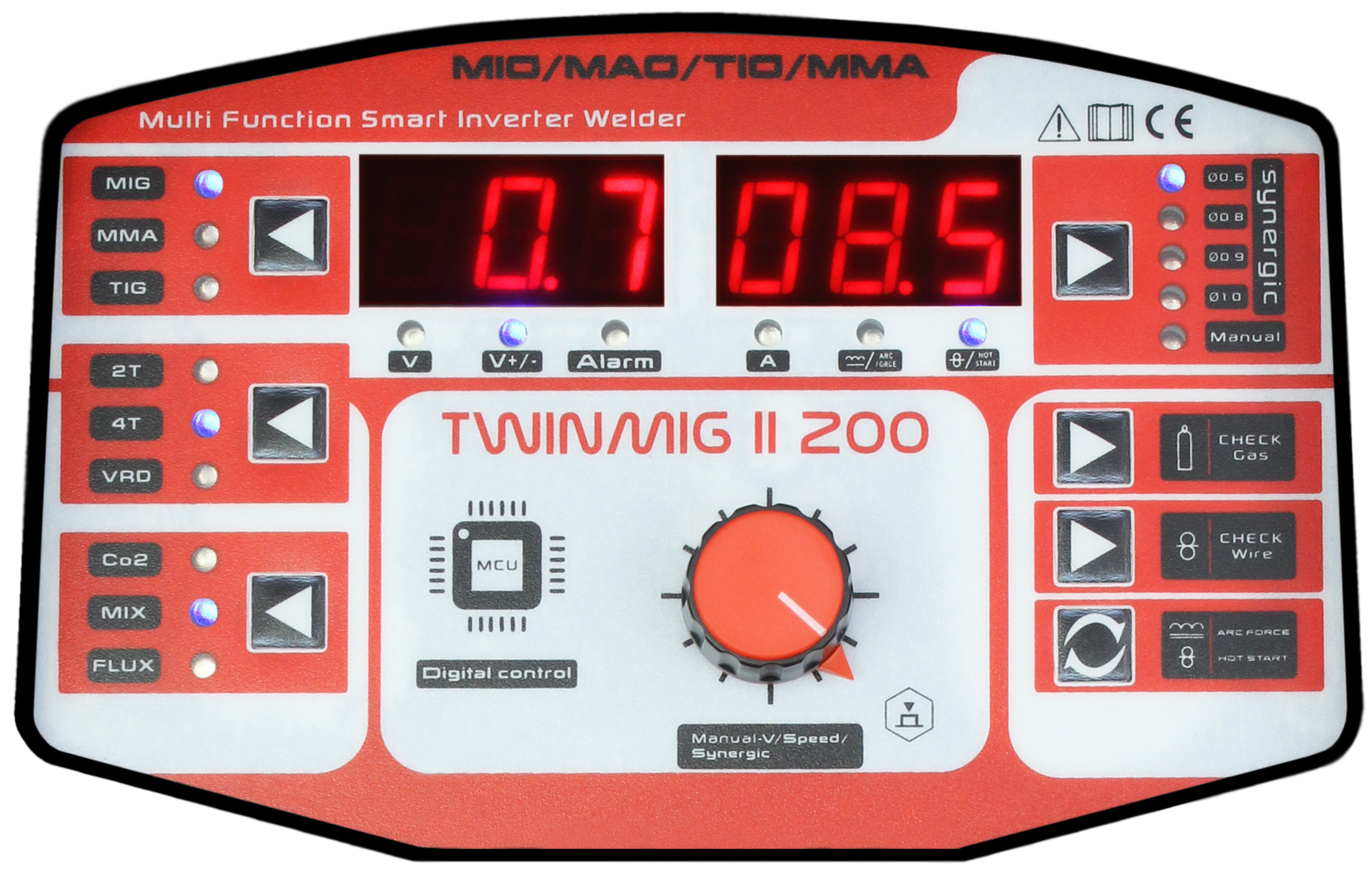
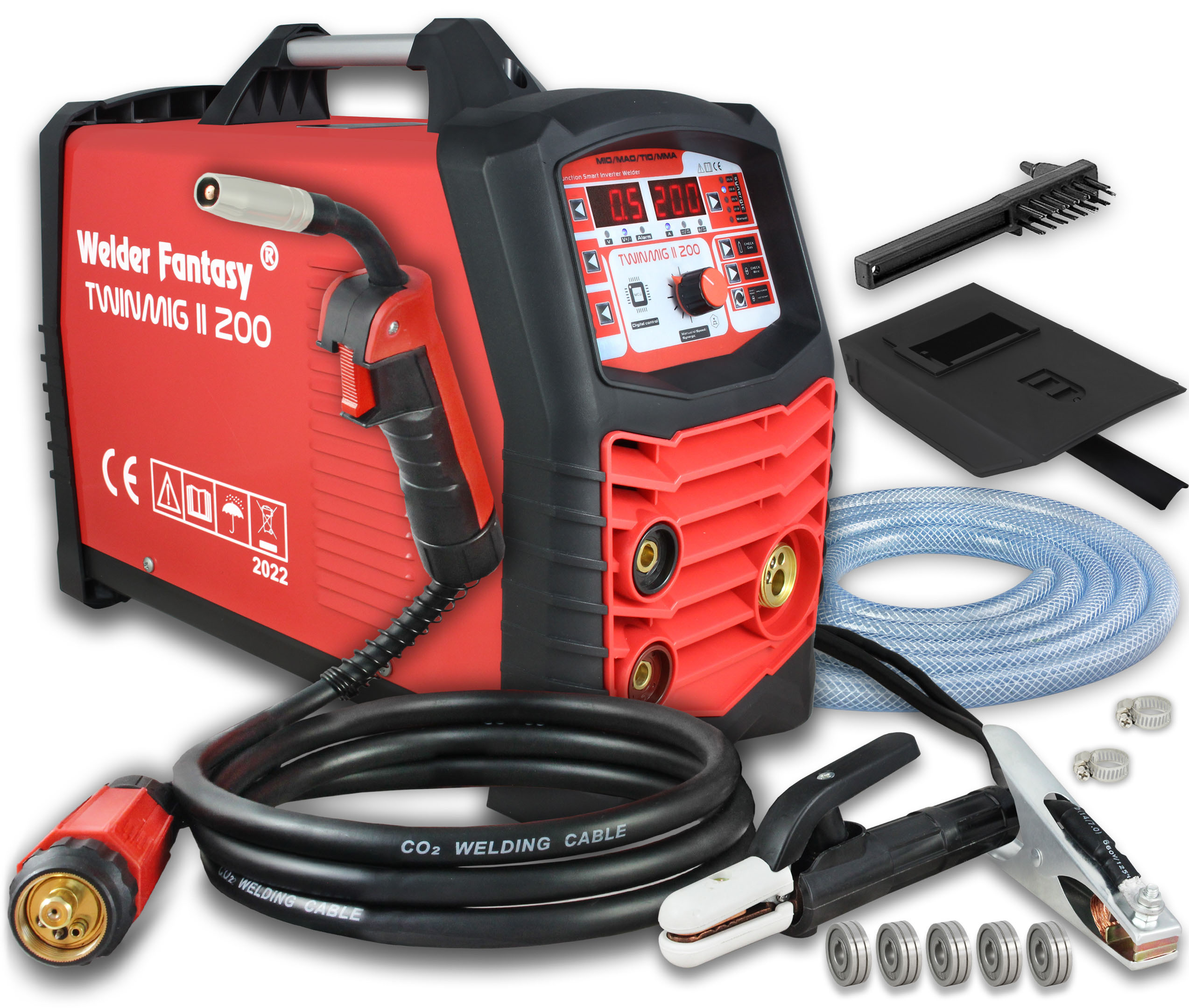
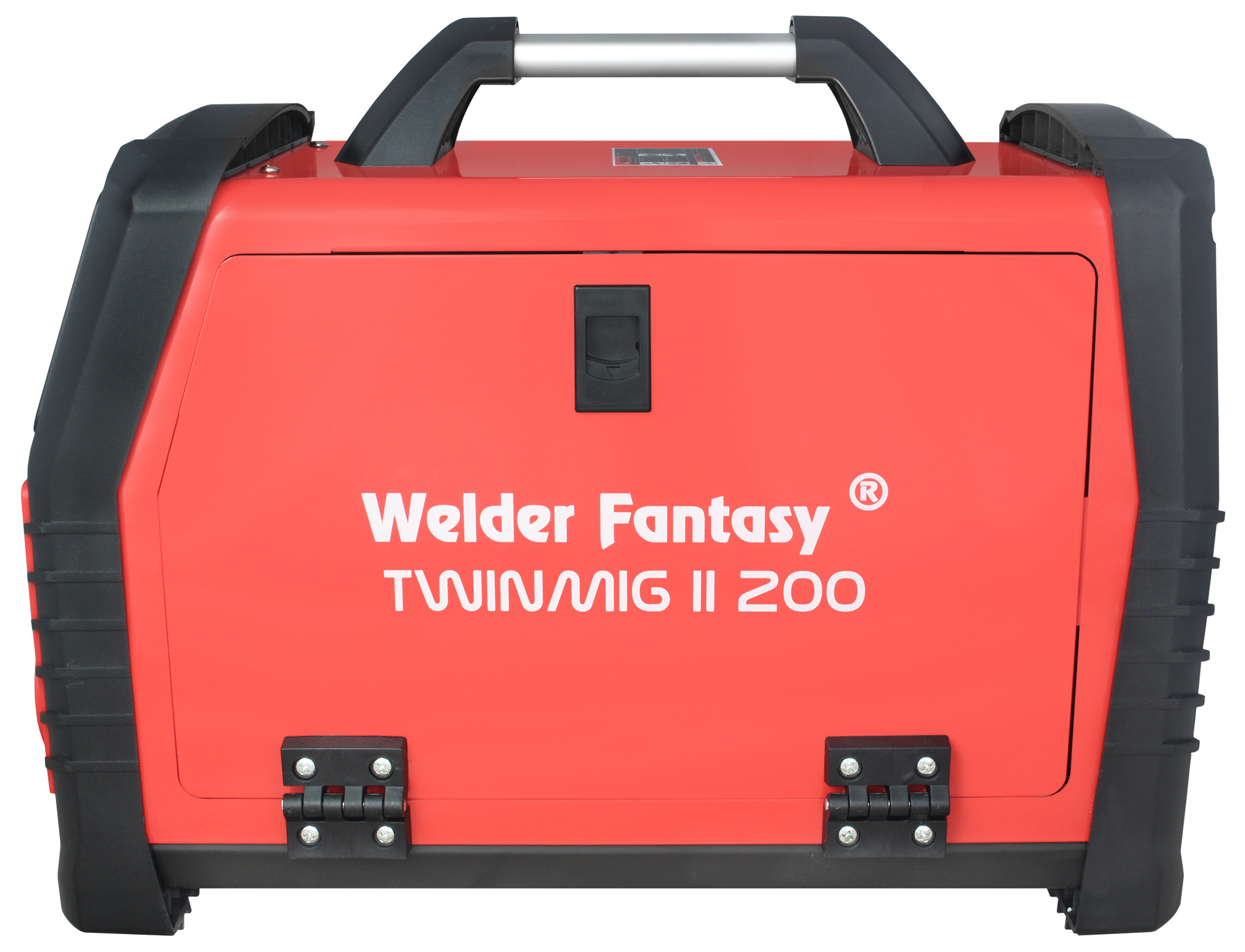
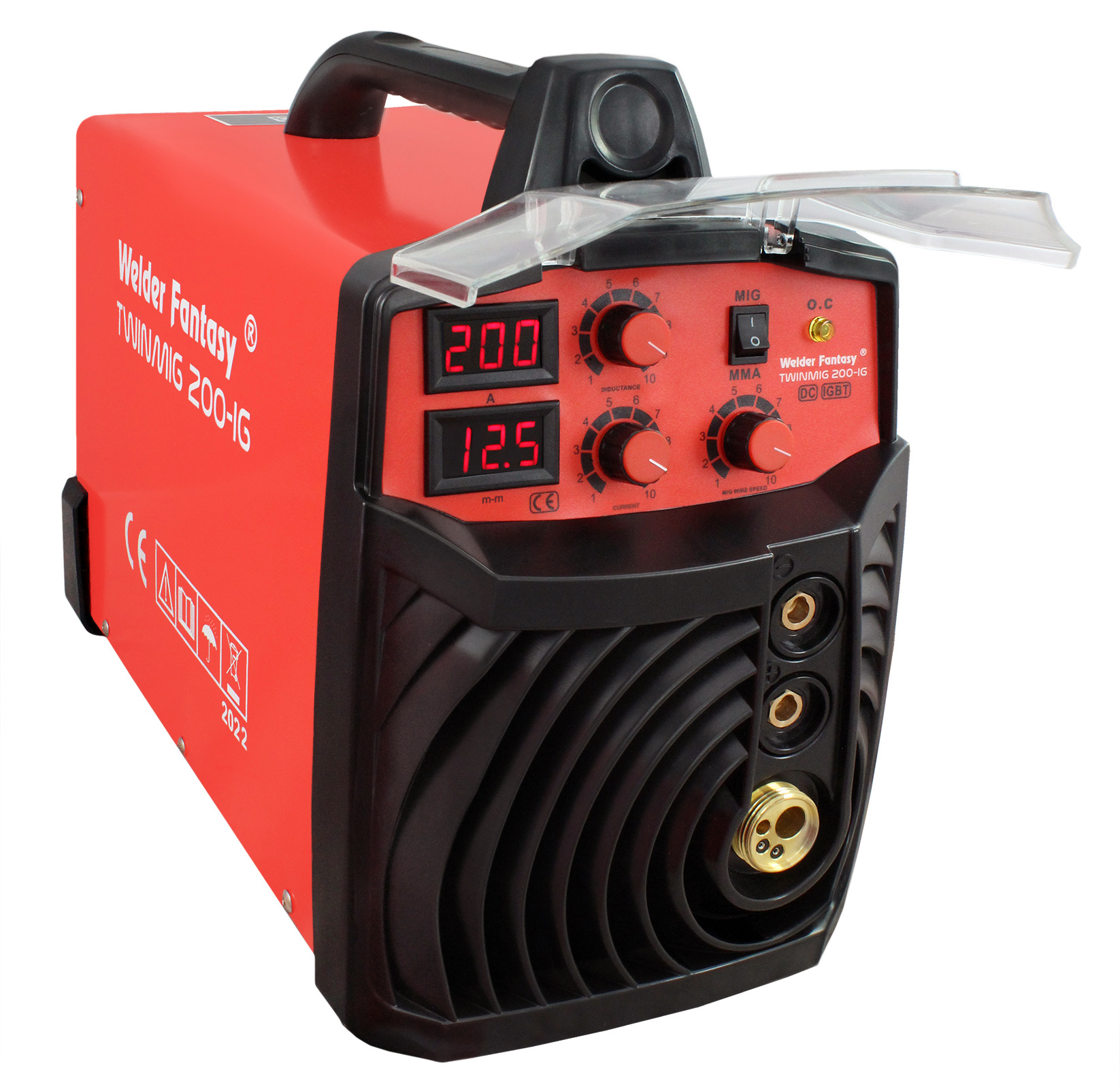
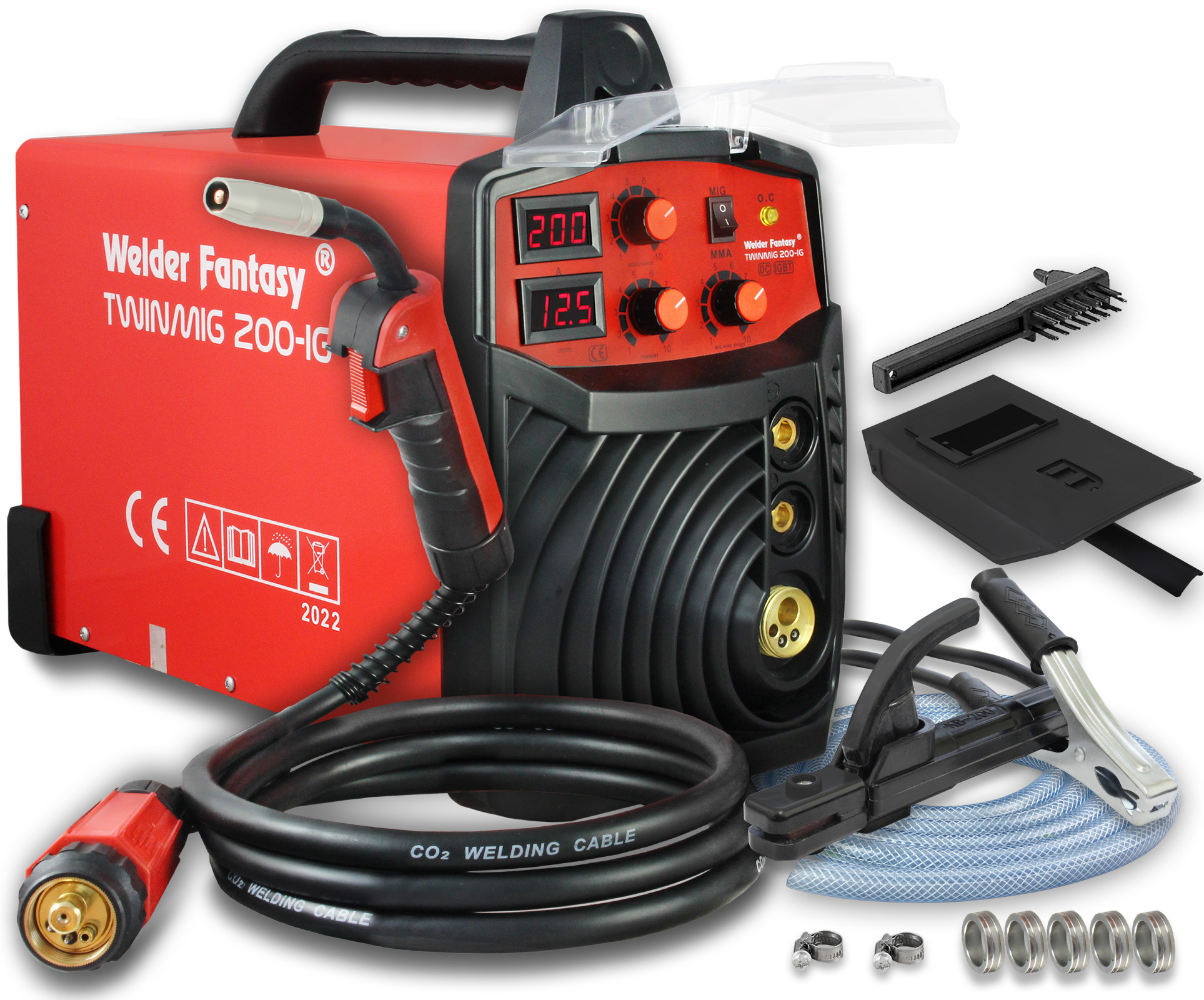
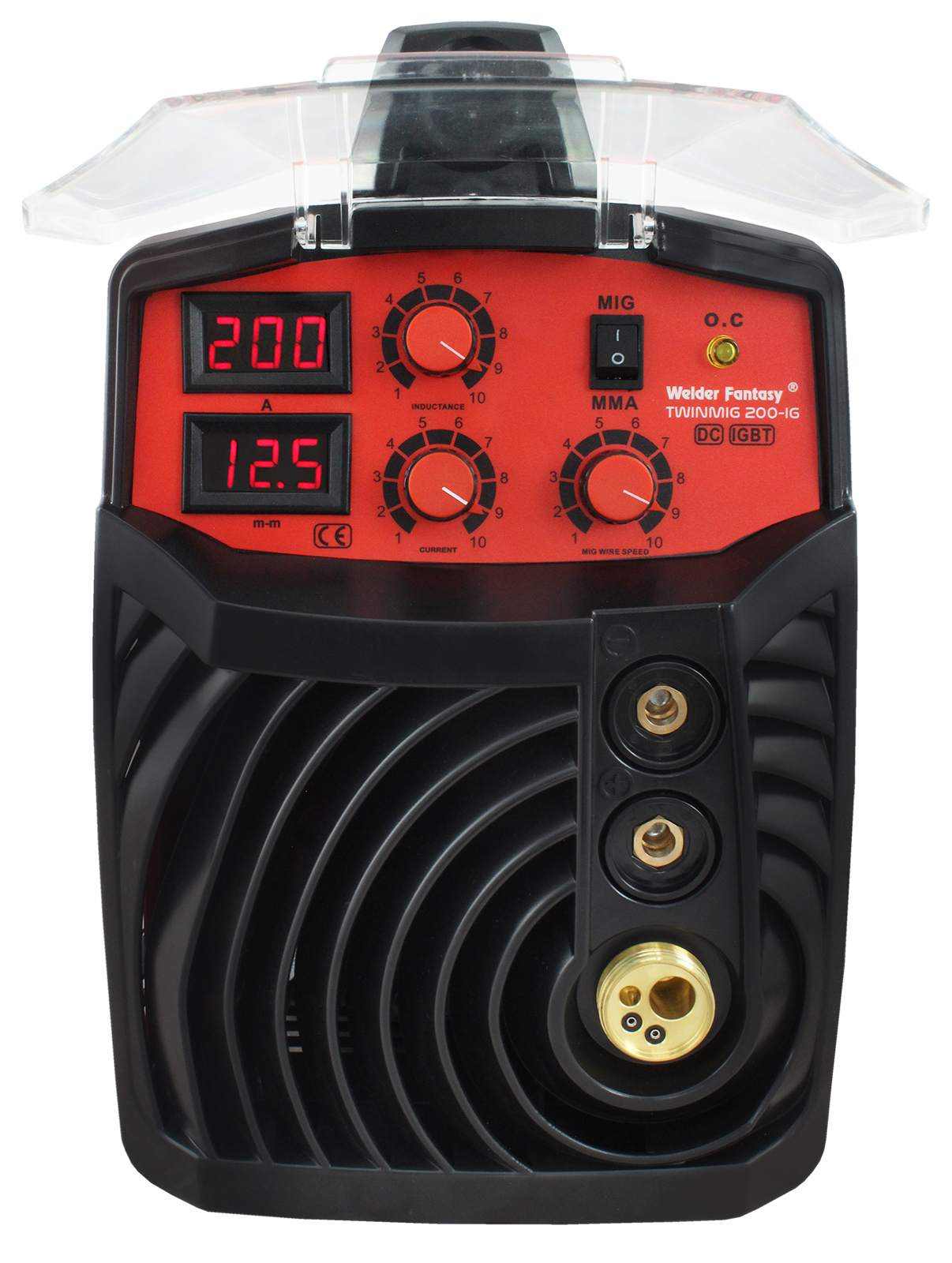
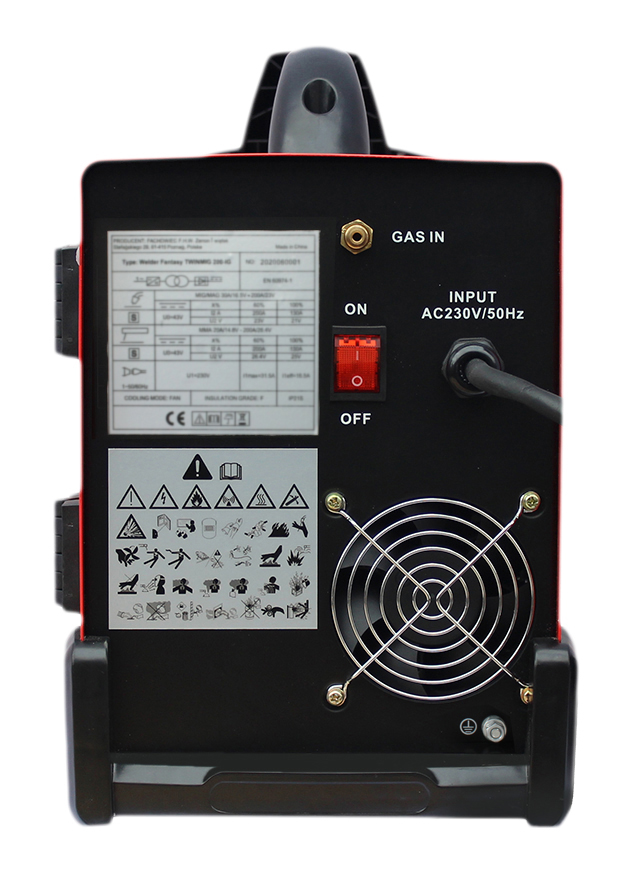
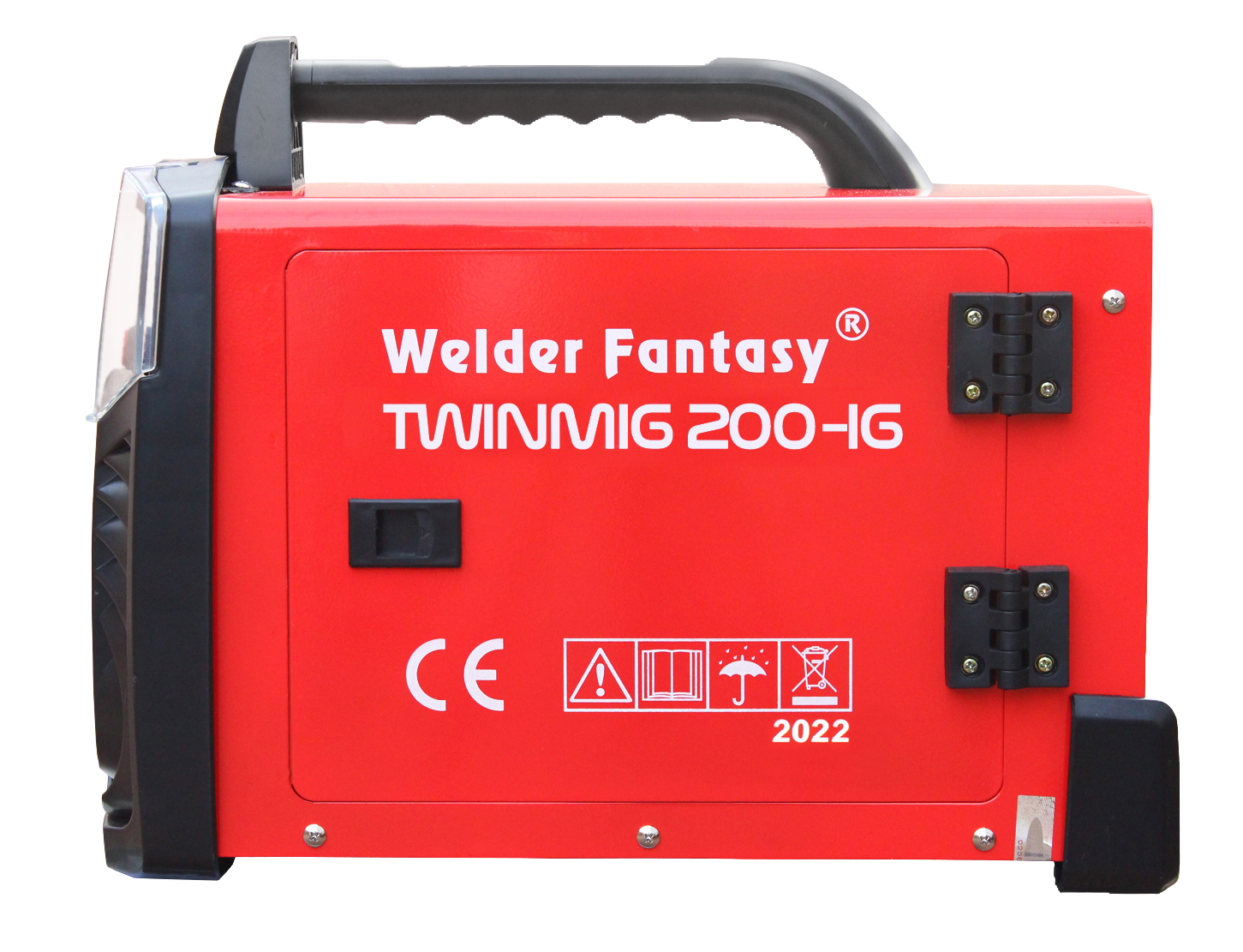
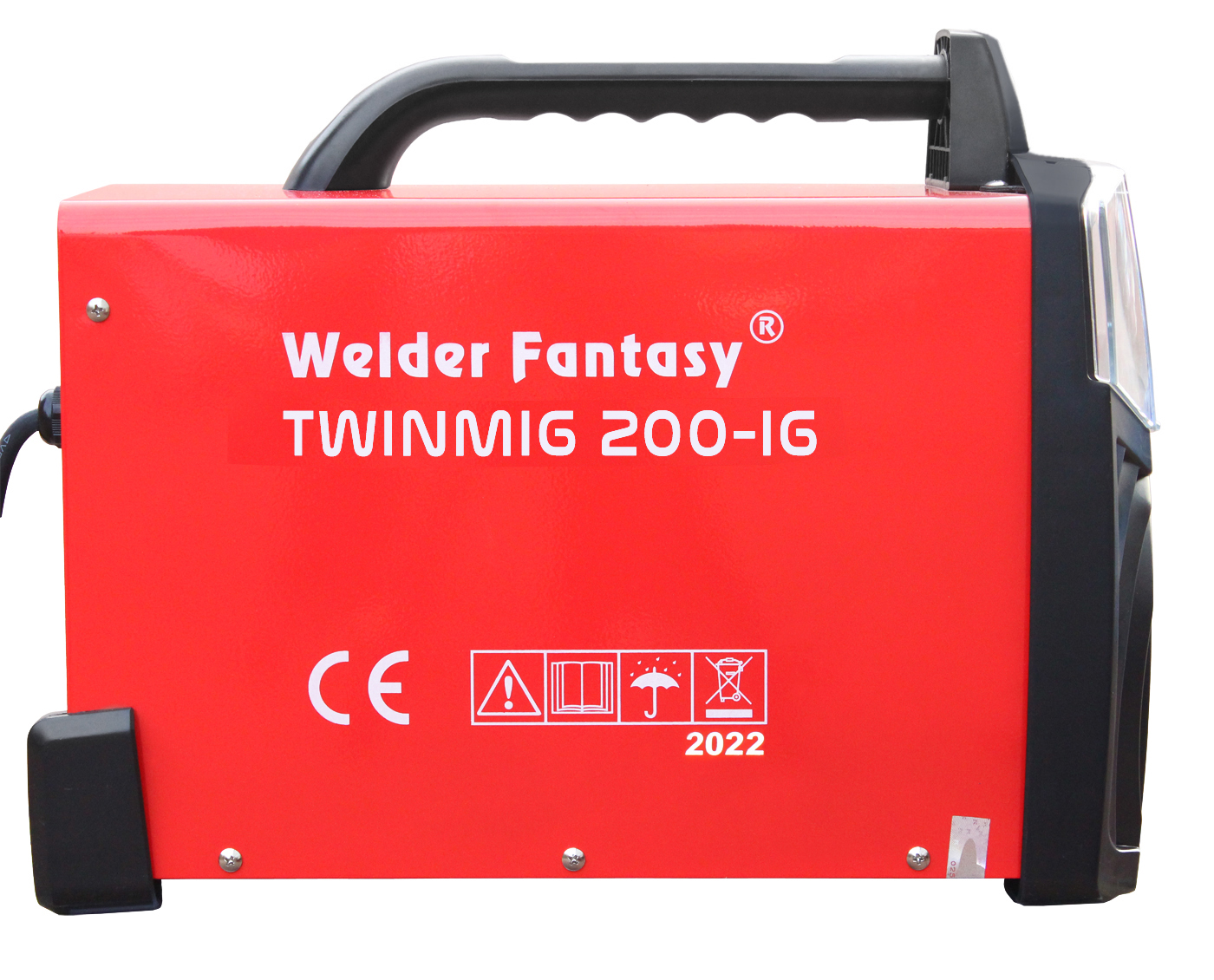
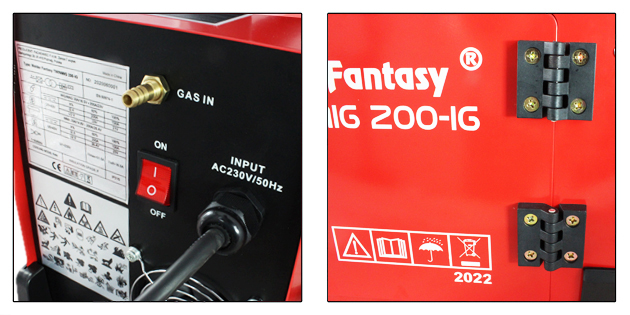
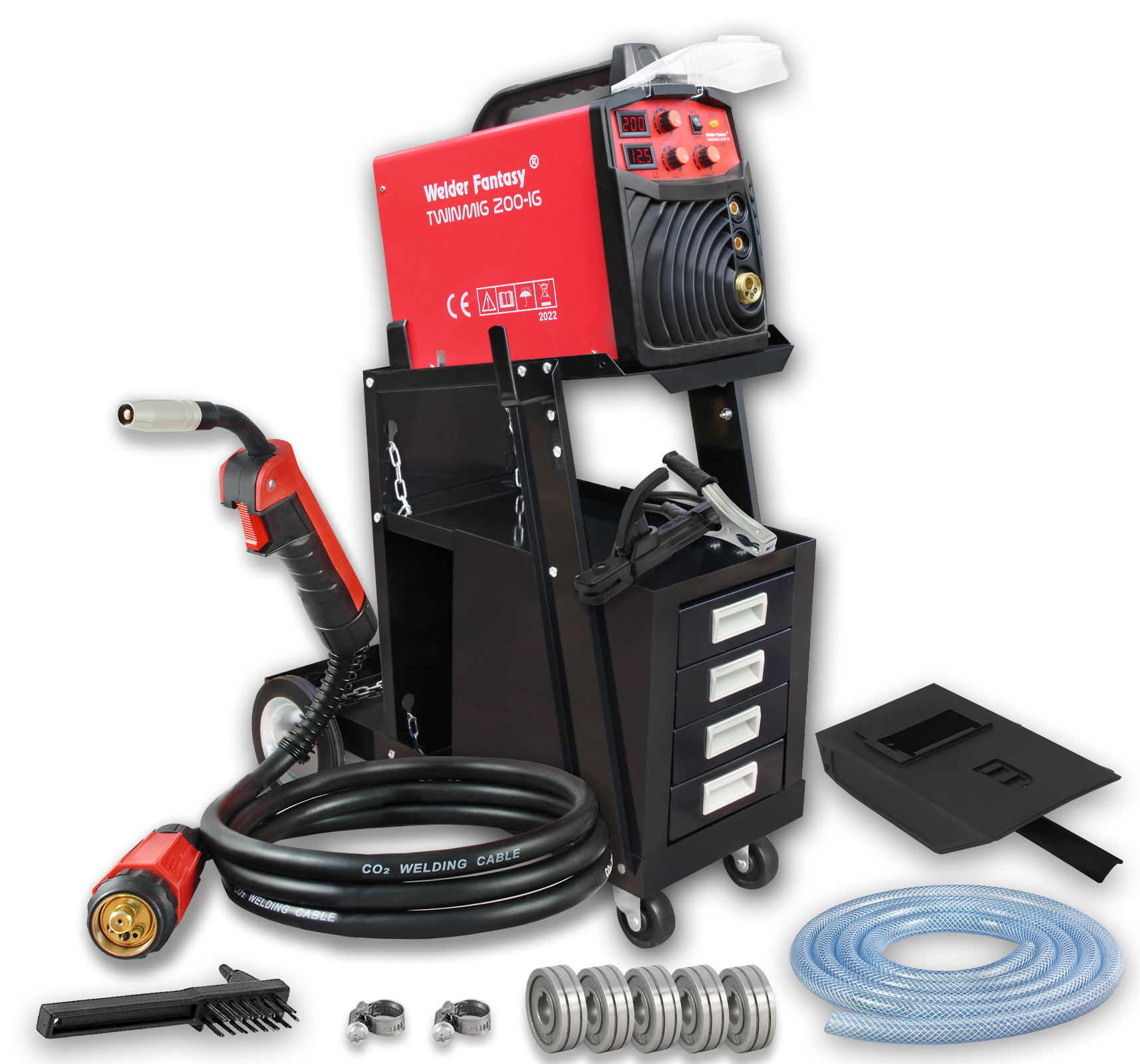
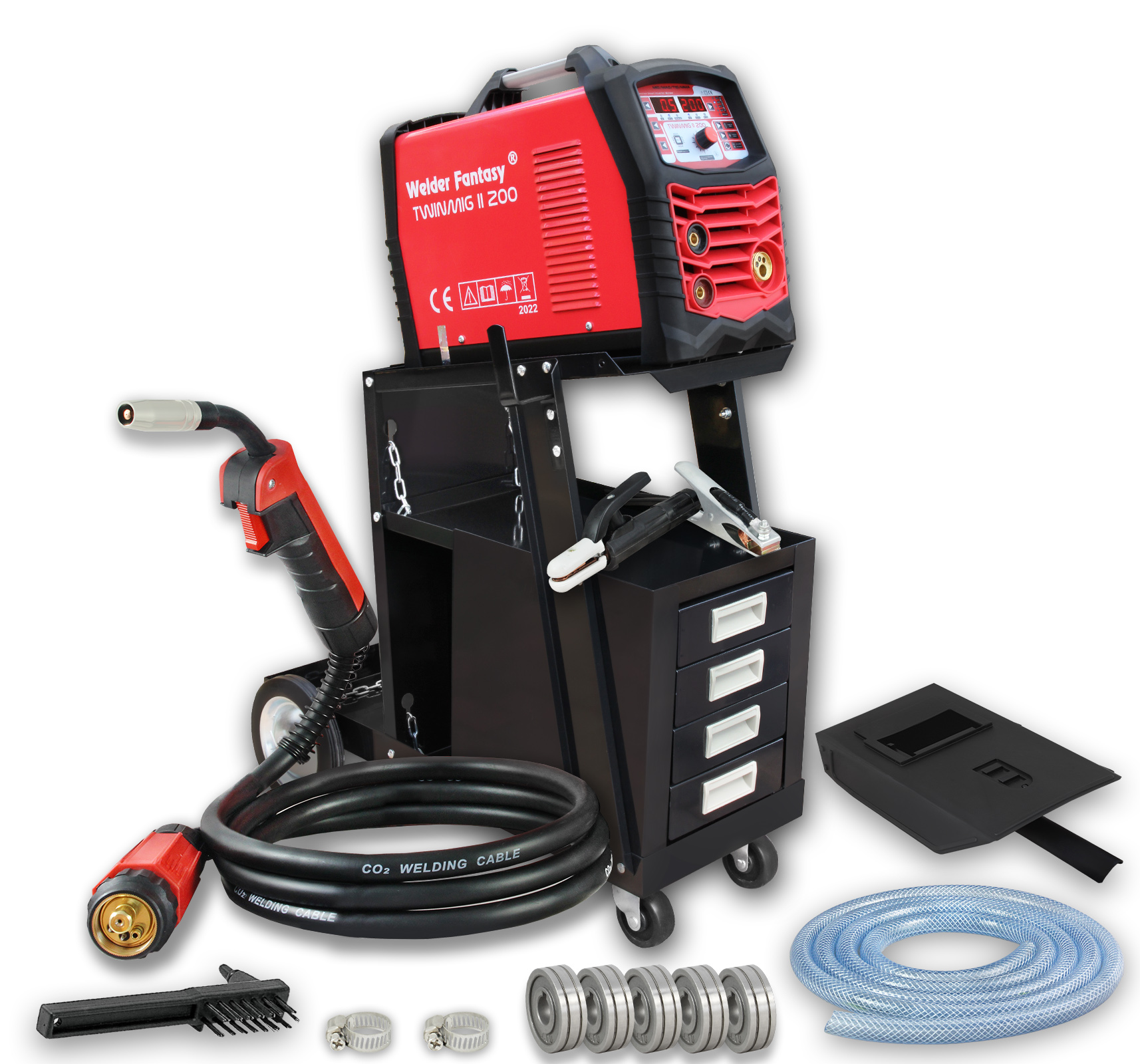
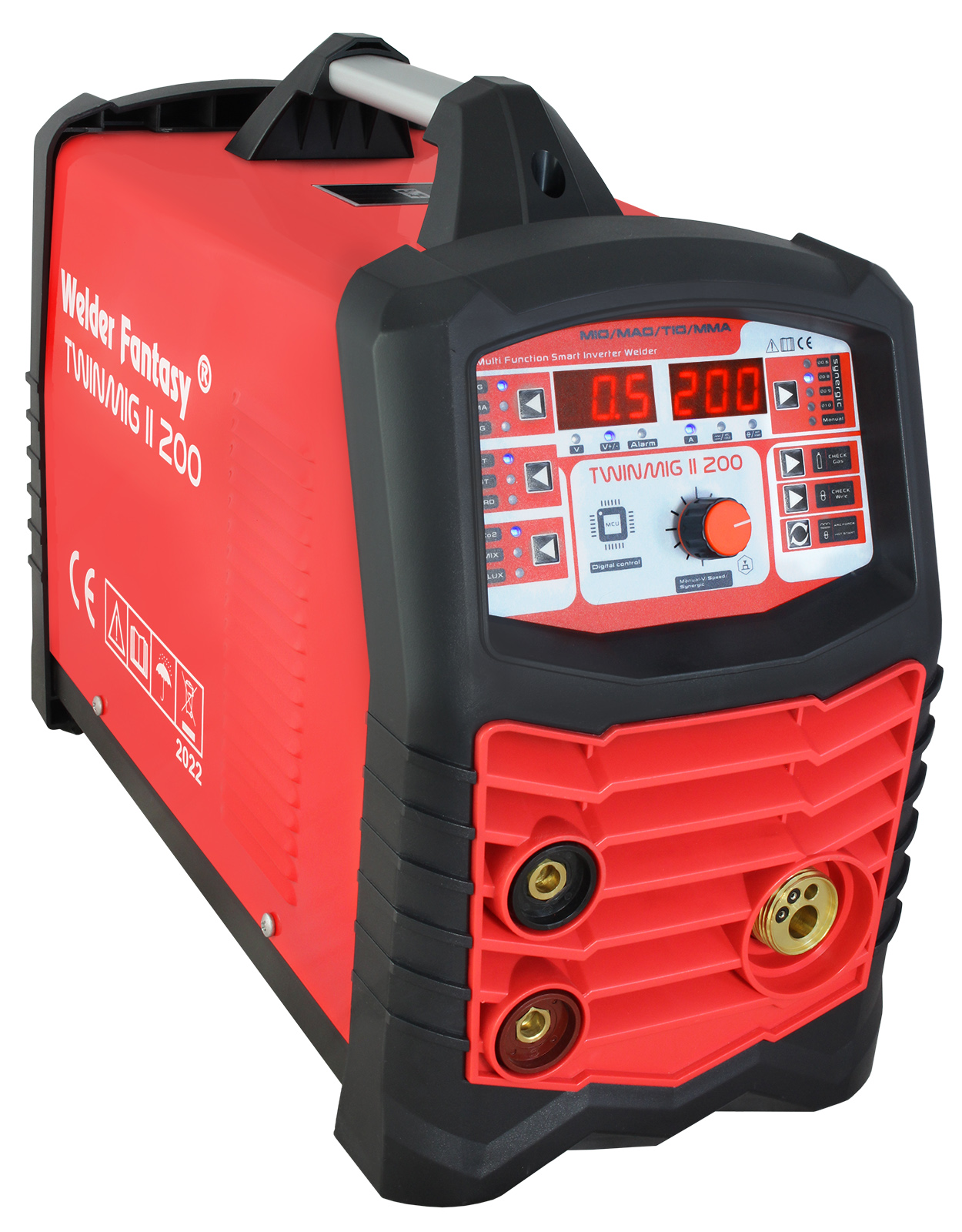
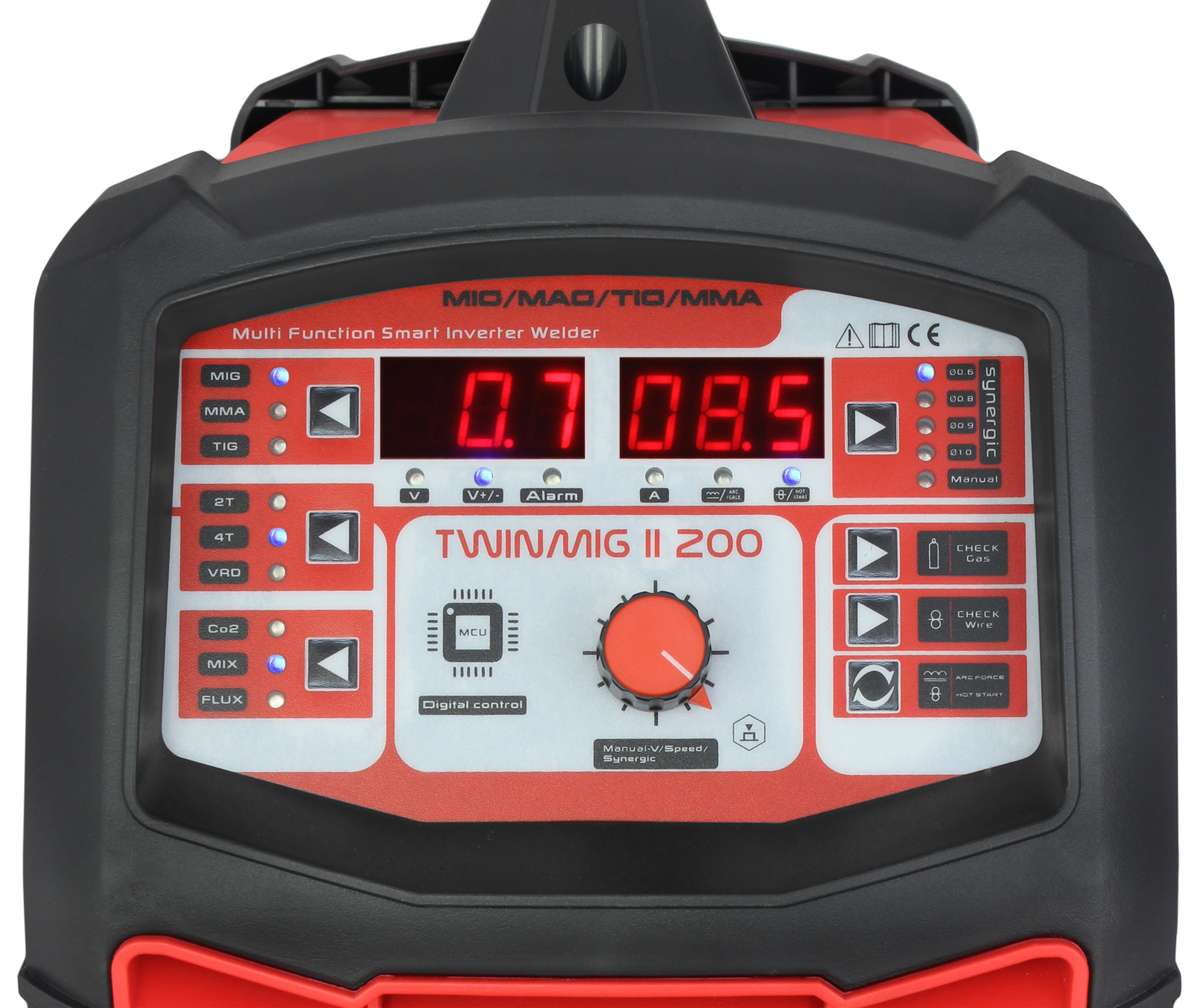
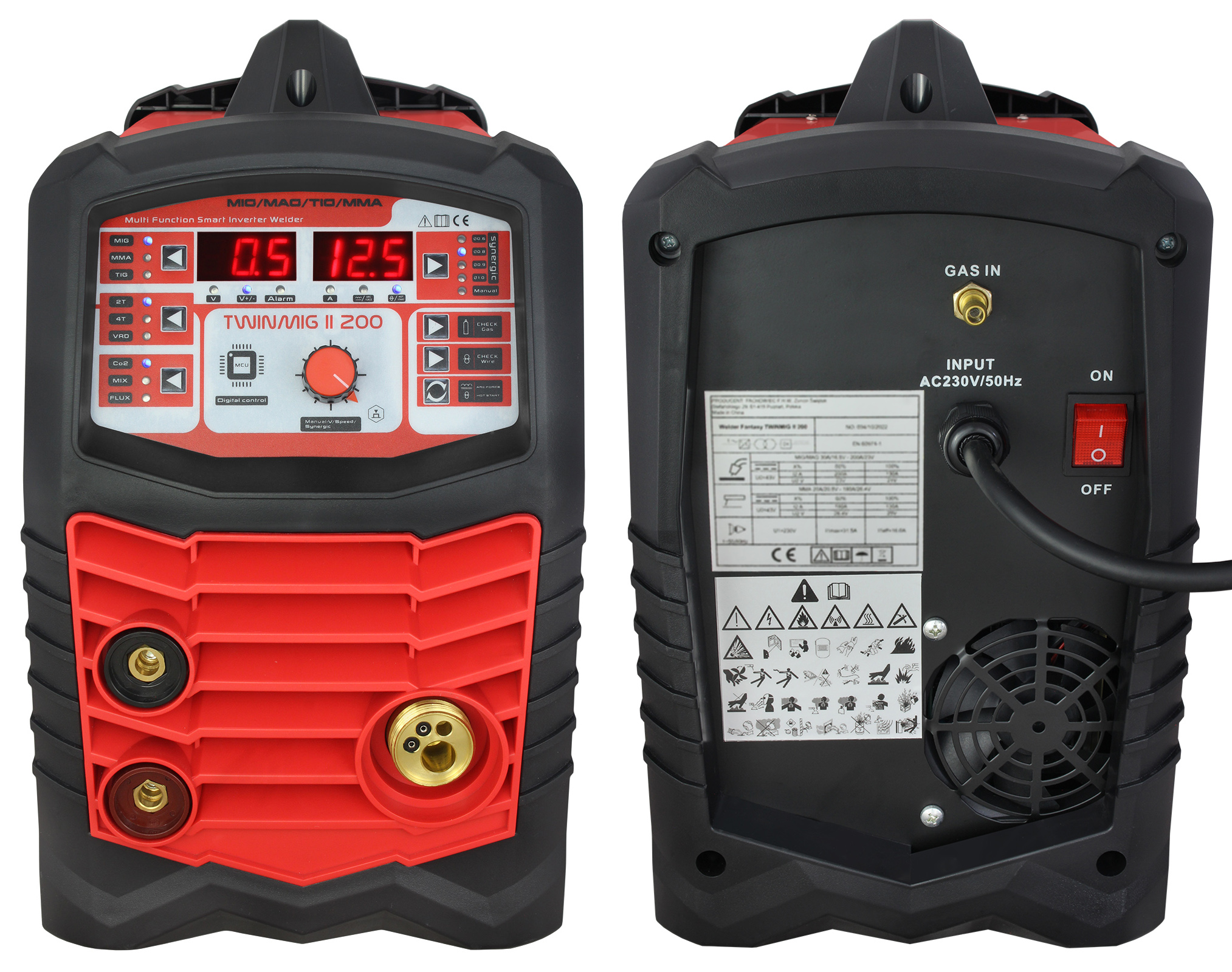
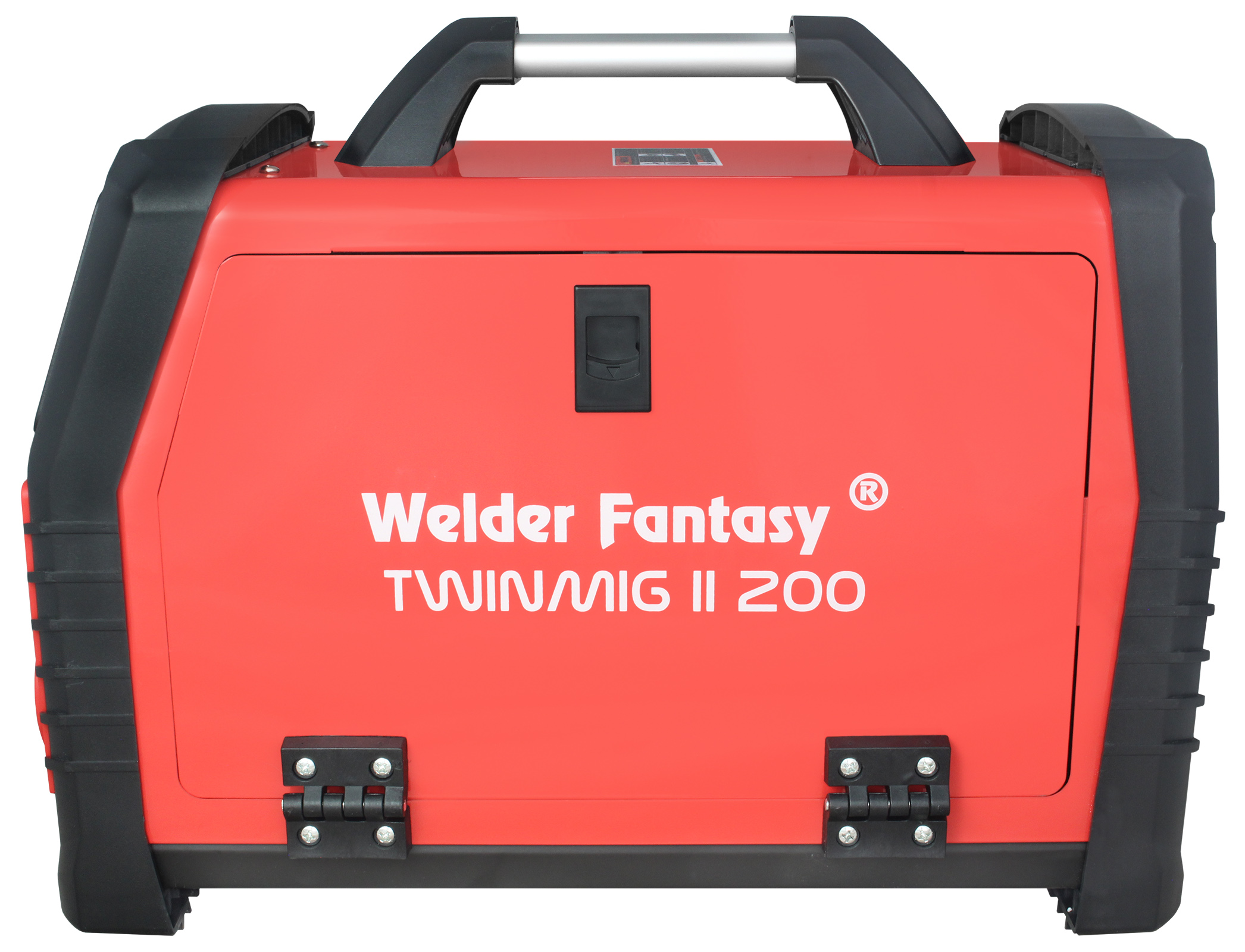
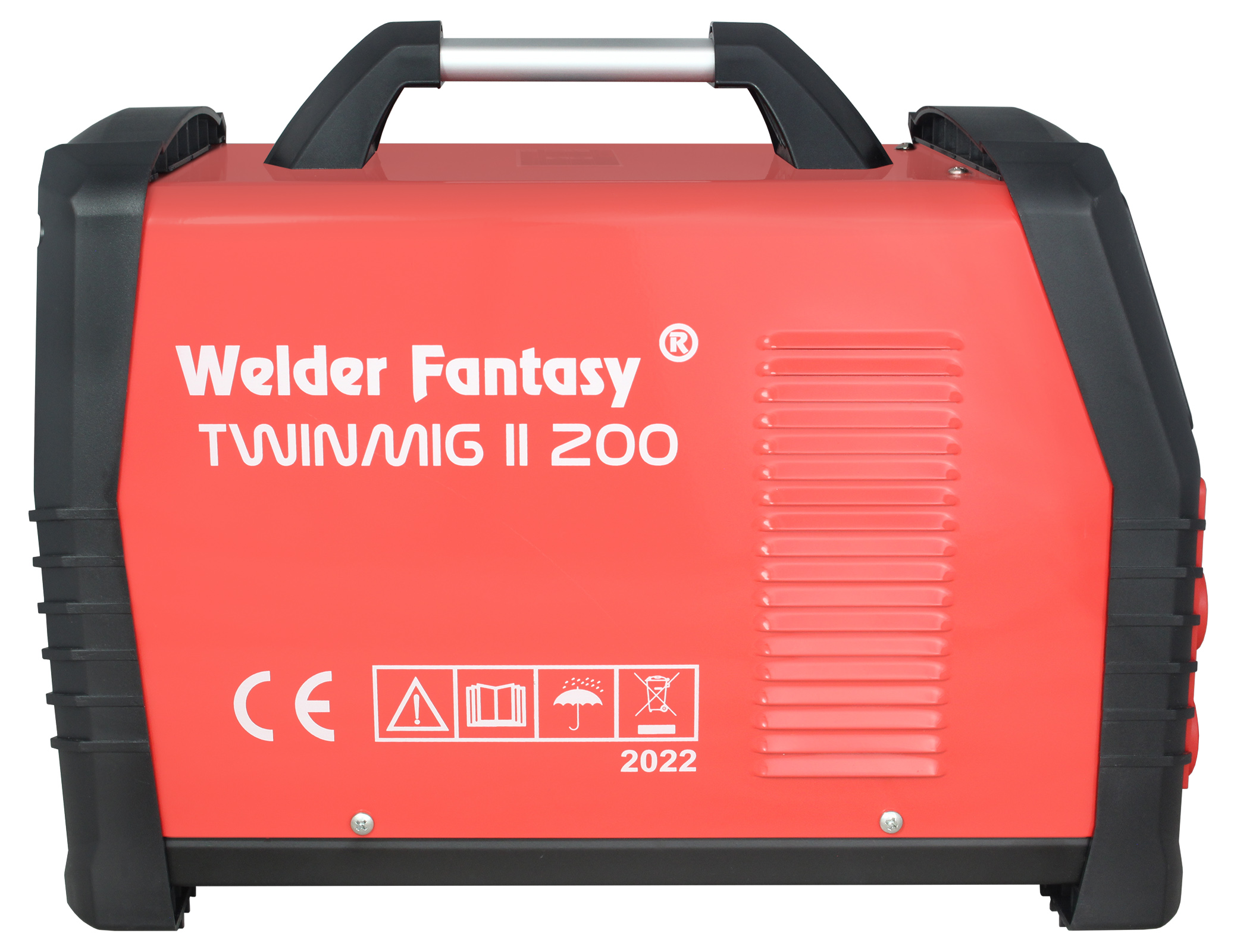
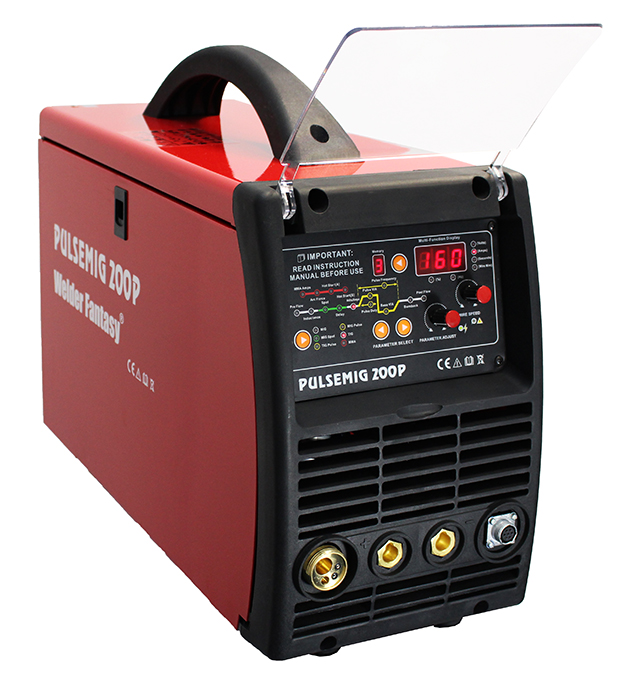
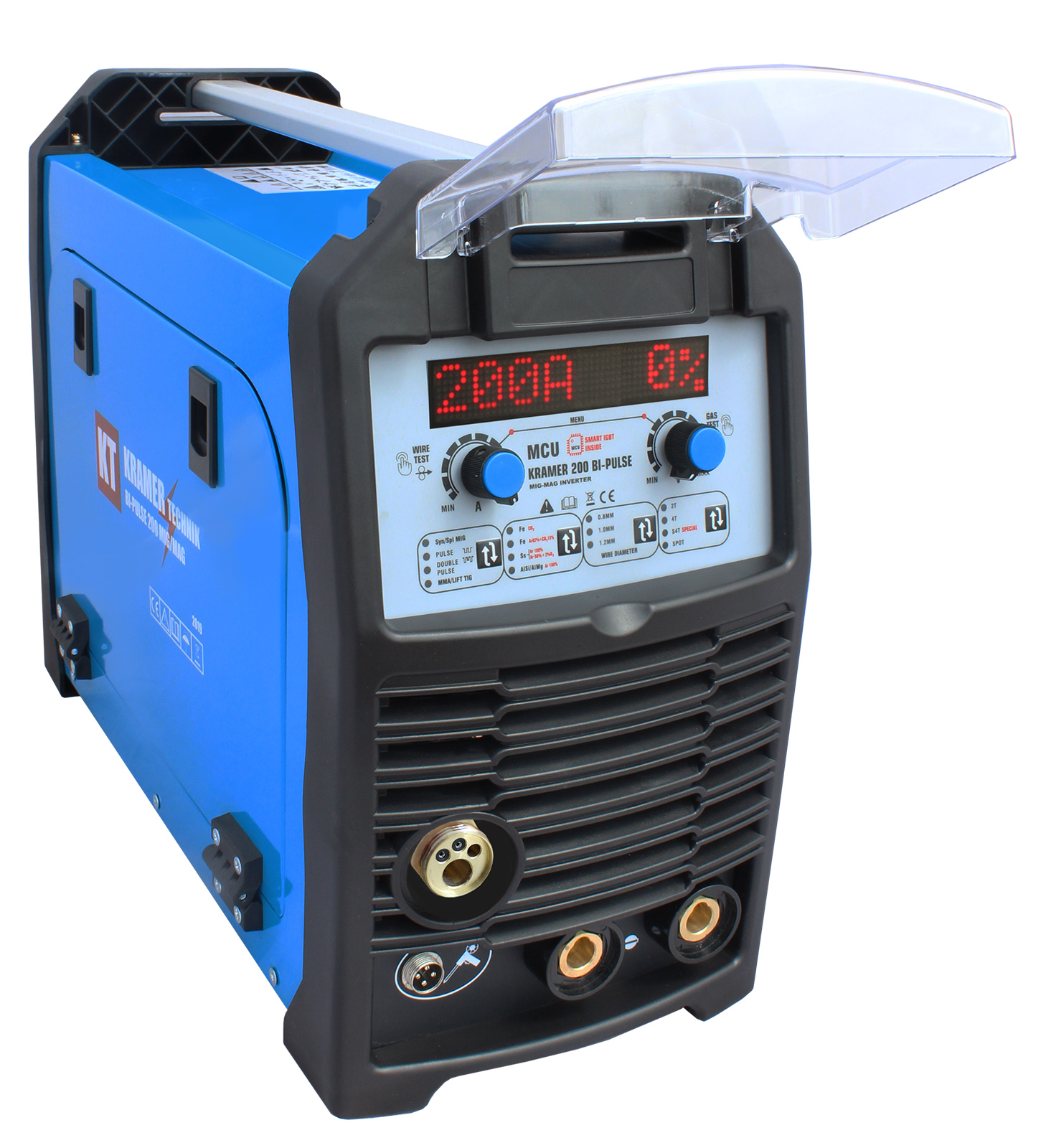
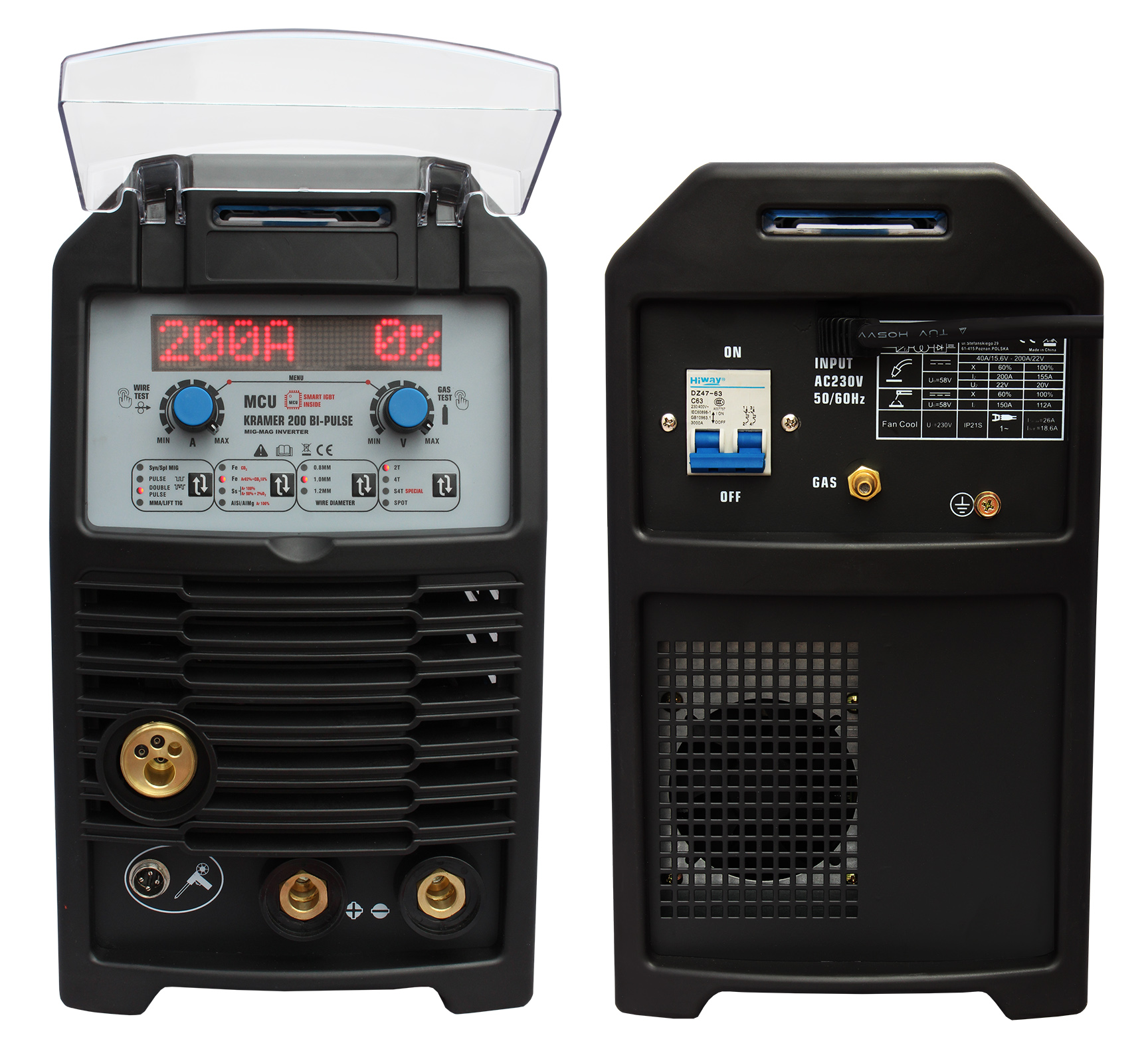
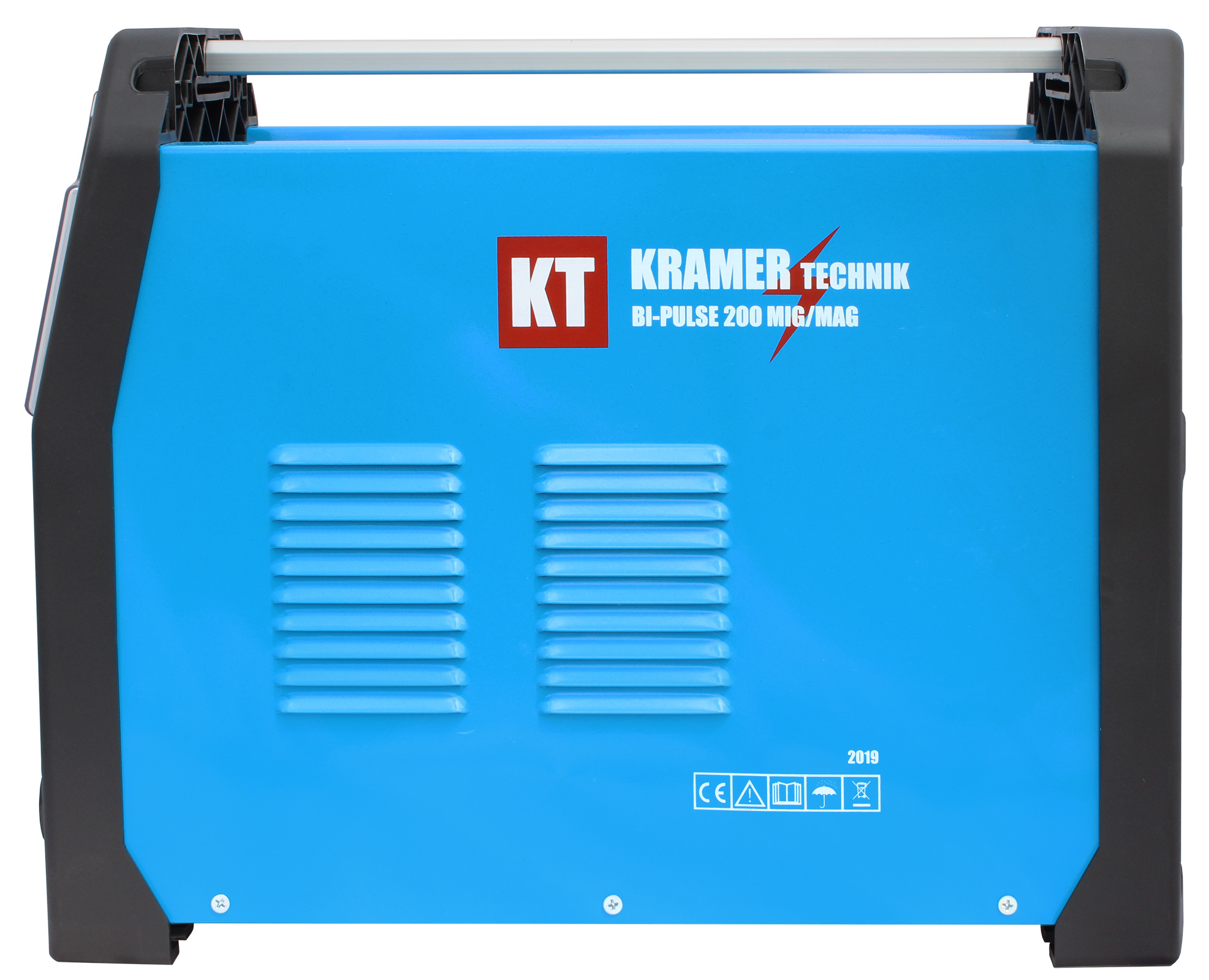
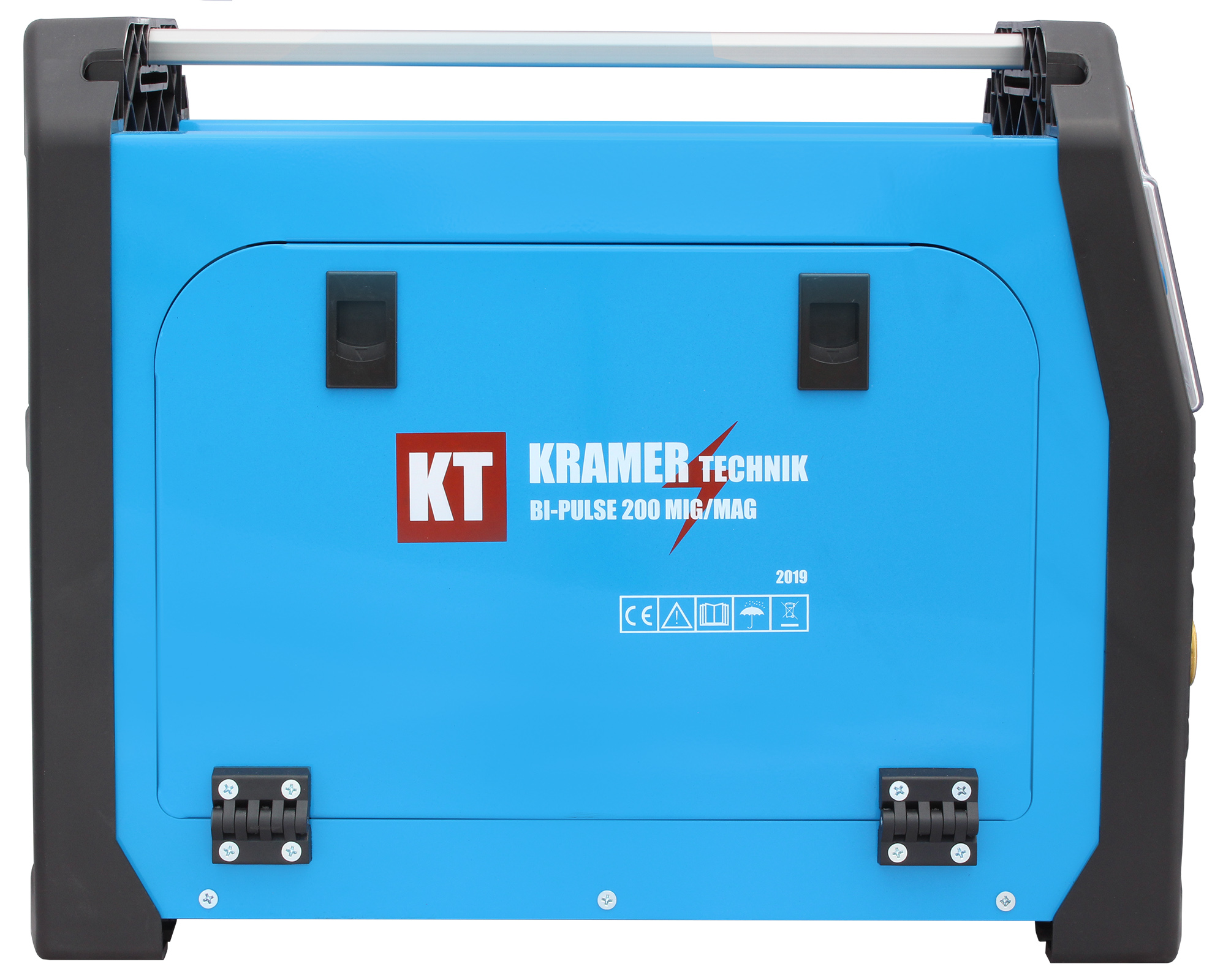
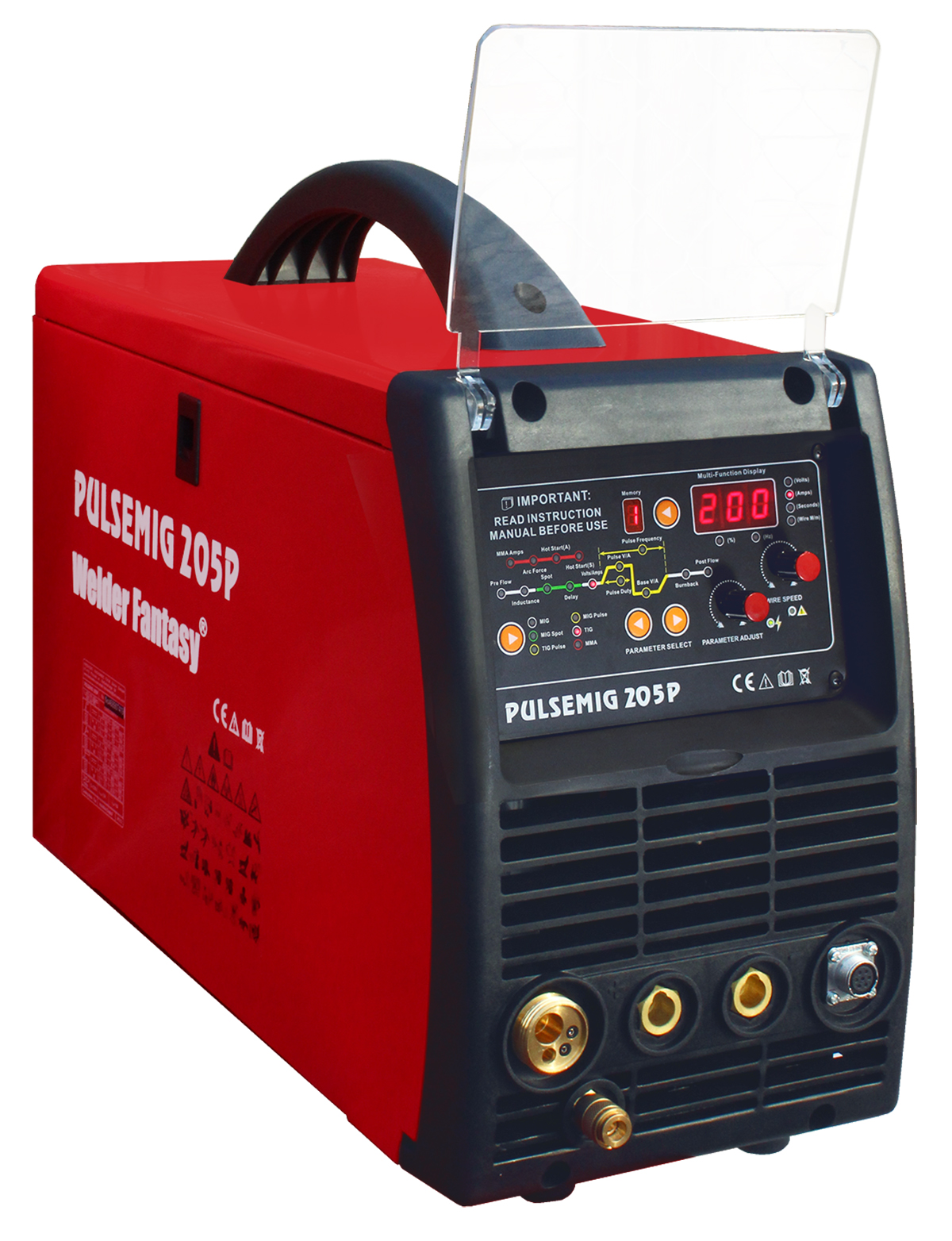
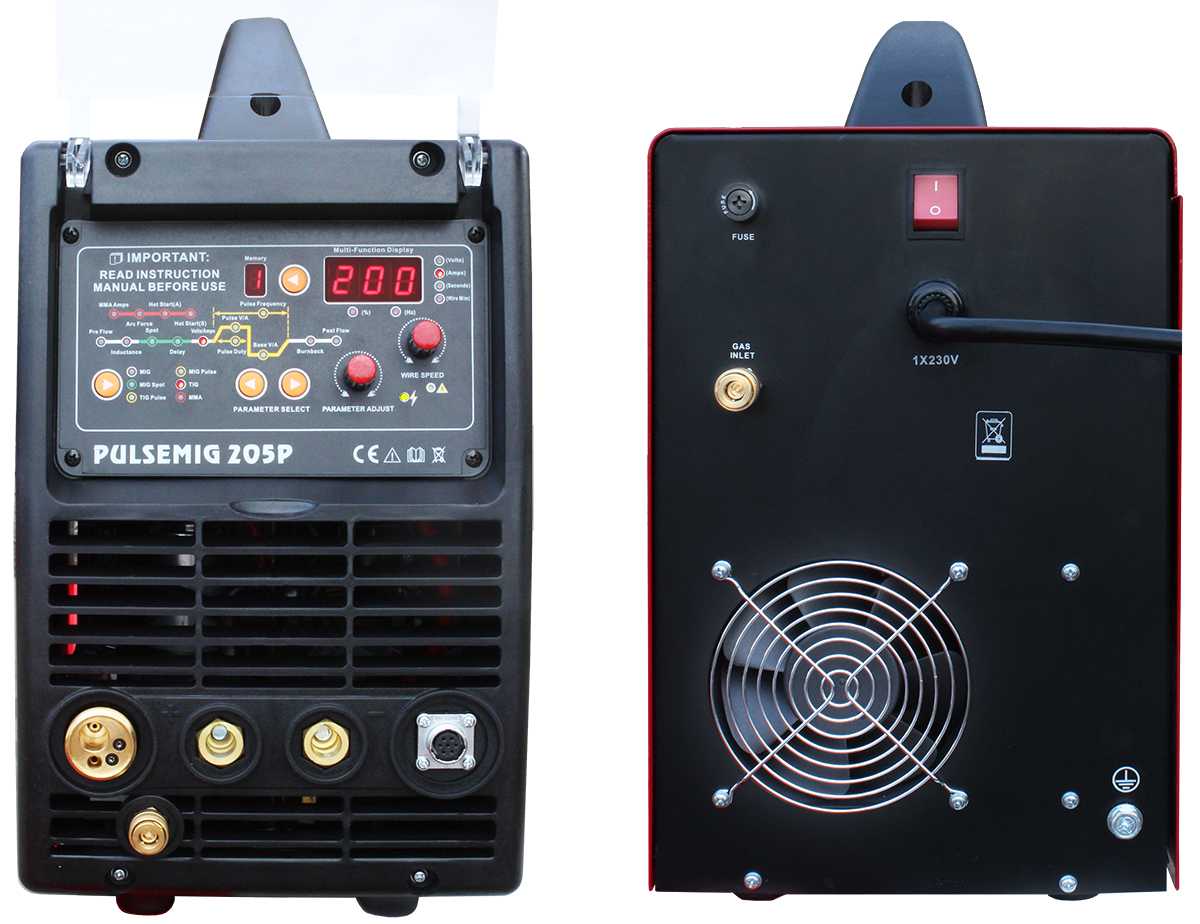
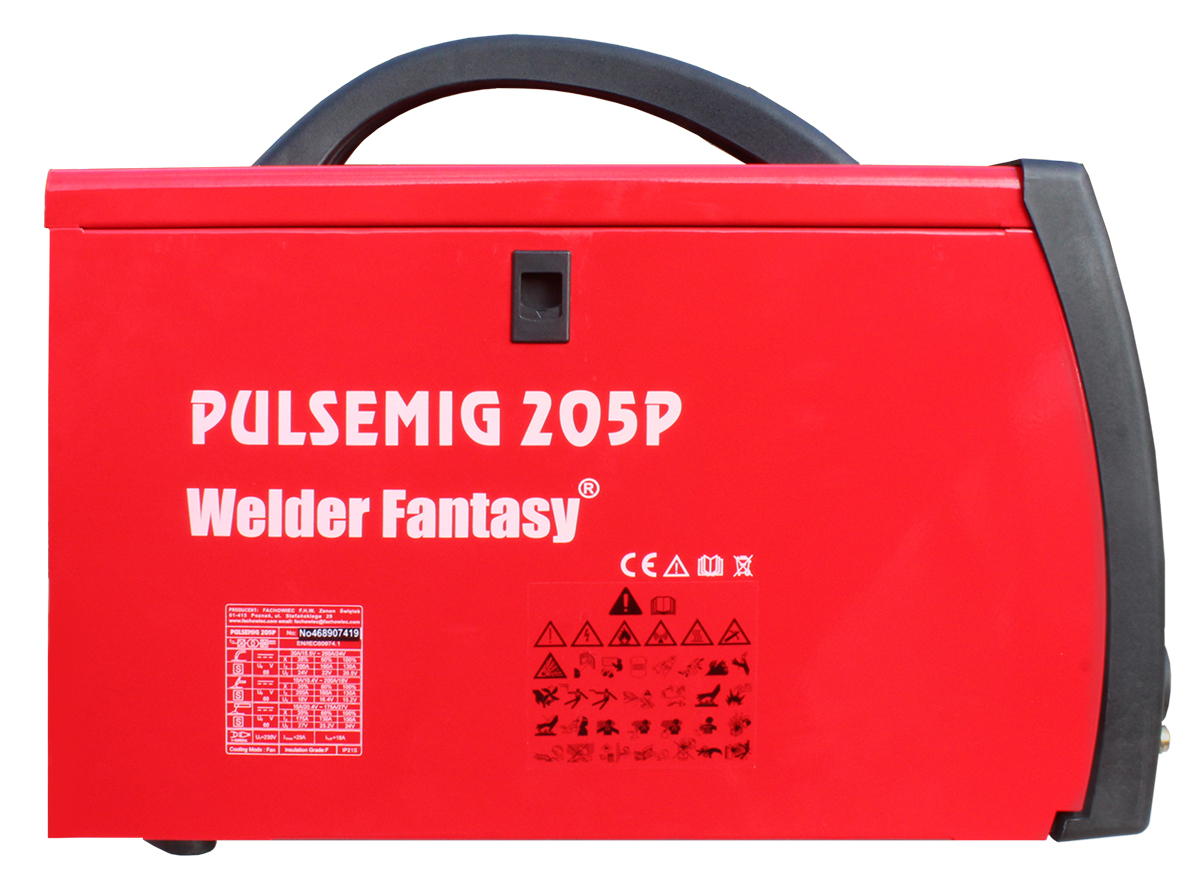
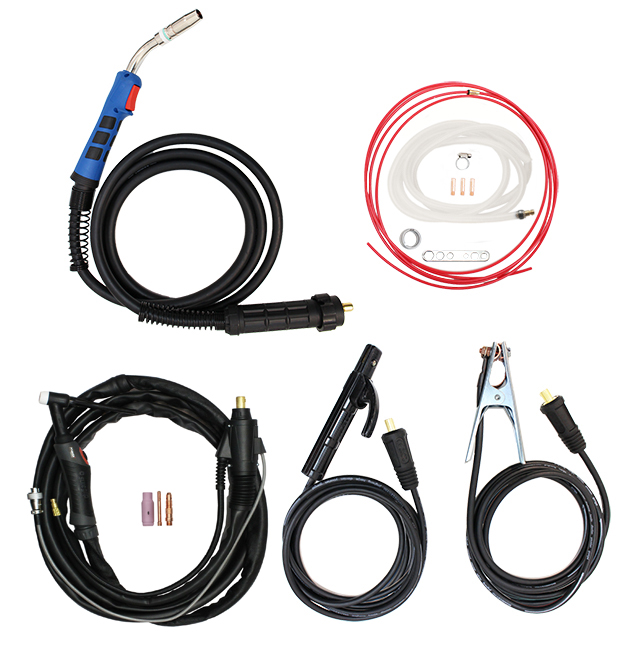
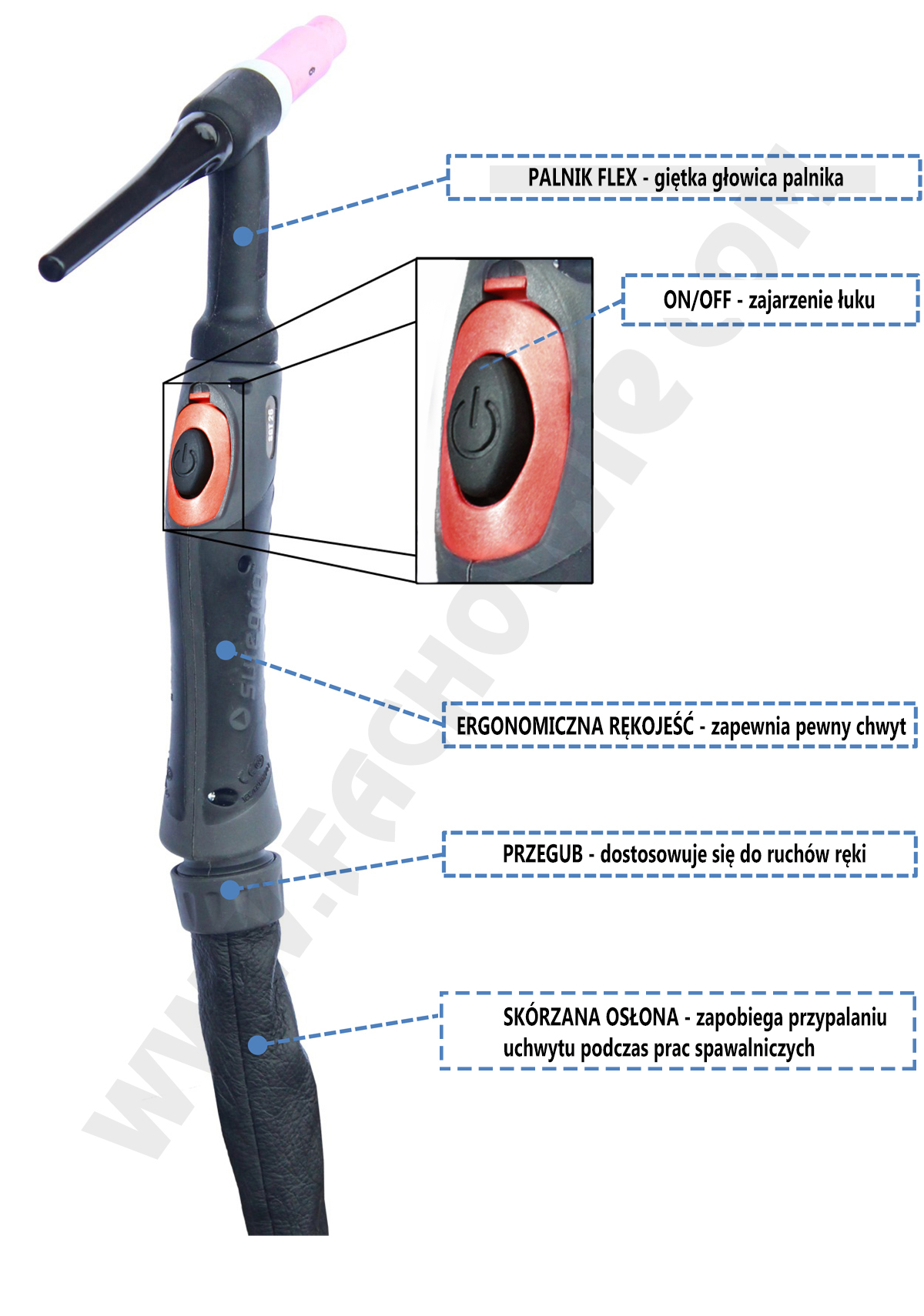
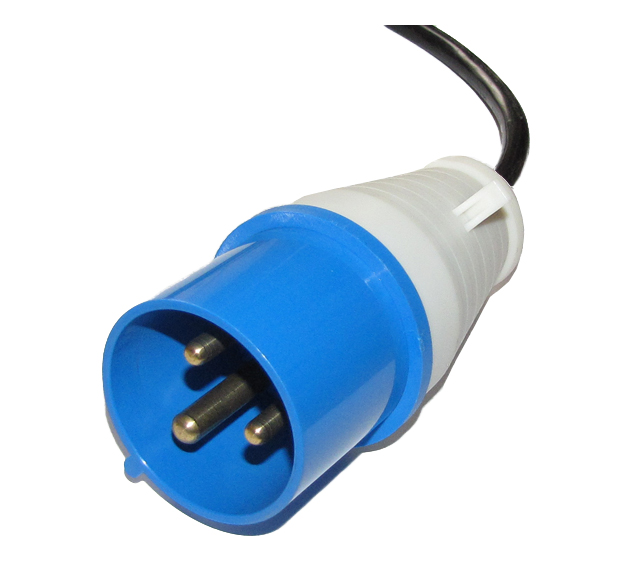
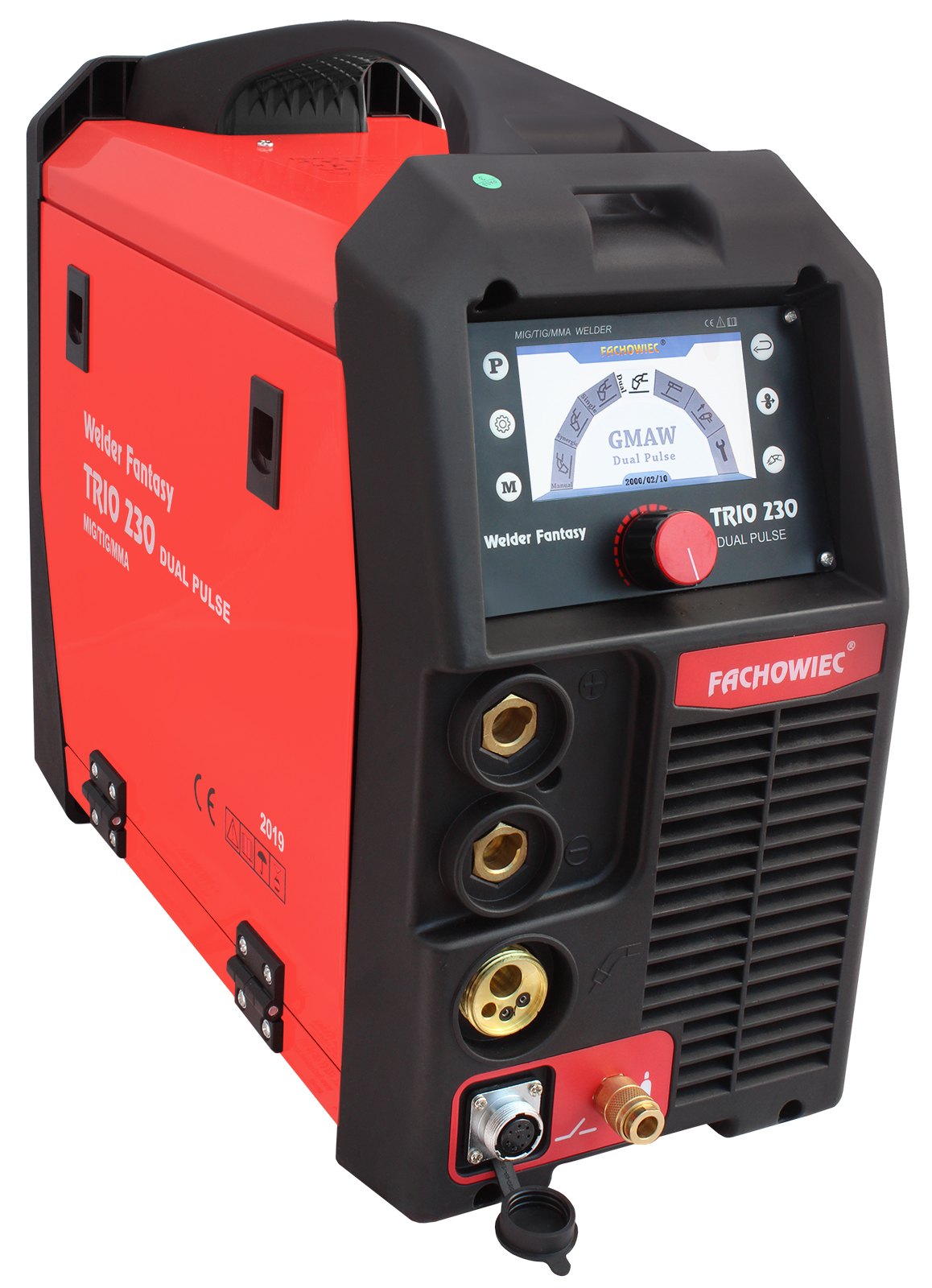
Operation principle of MIG/MAG welder with MMA function
- MIG/MAG method:
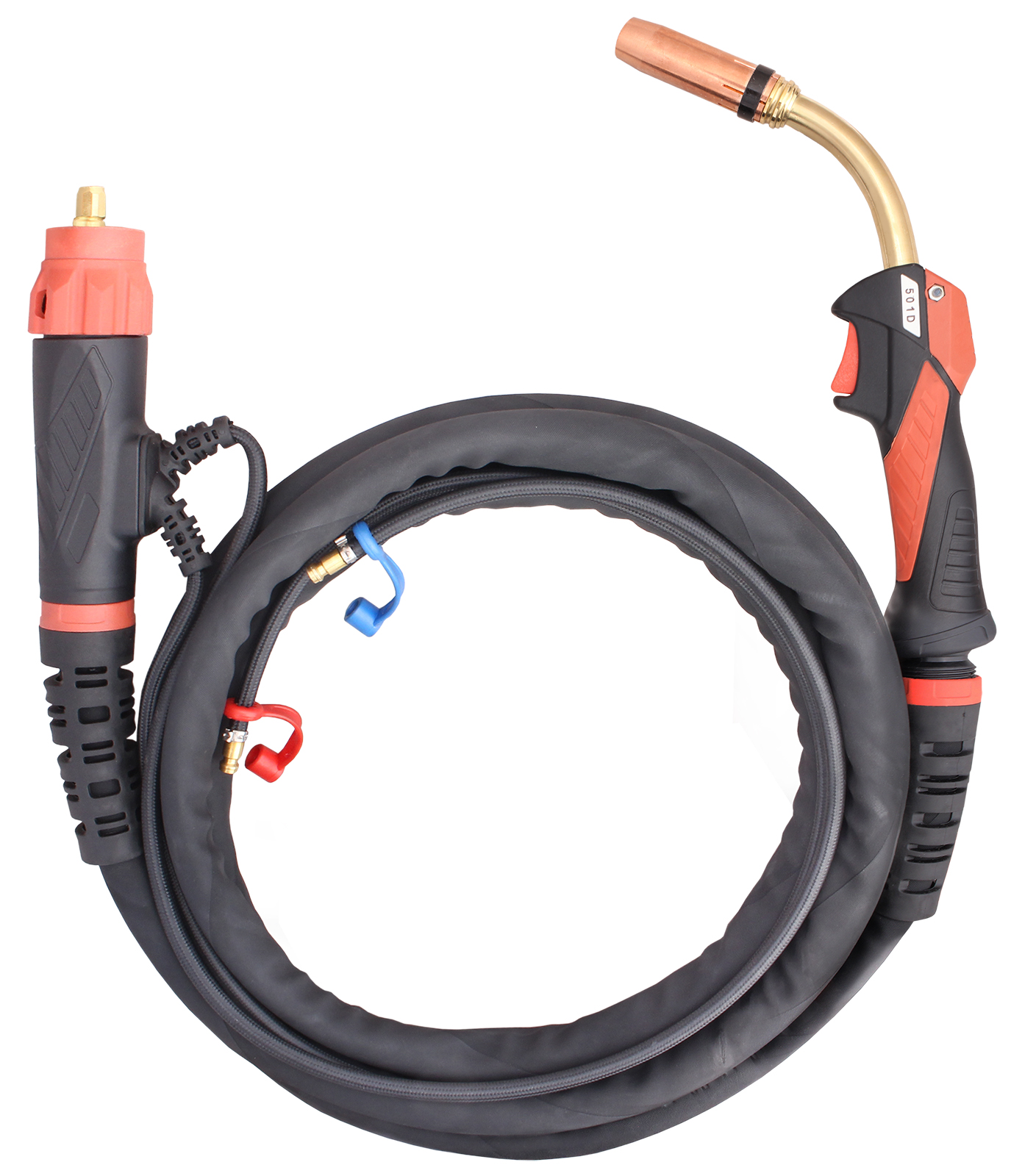
- Welding current: An electric arc glows between the melting electrode (wire) and the welded metal.
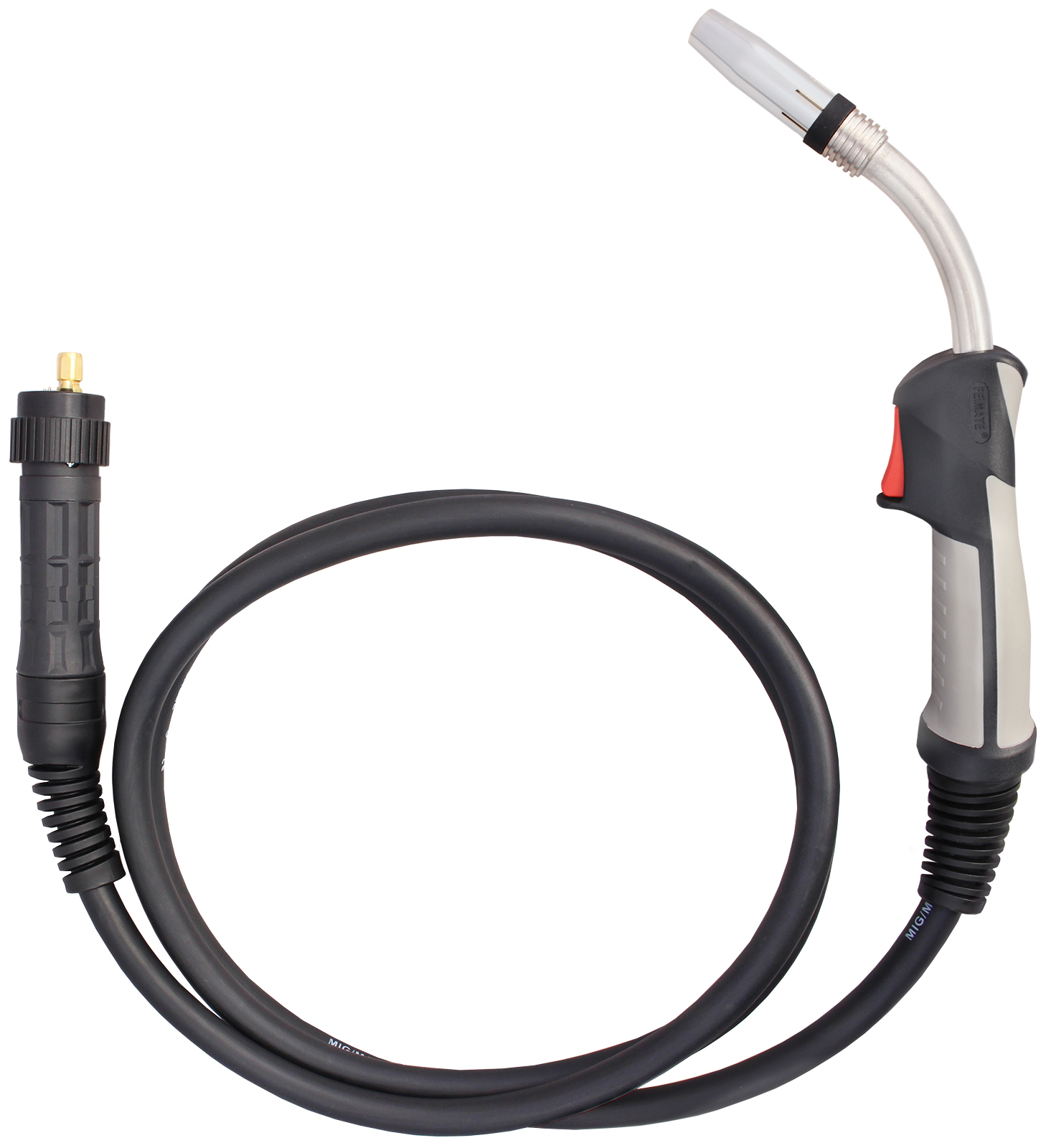
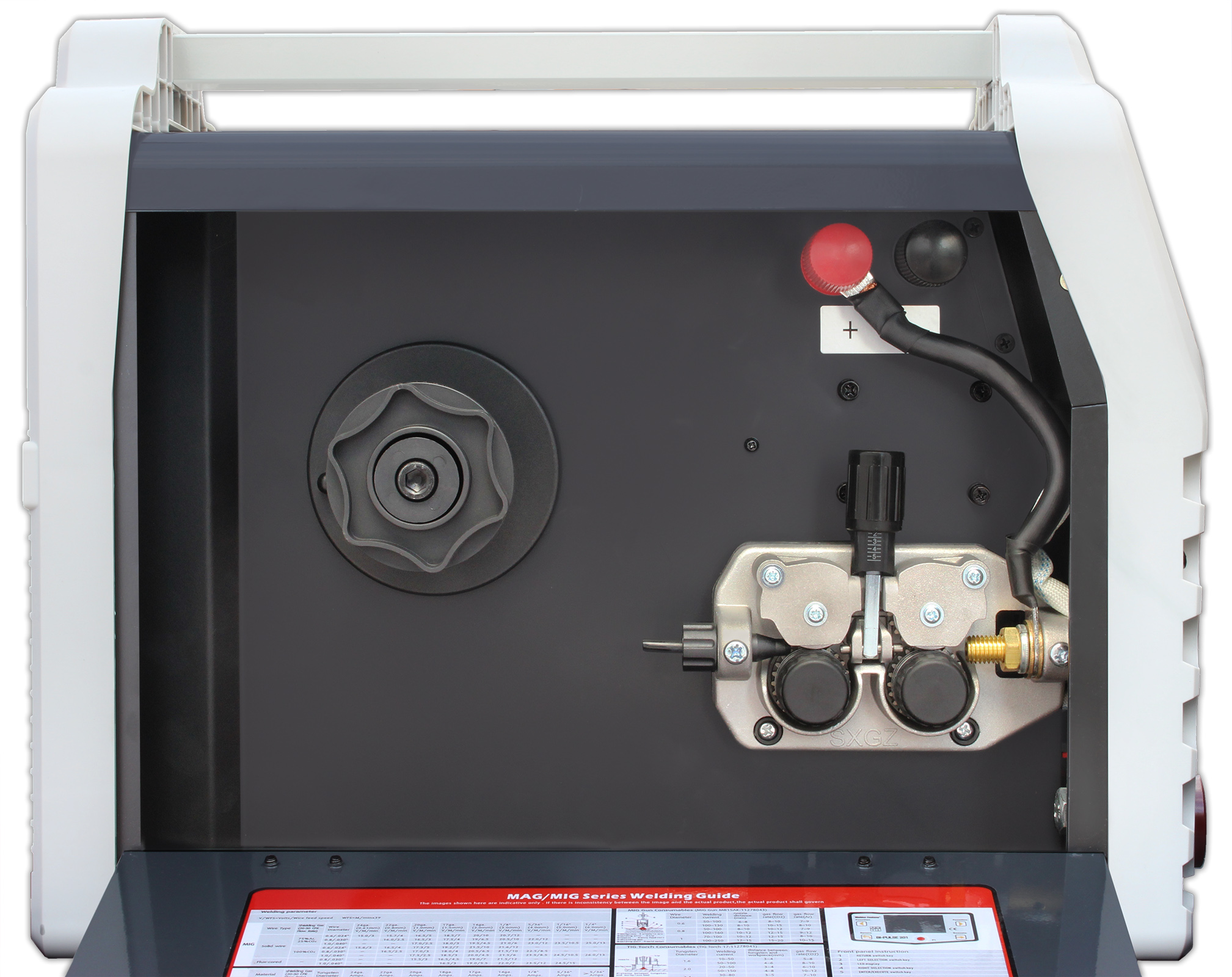
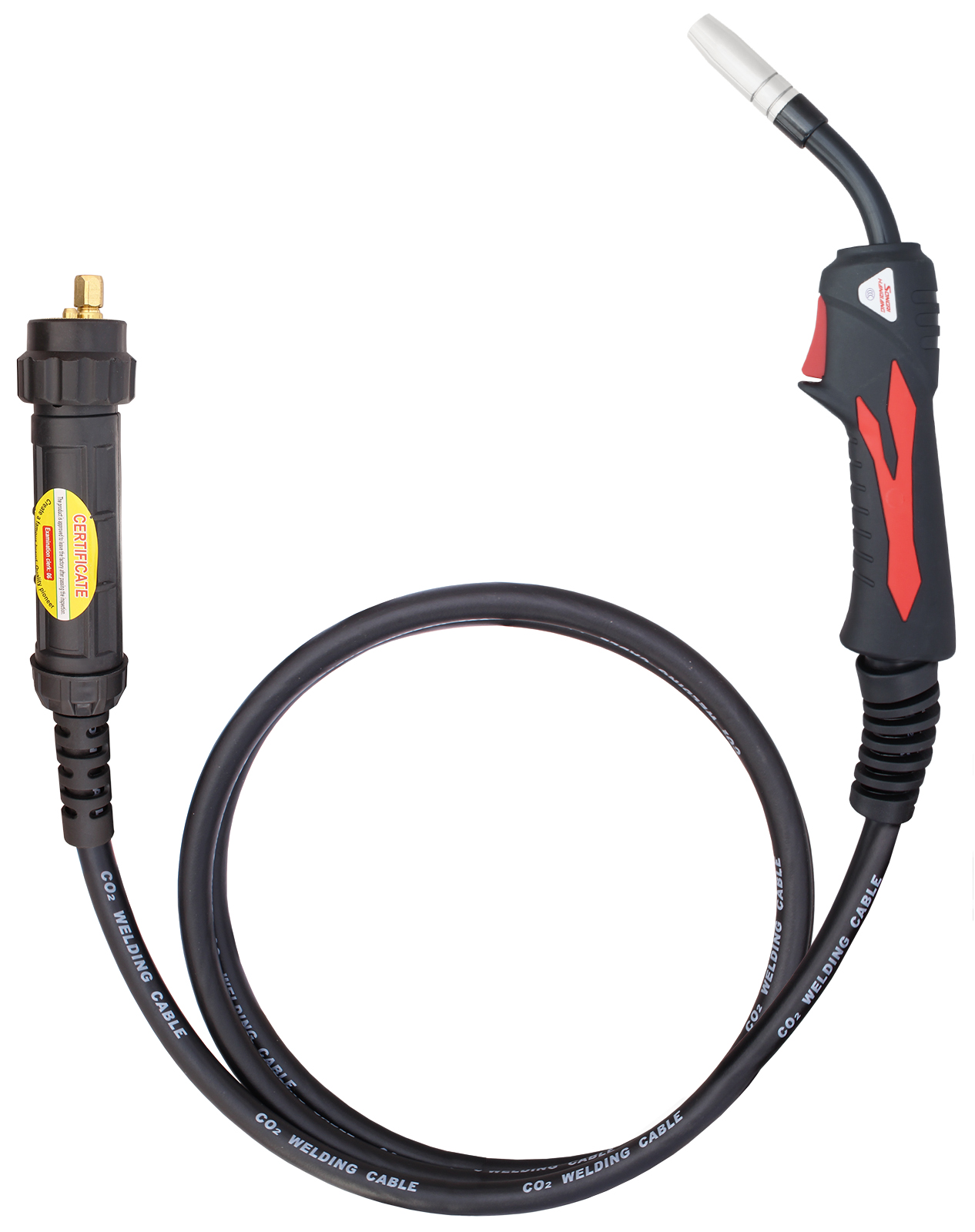
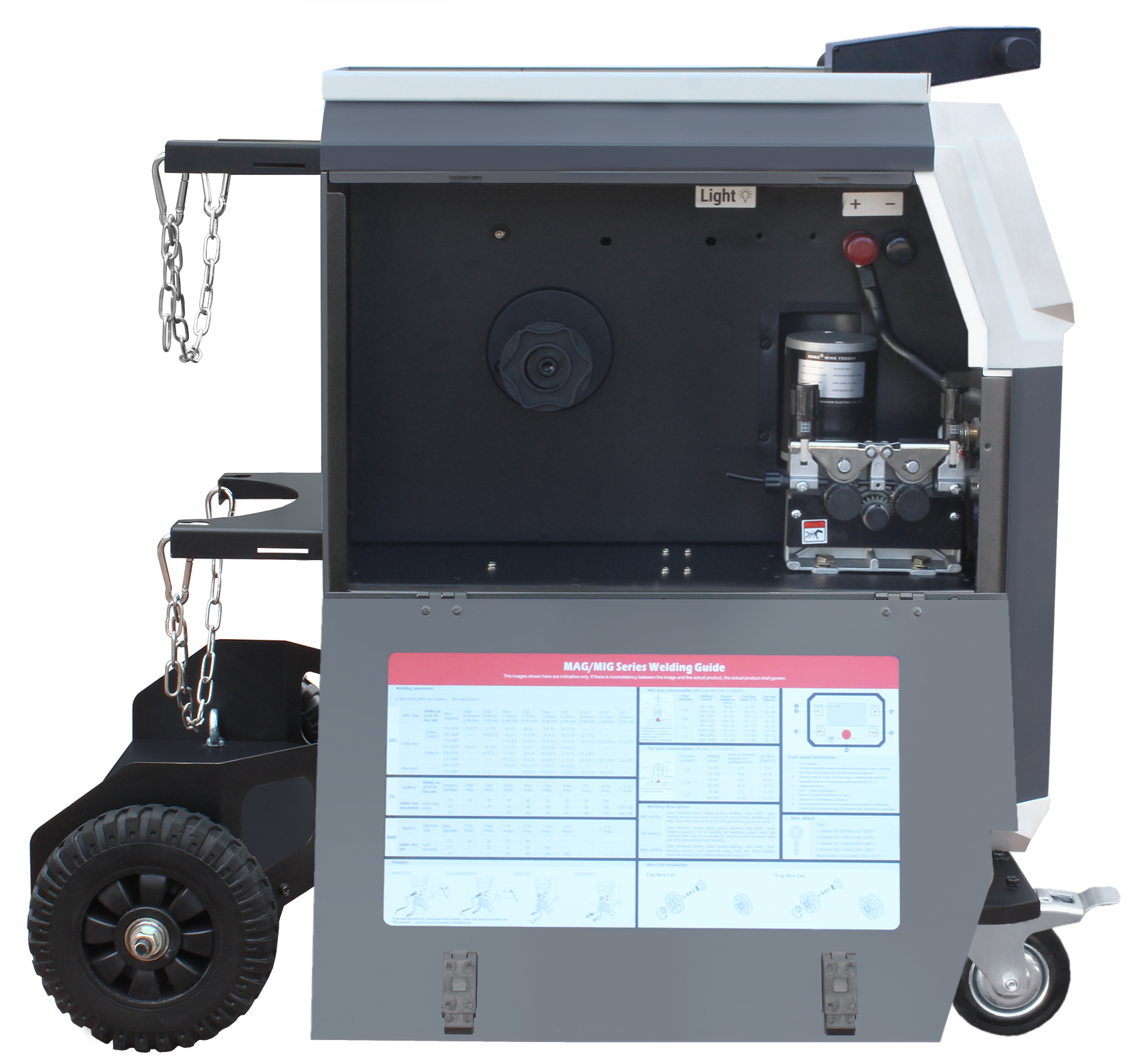
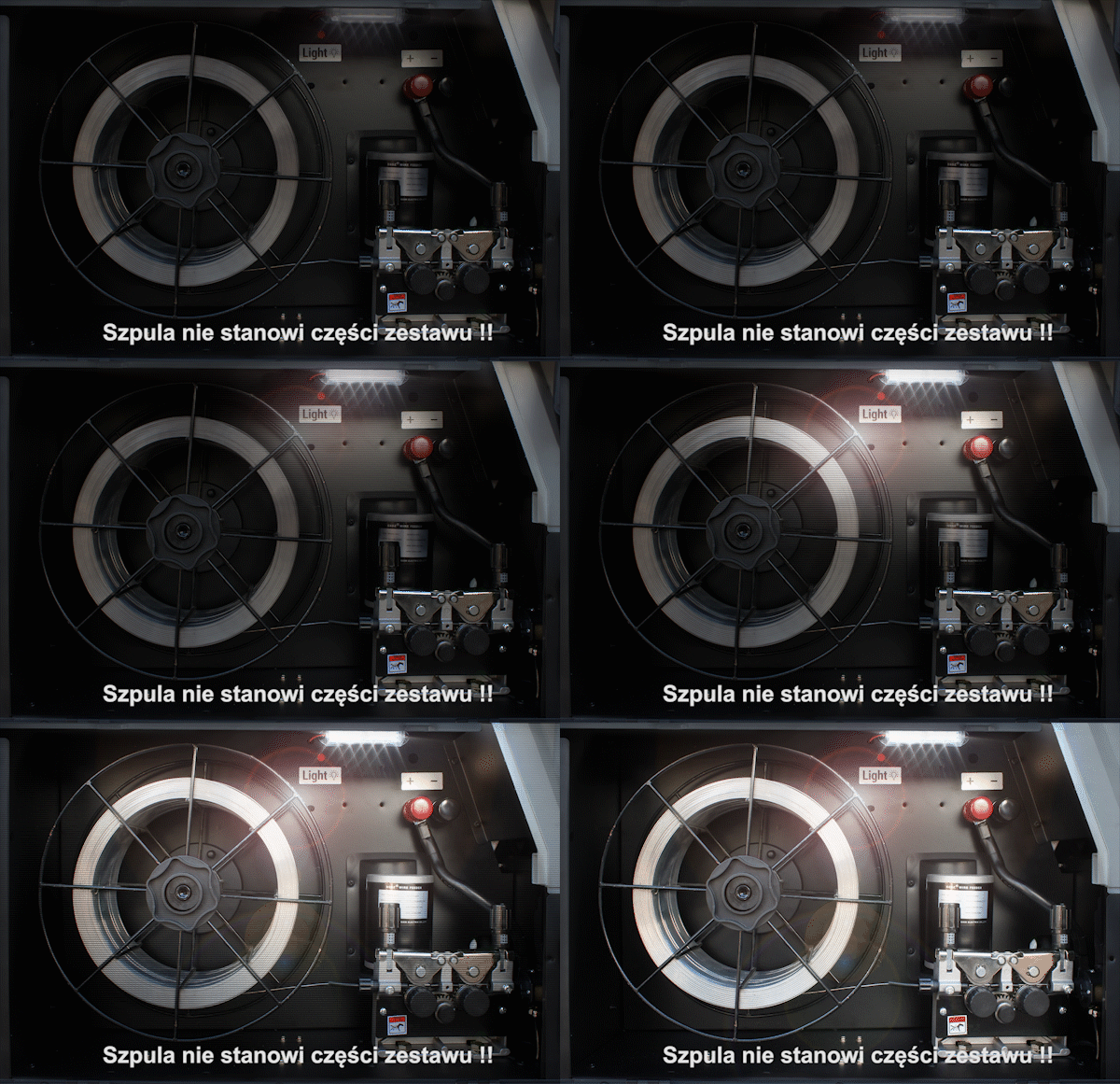
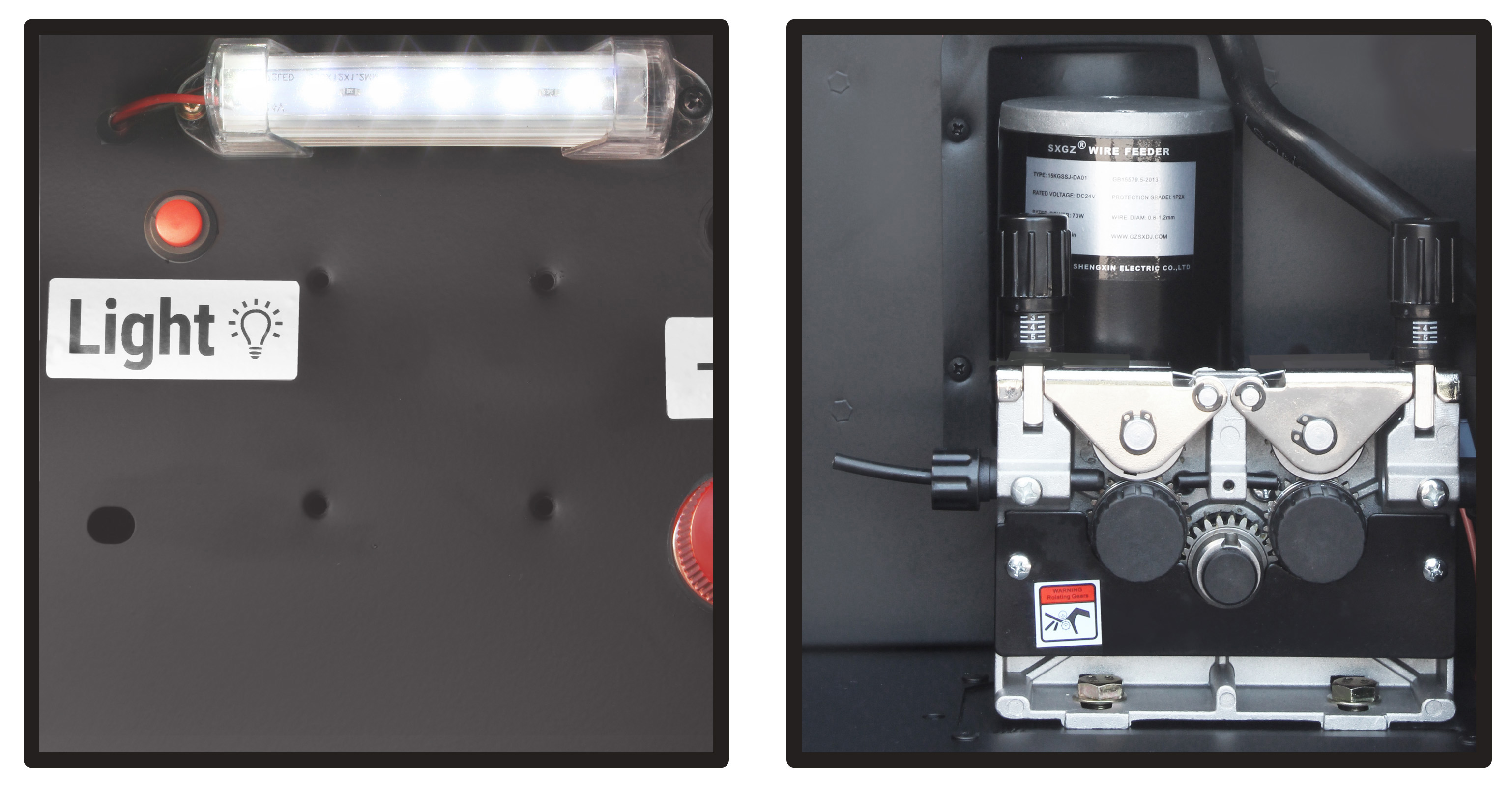
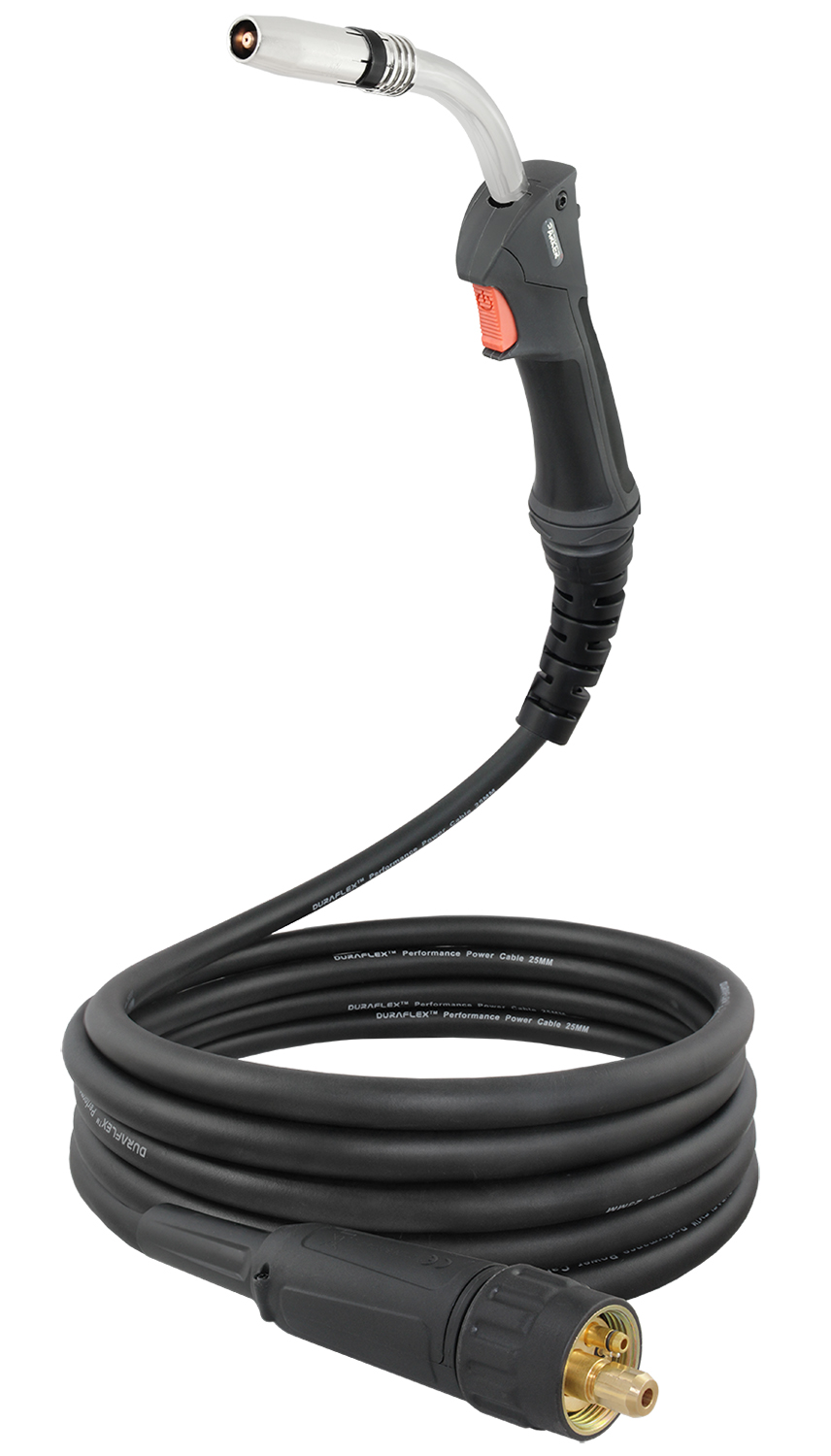
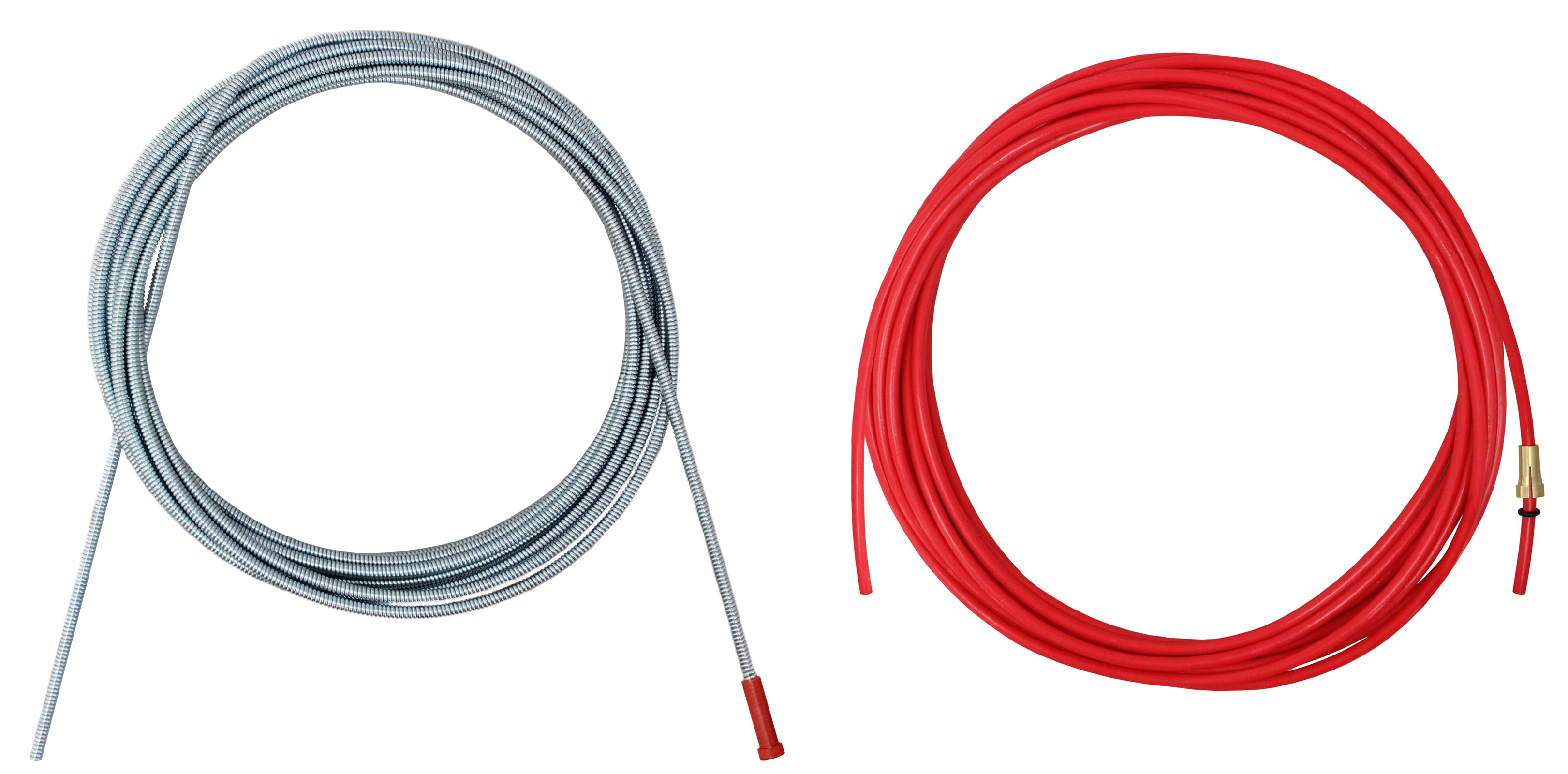
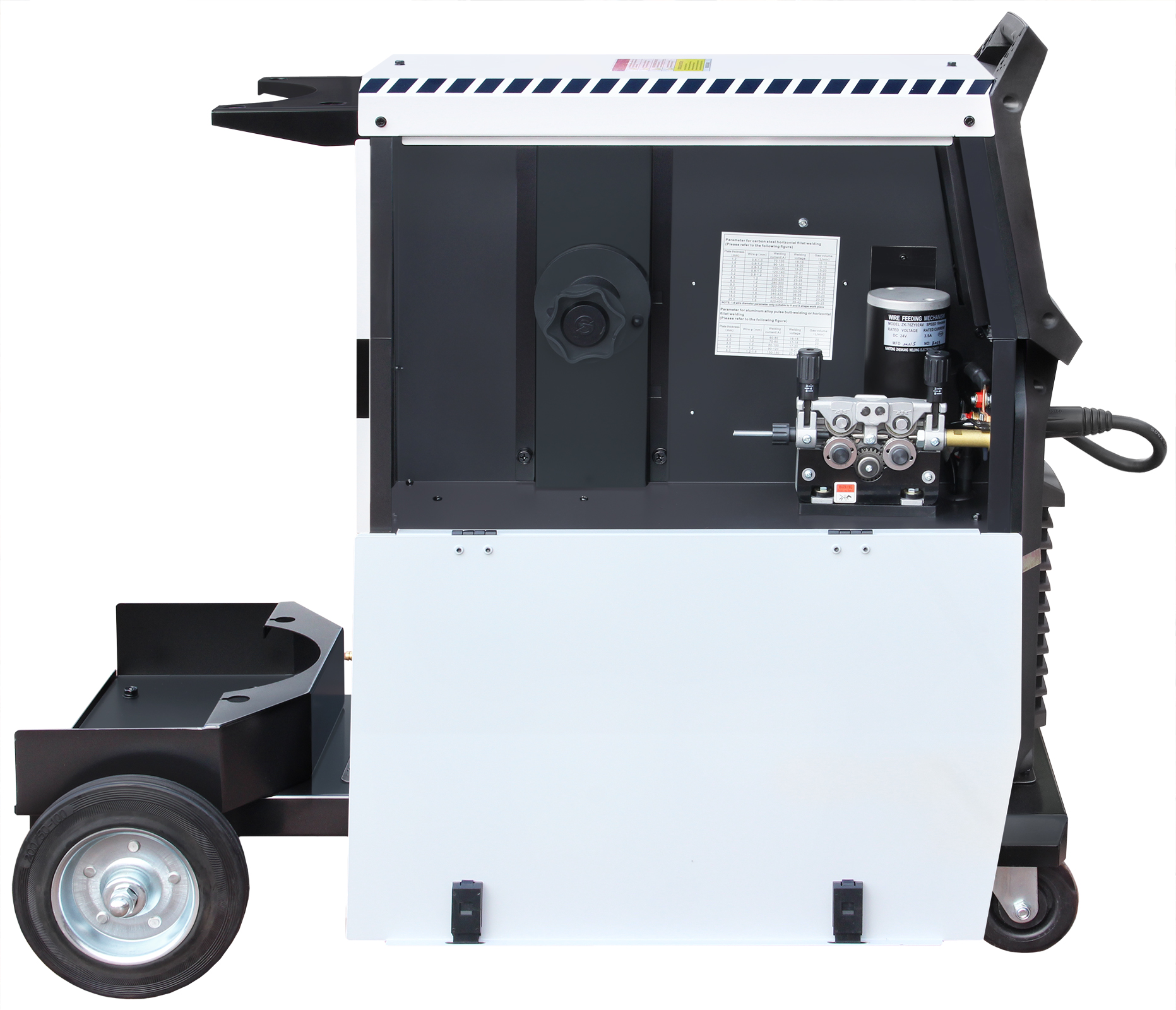
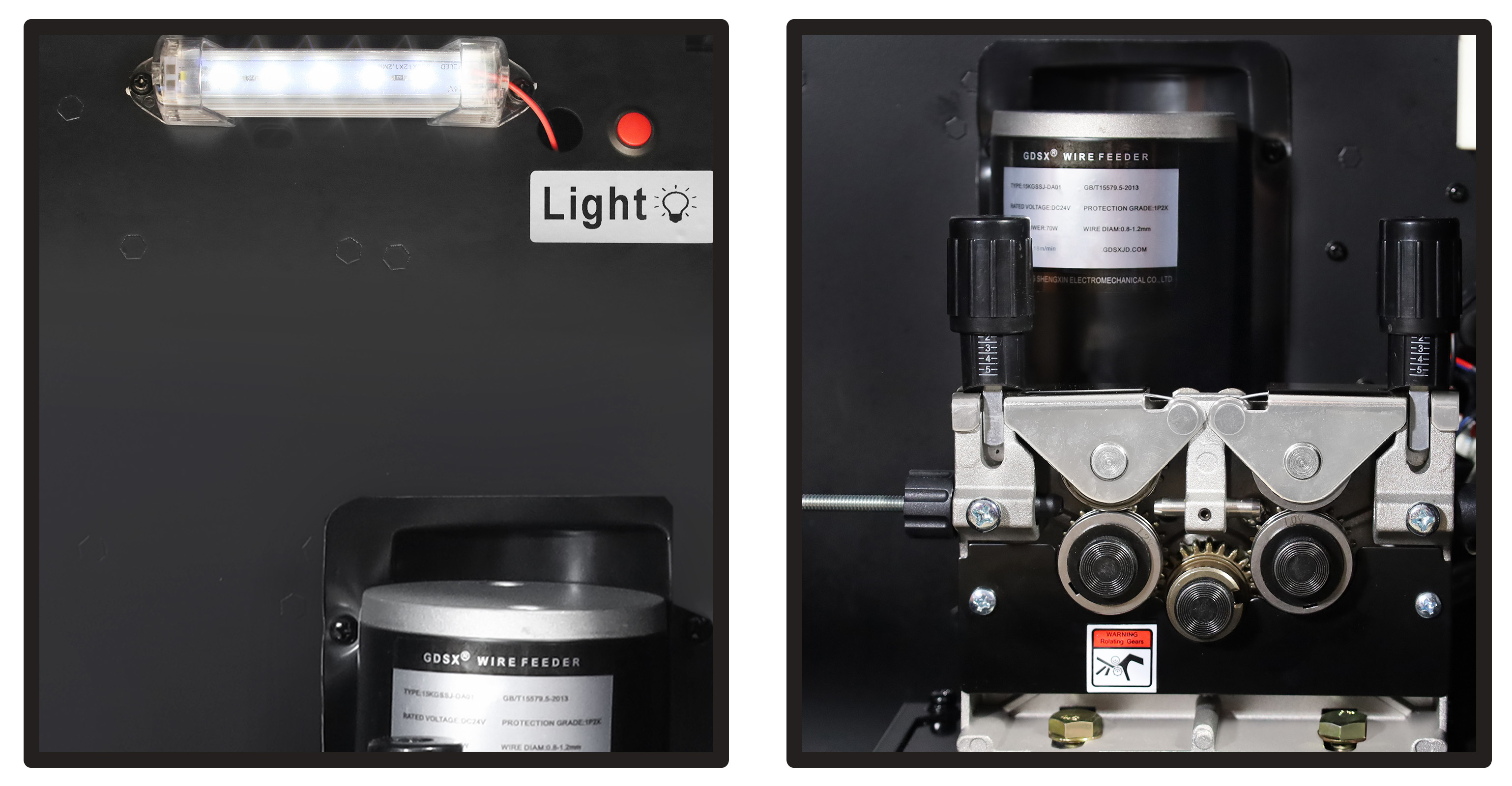
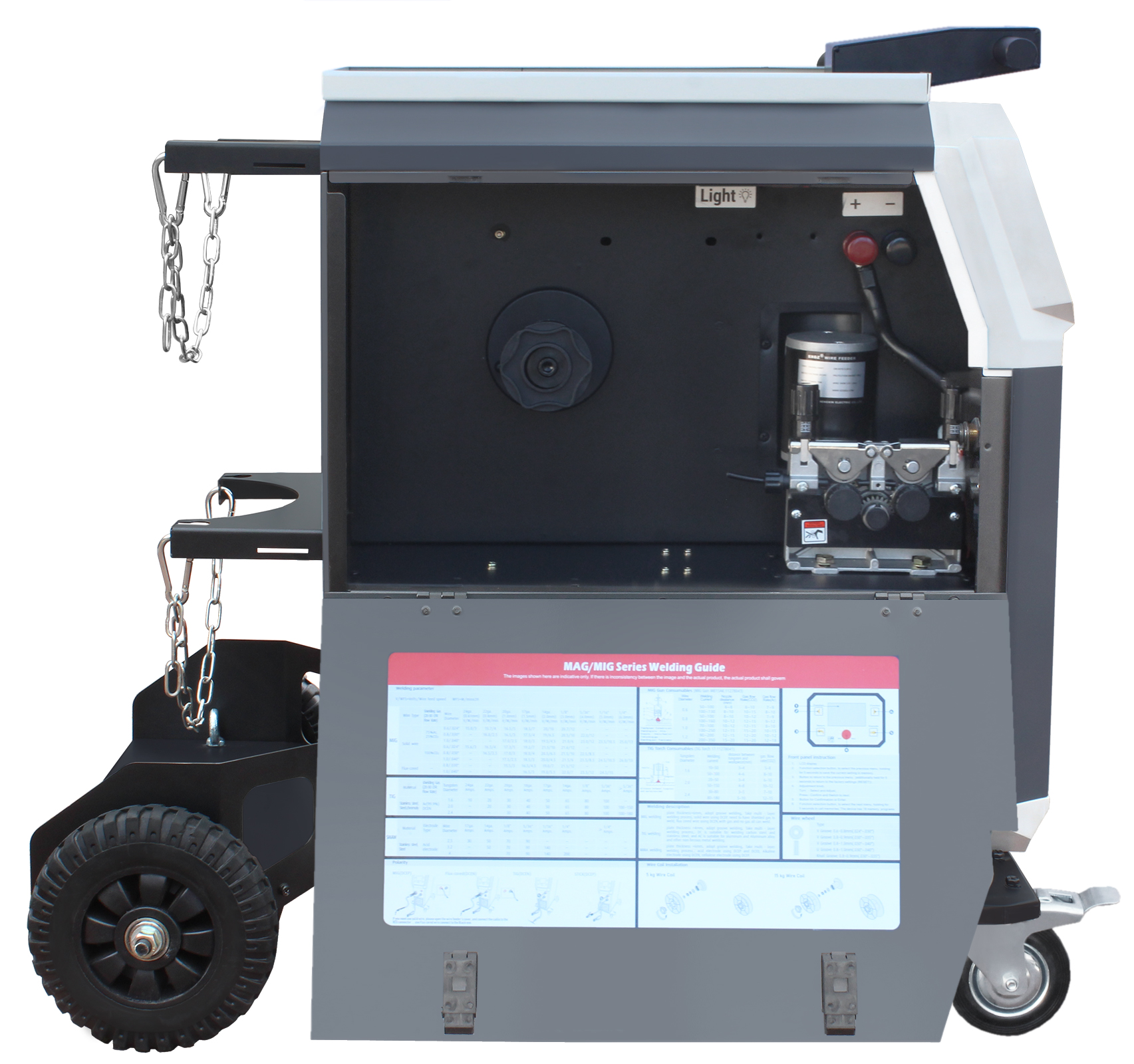
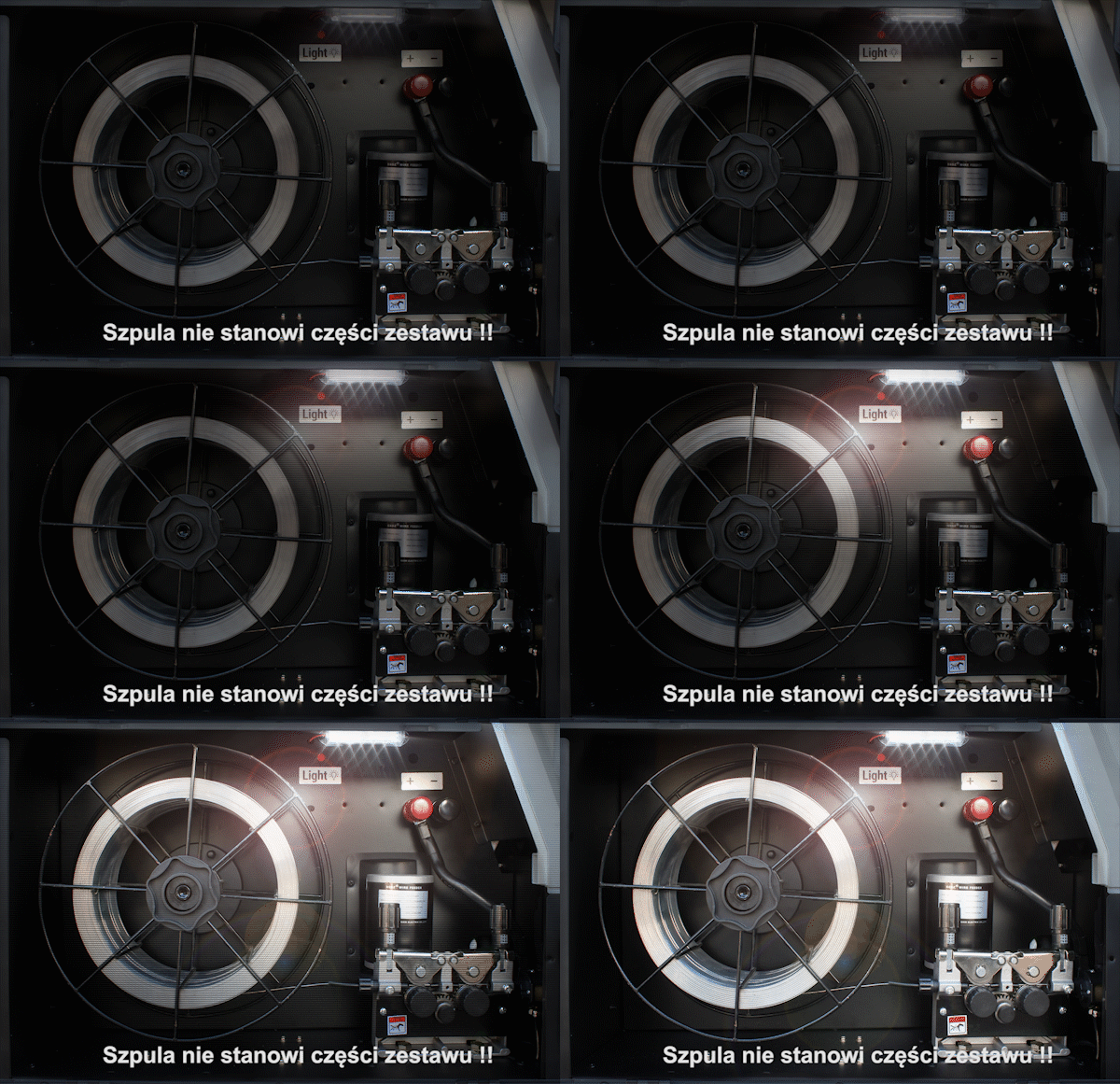
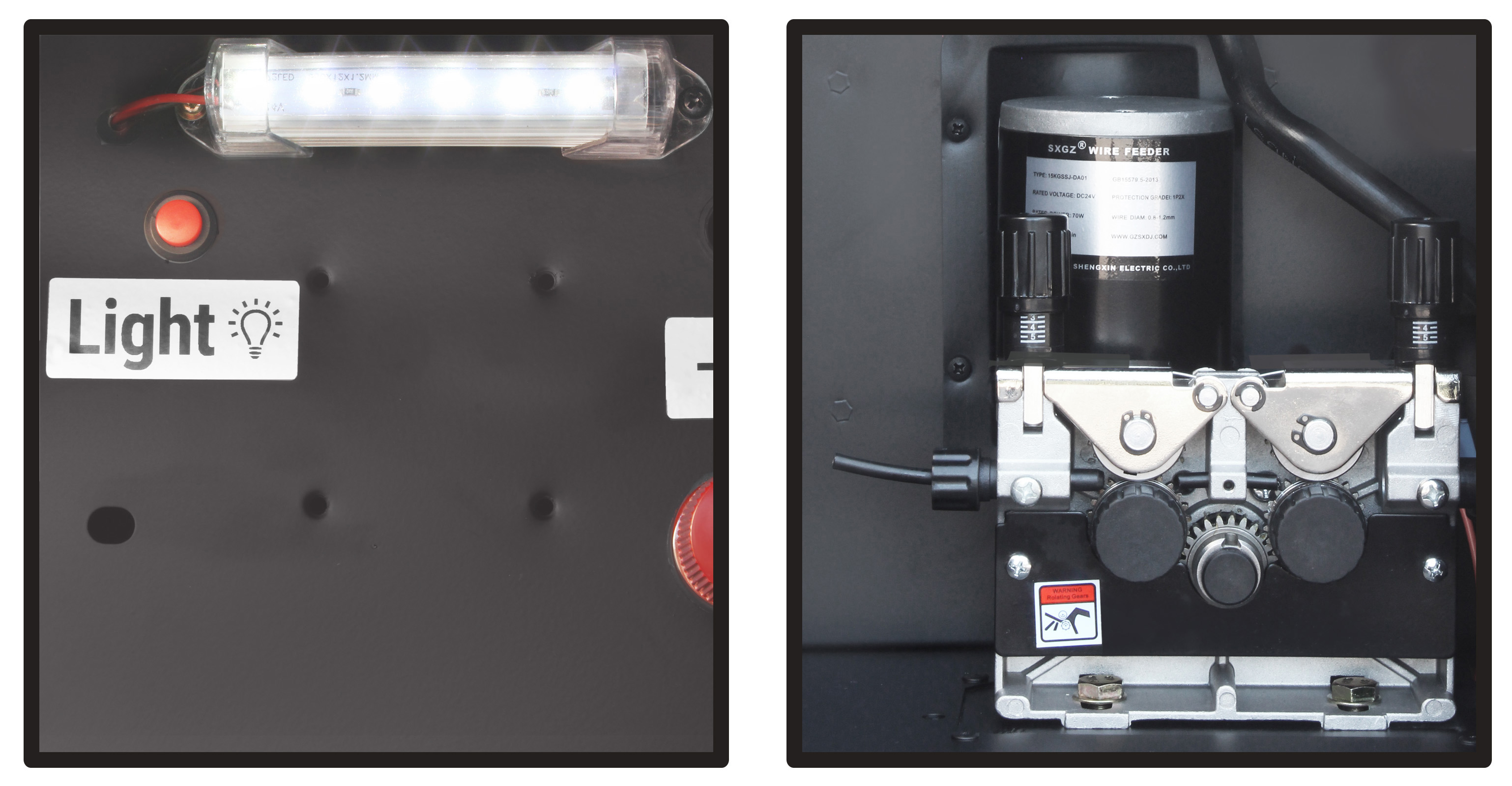
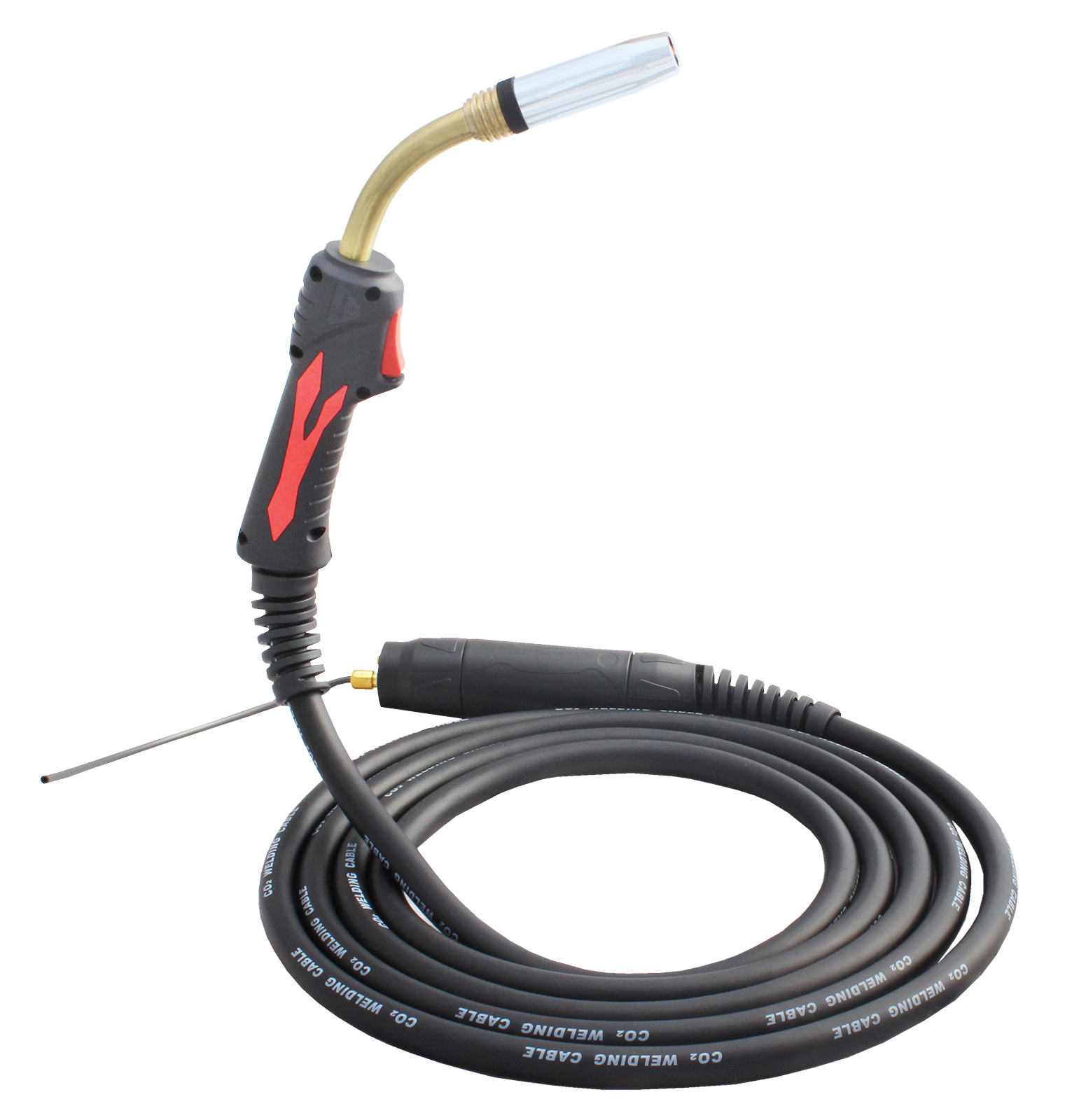
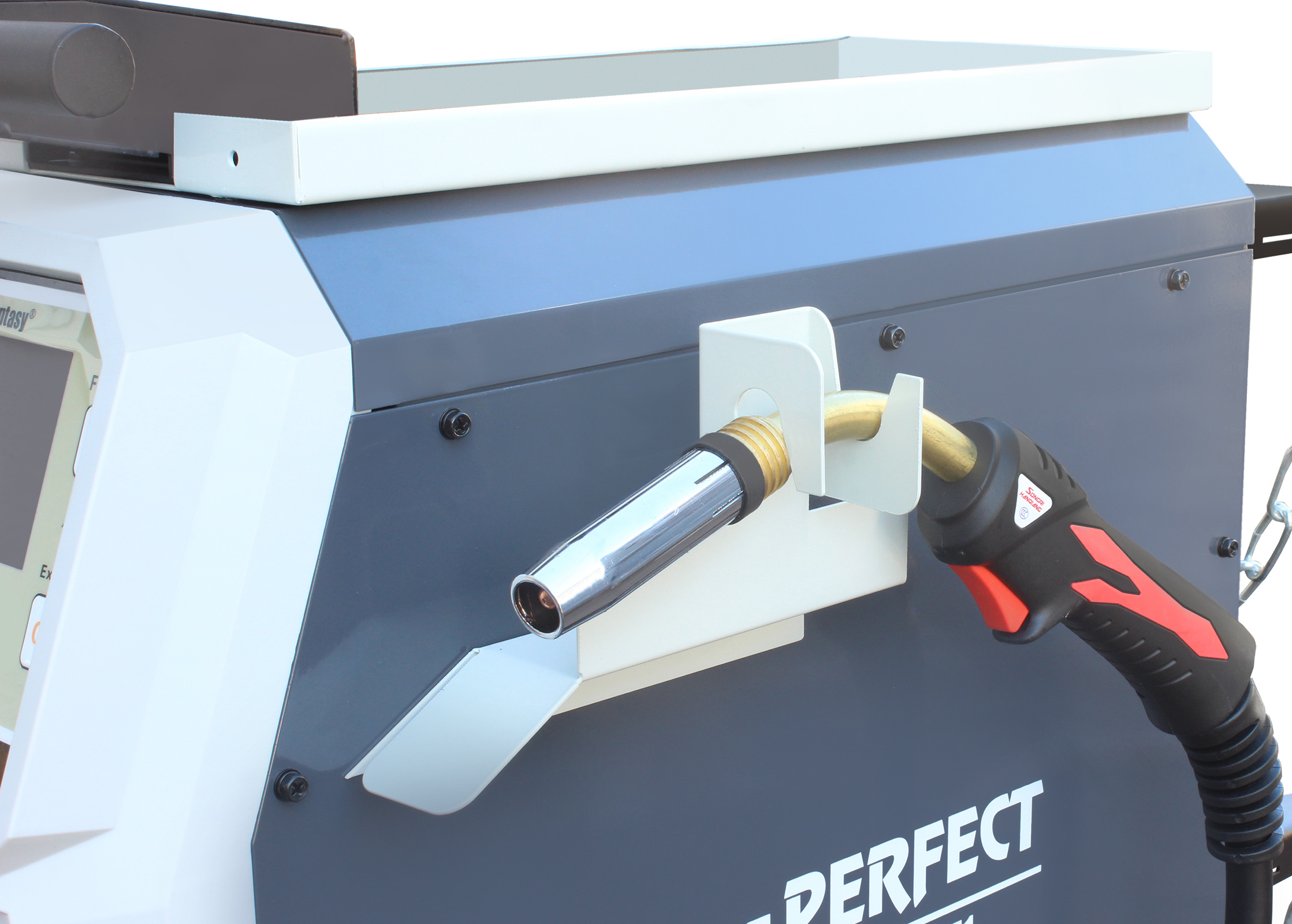
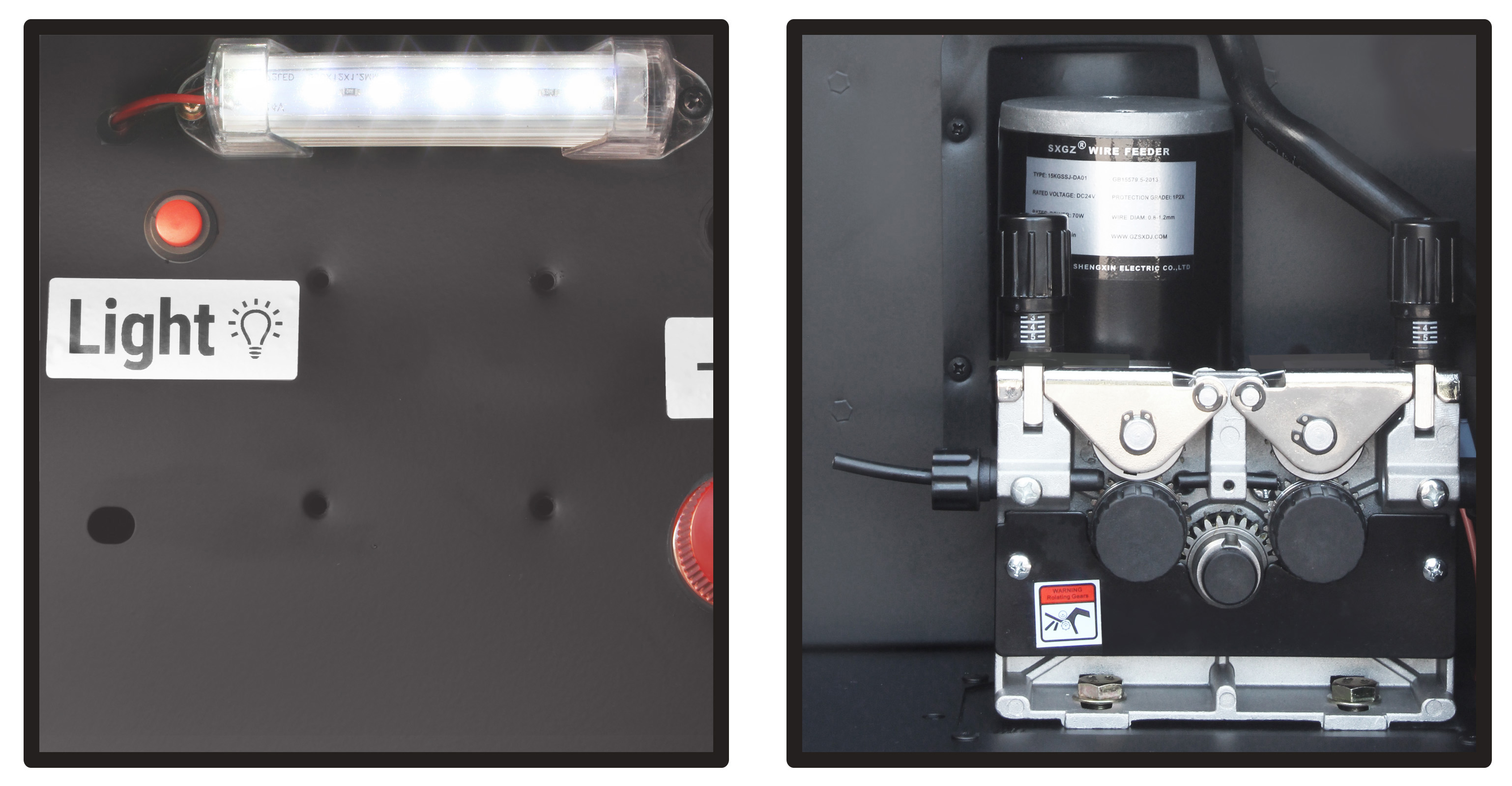
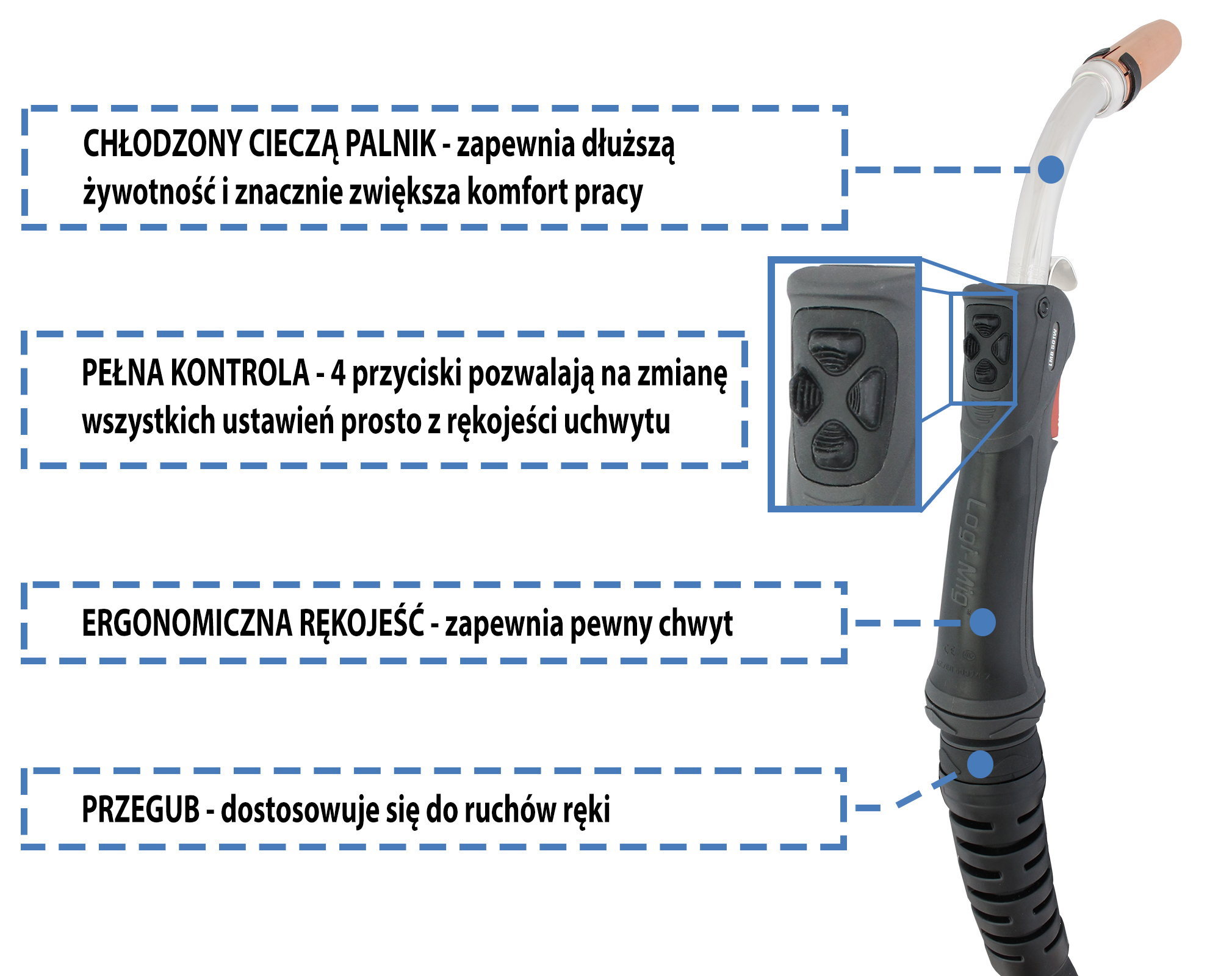
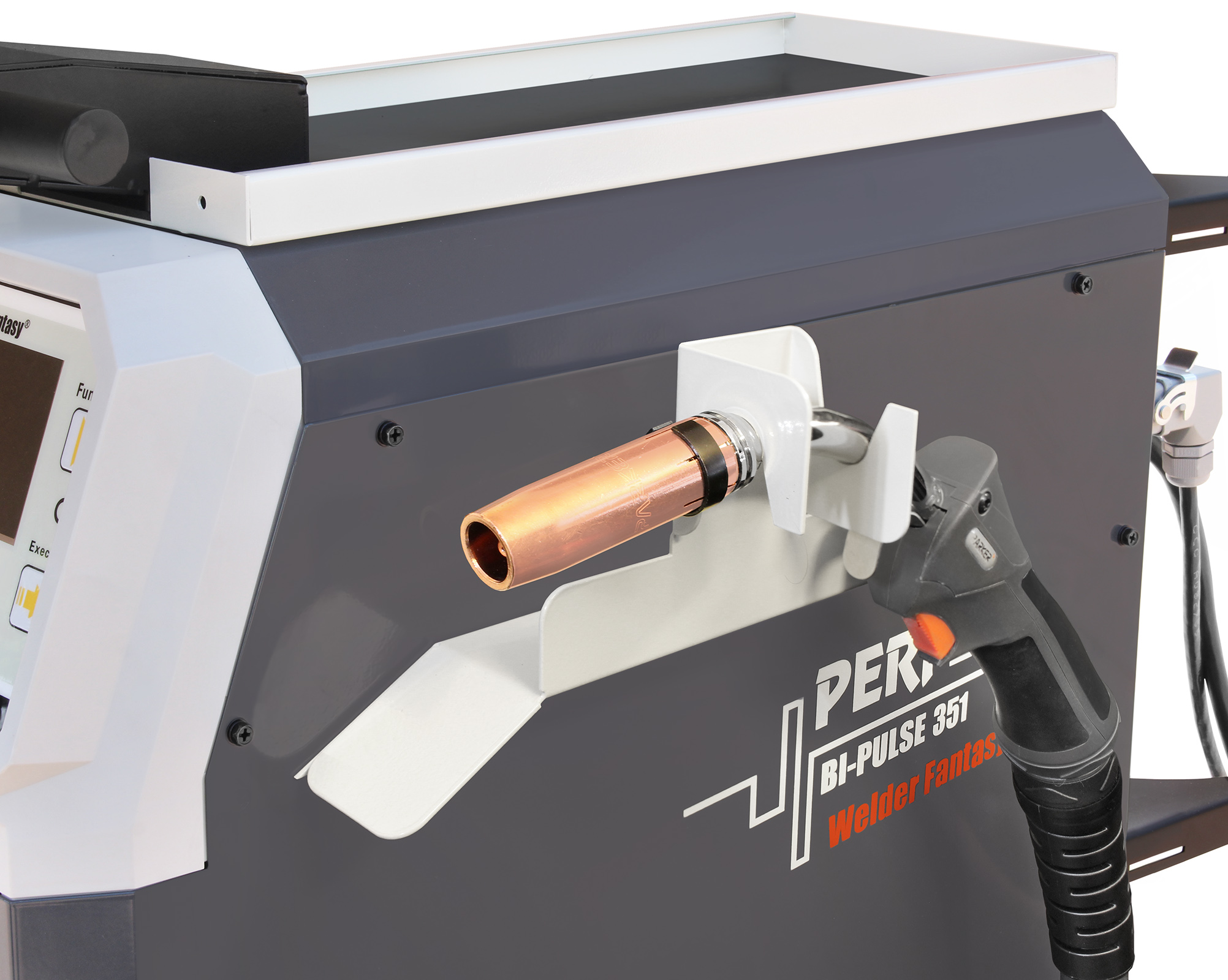
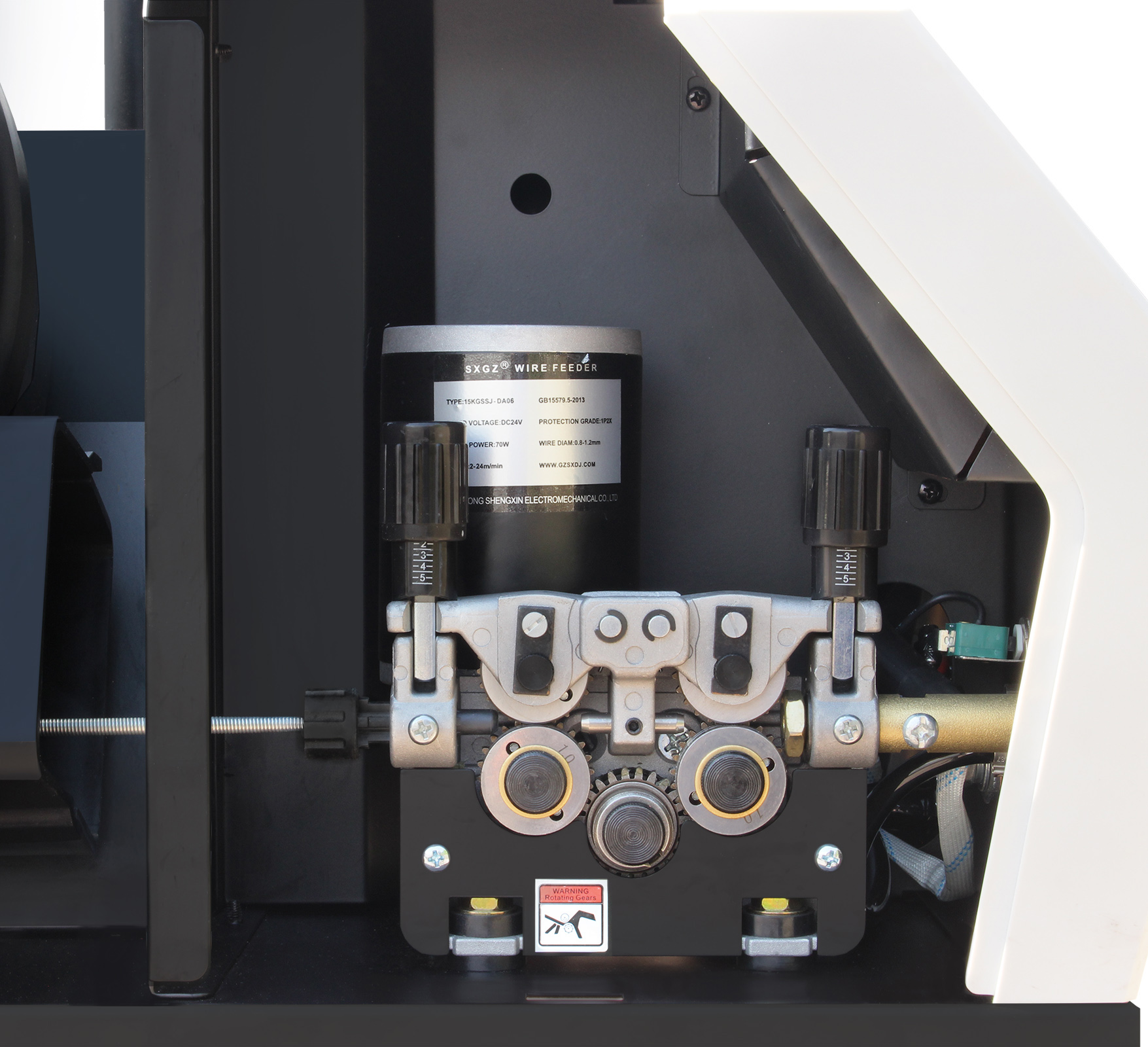
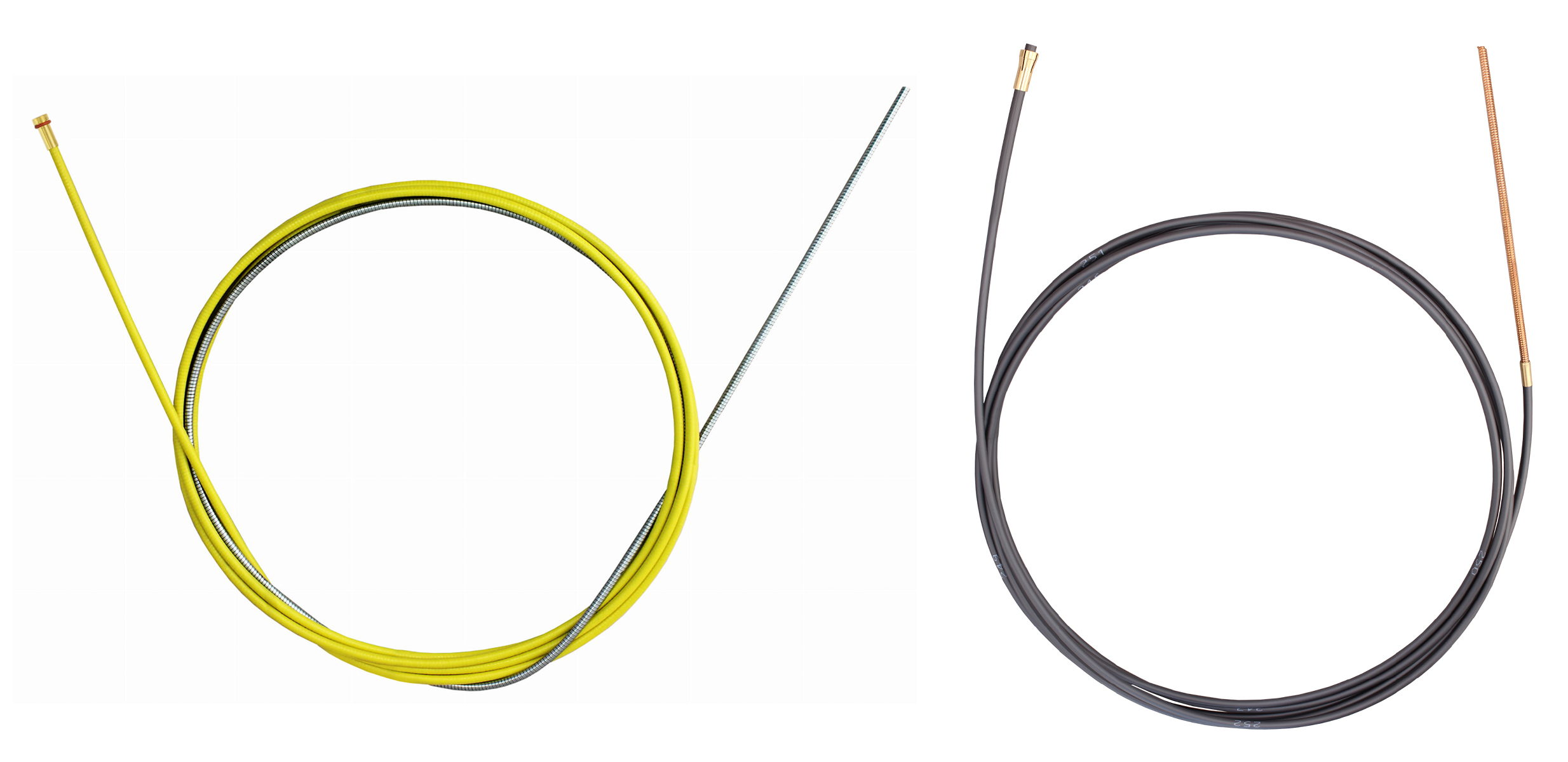
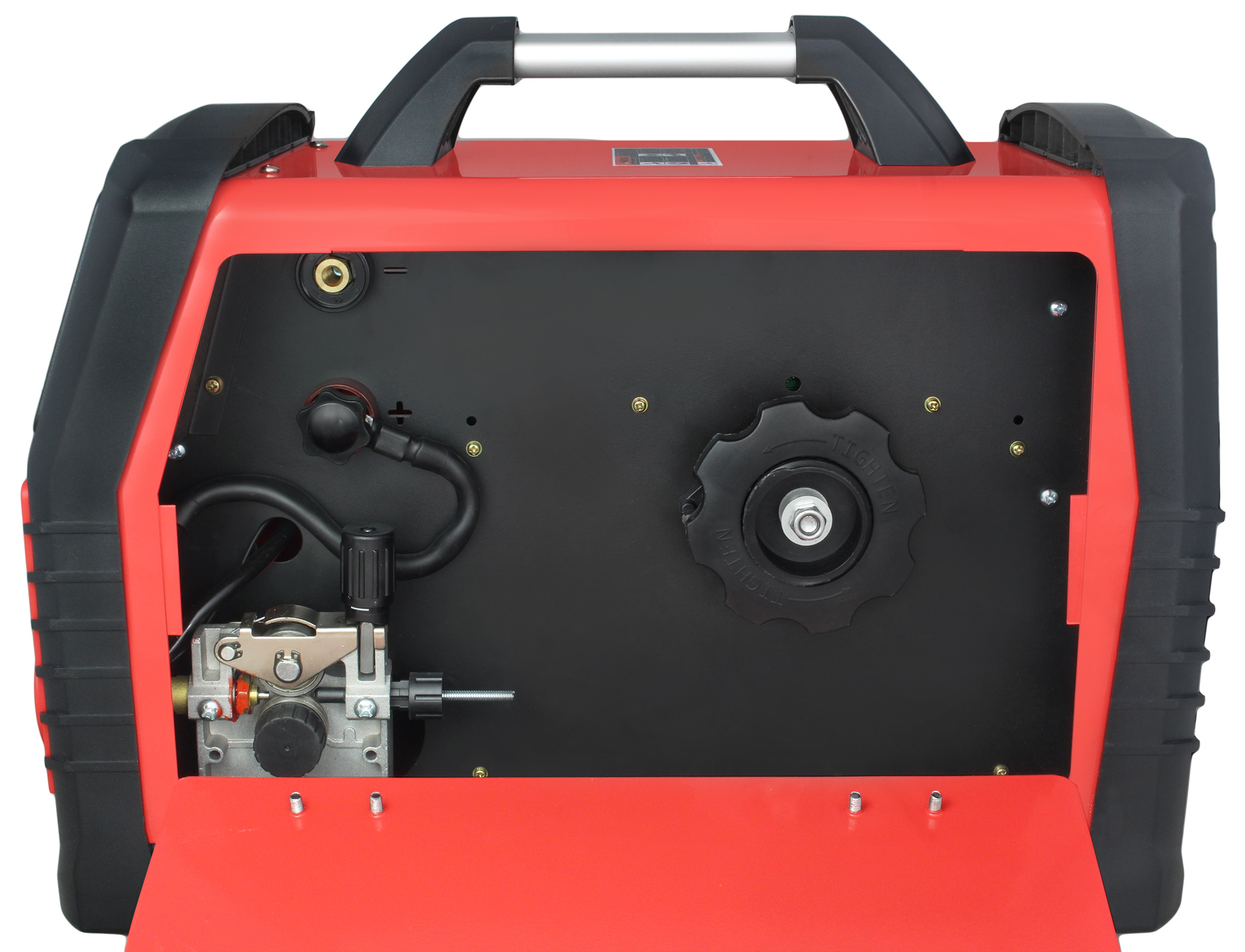
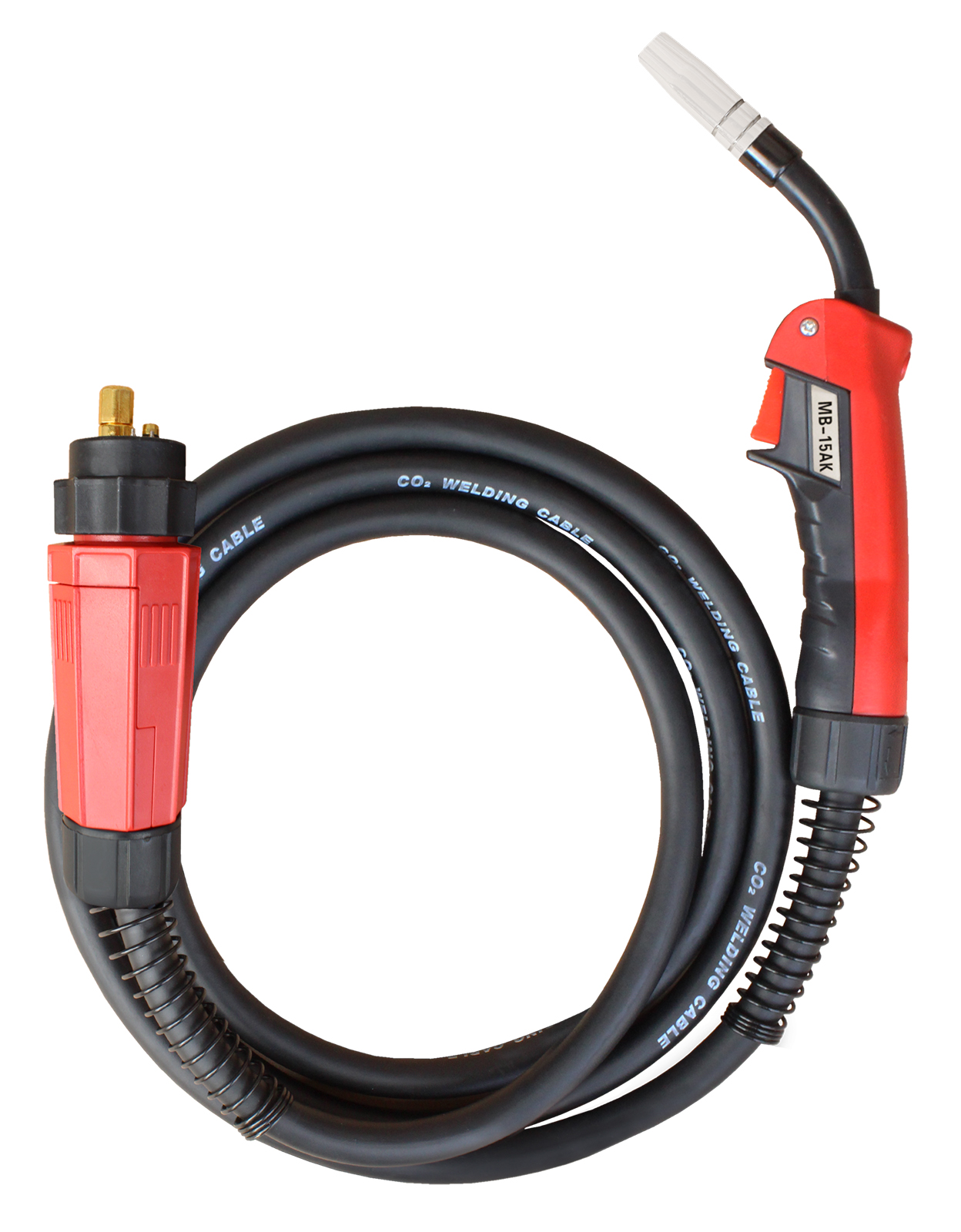
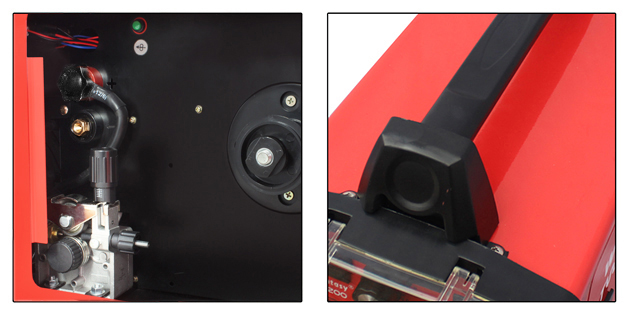
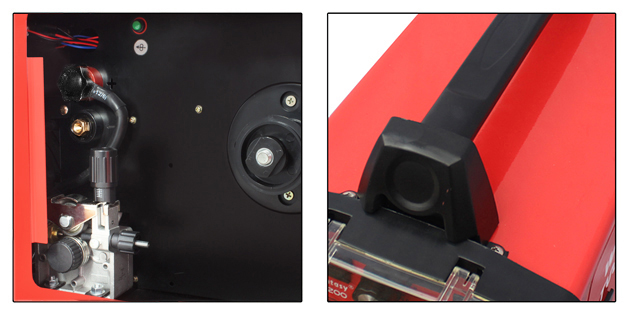
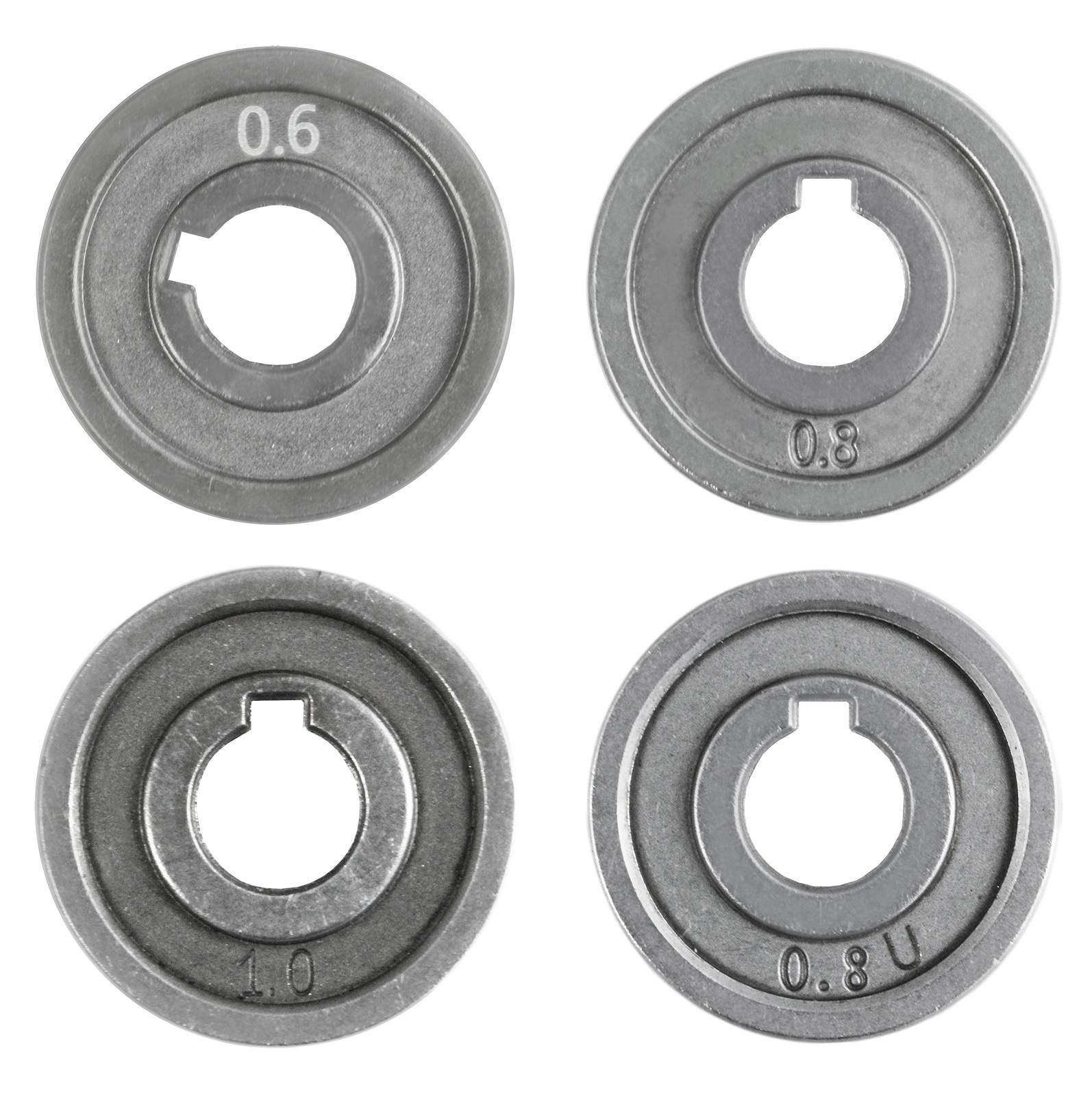
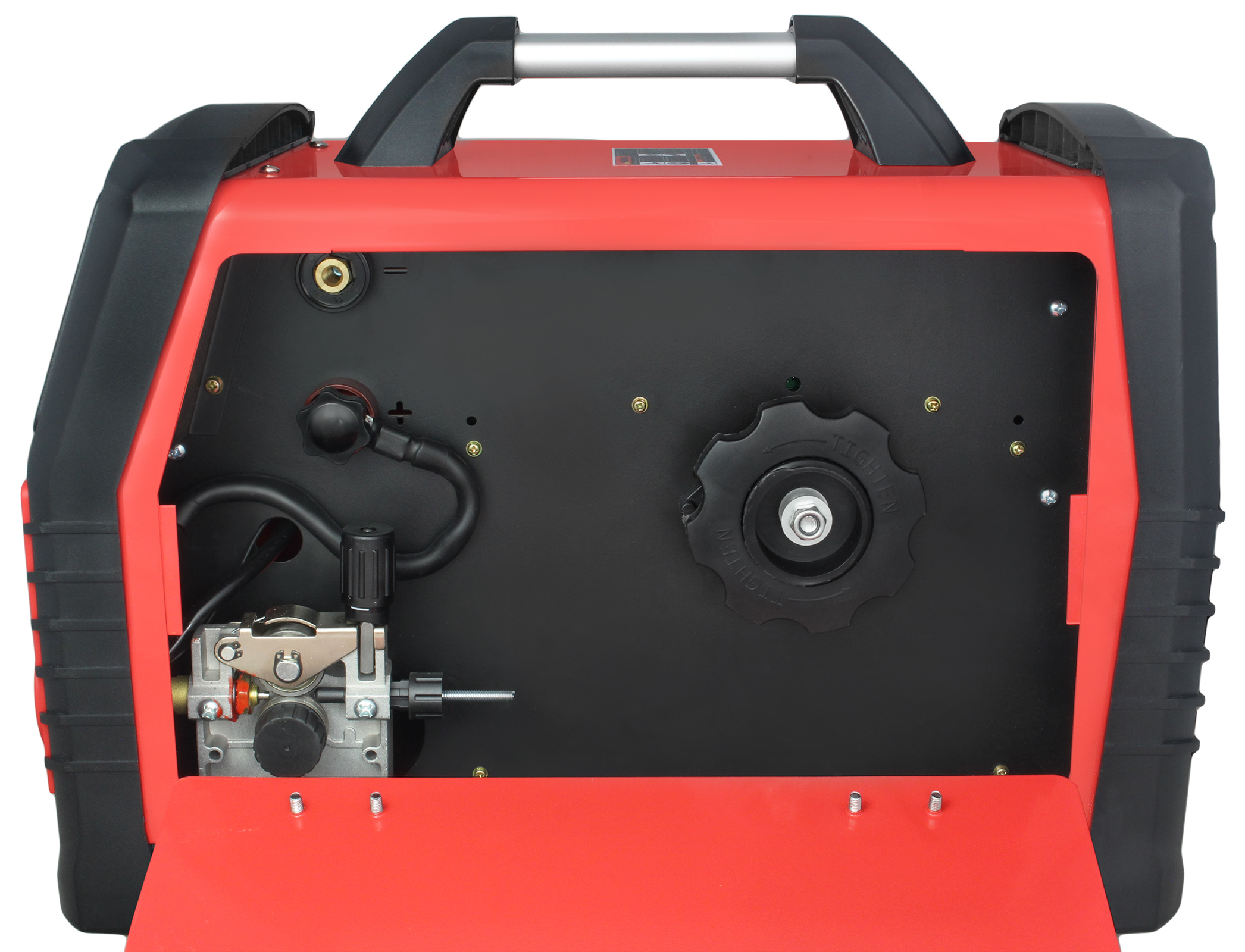
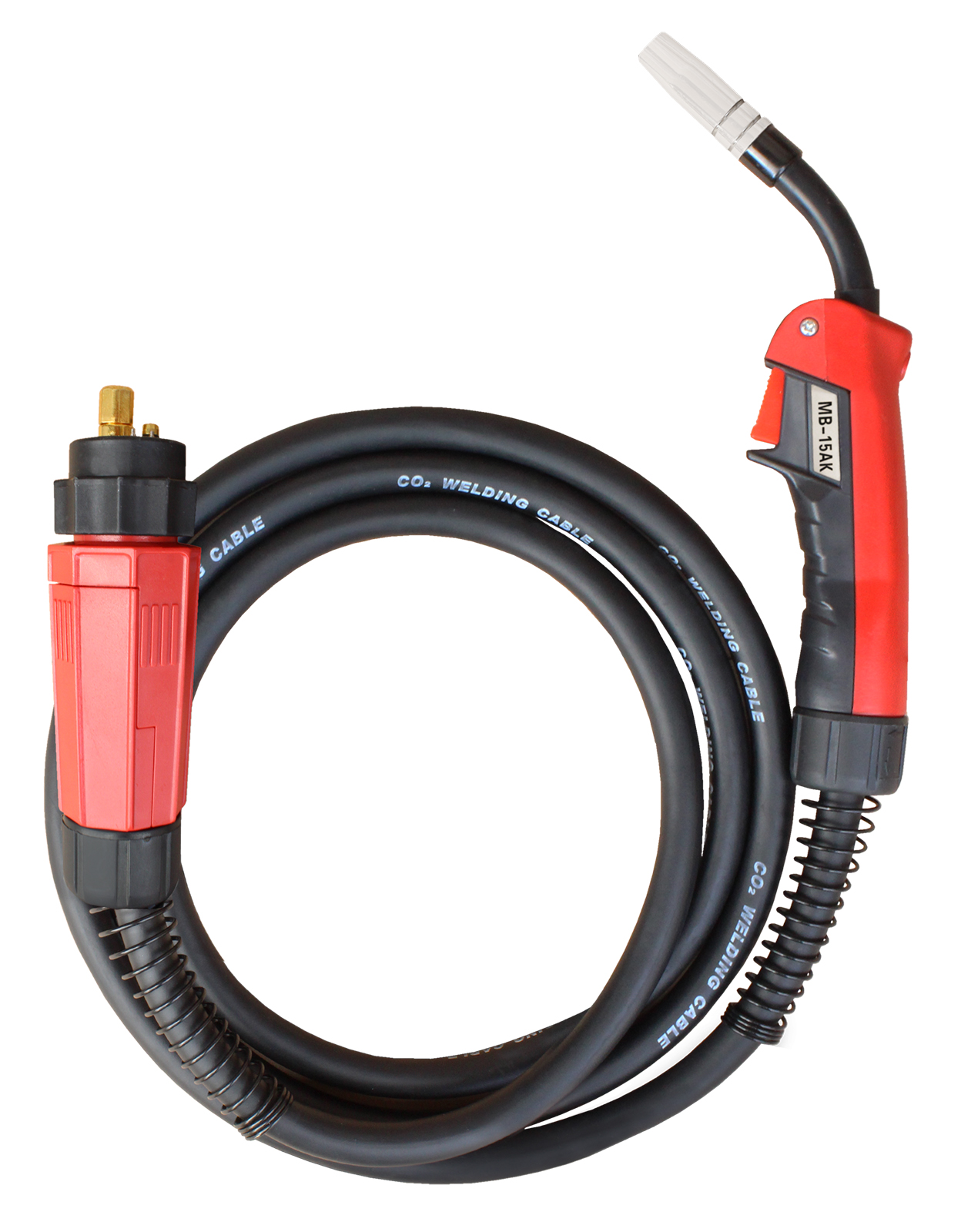
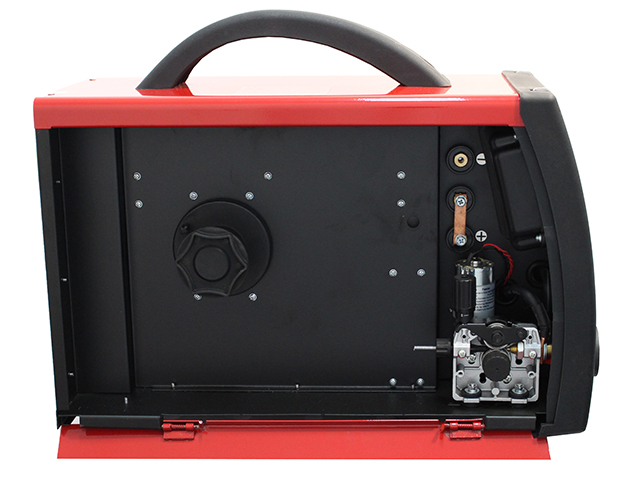
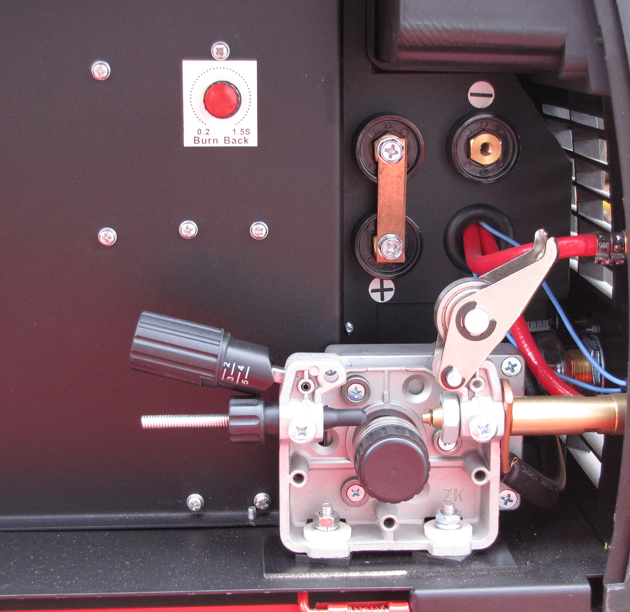
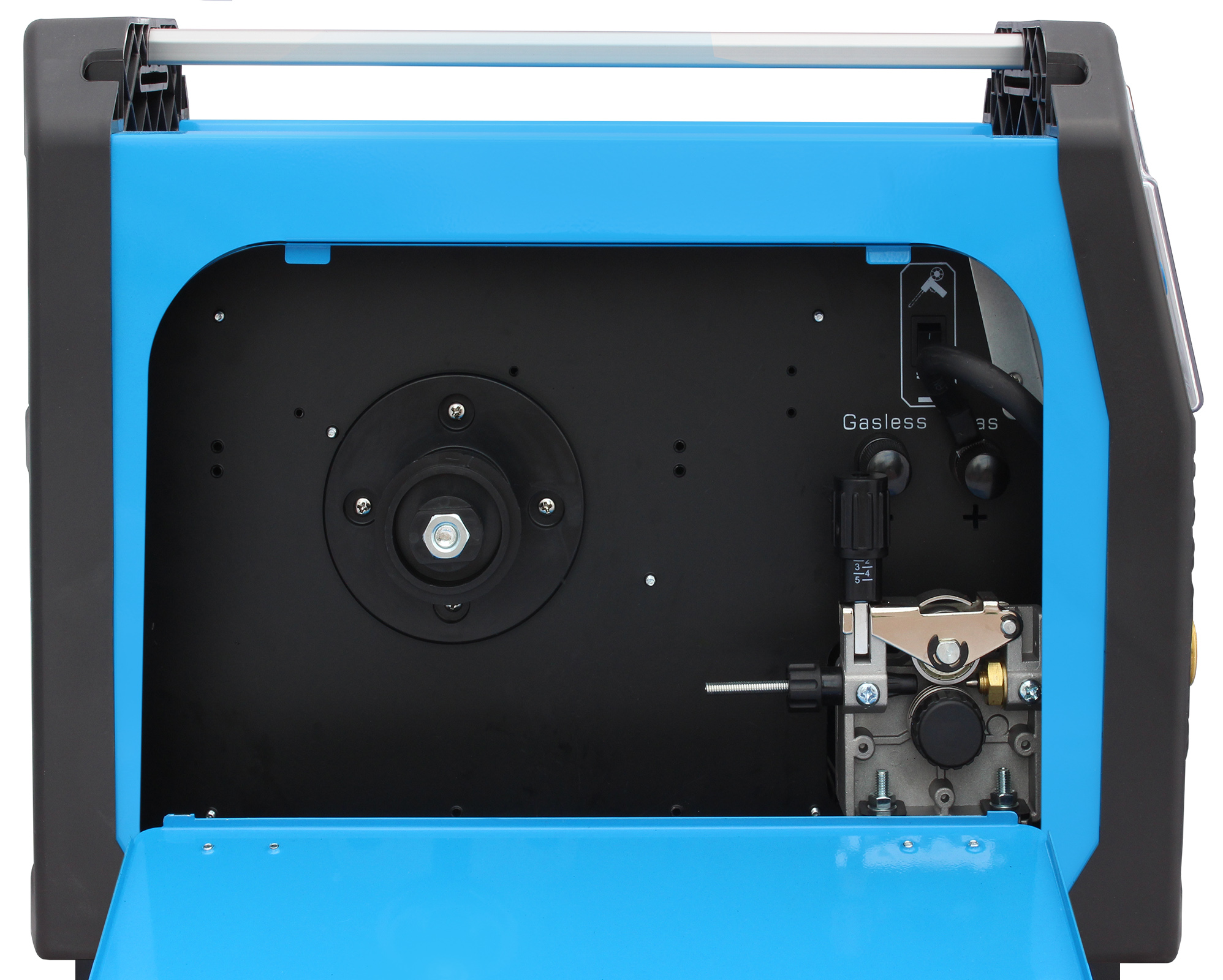
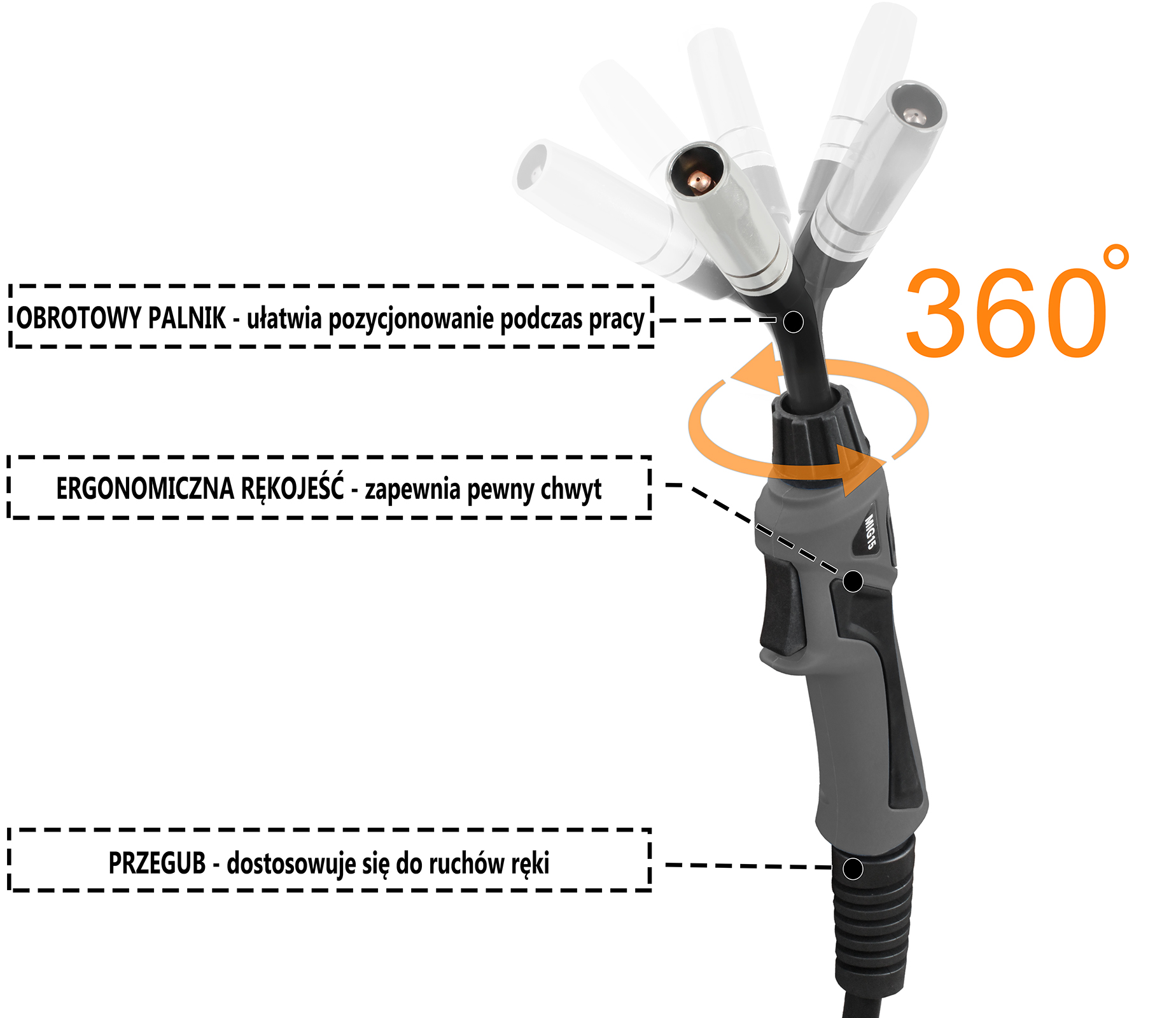
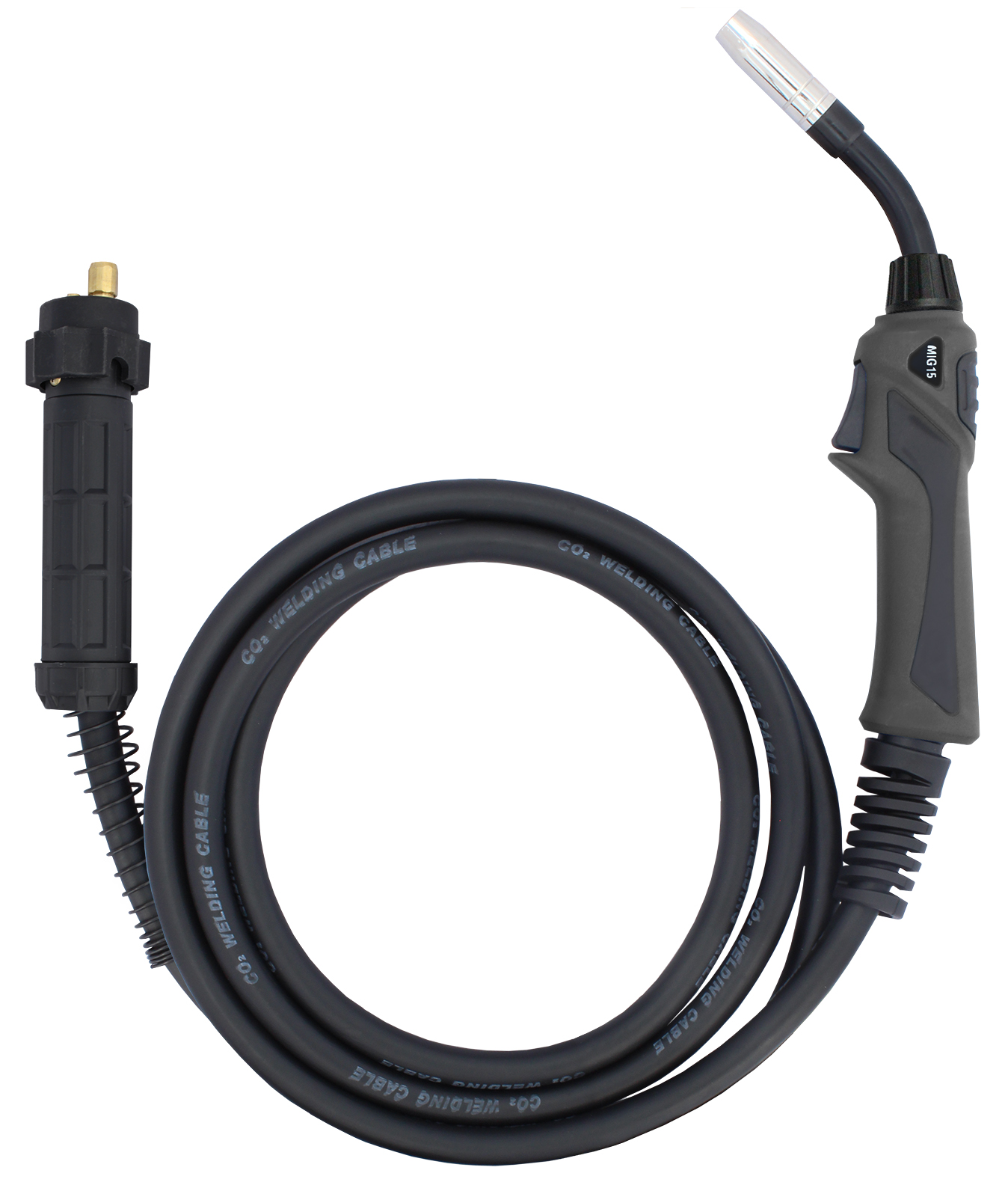
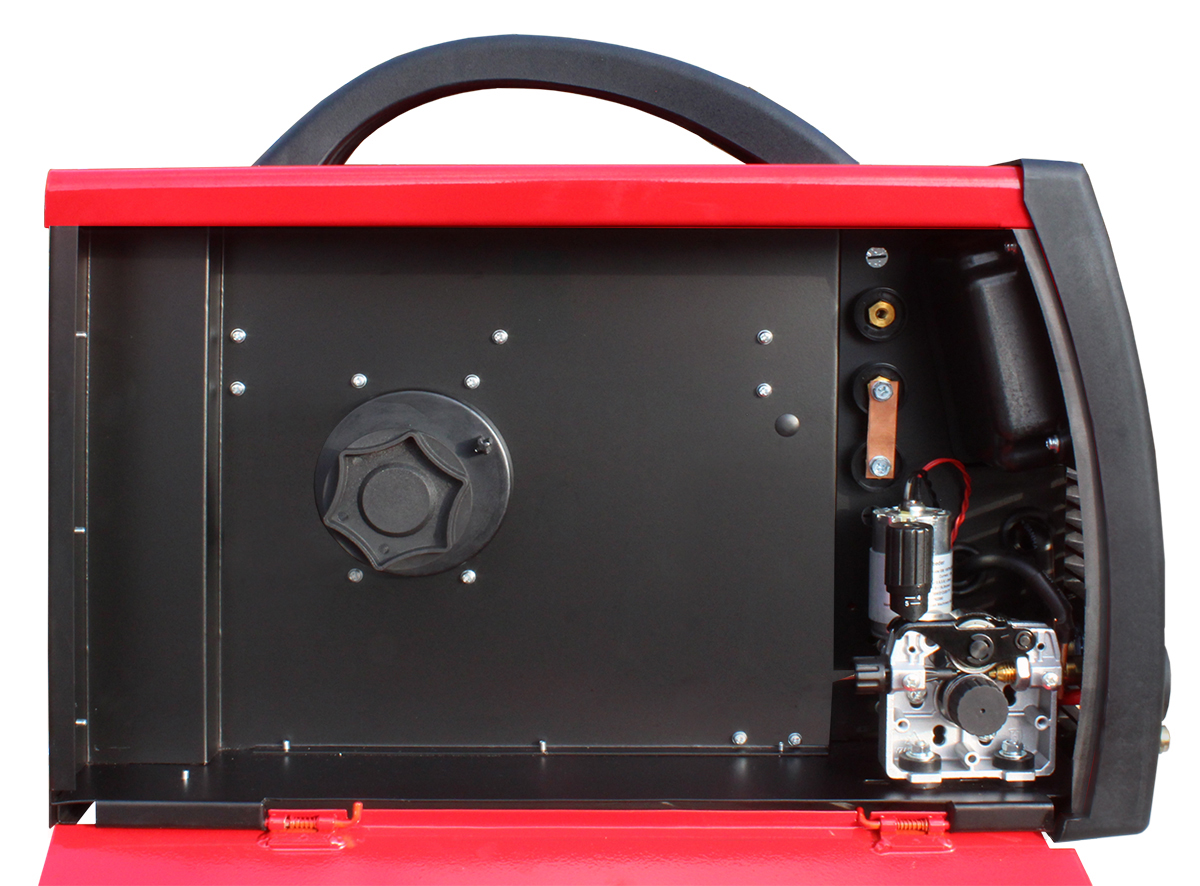
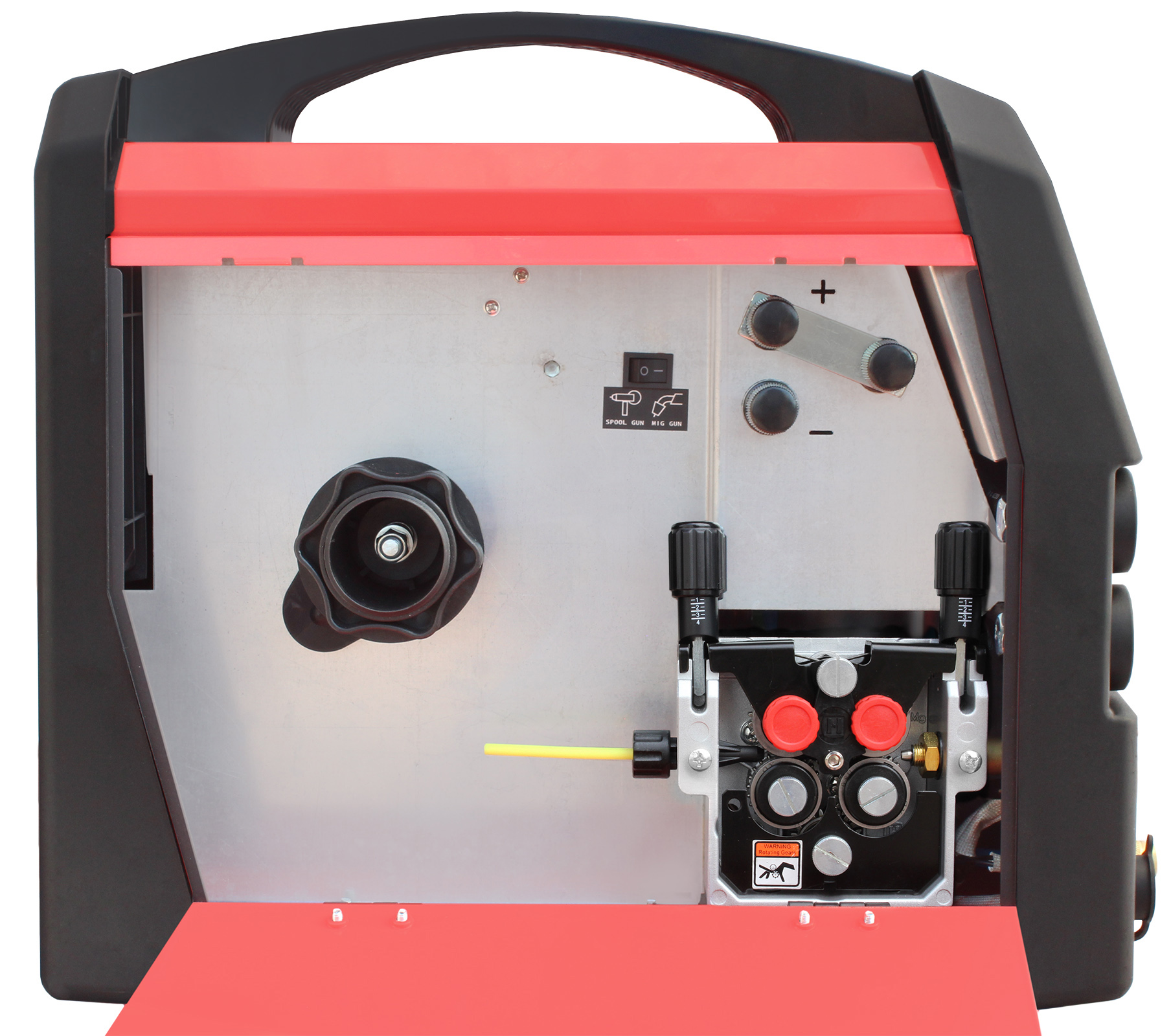
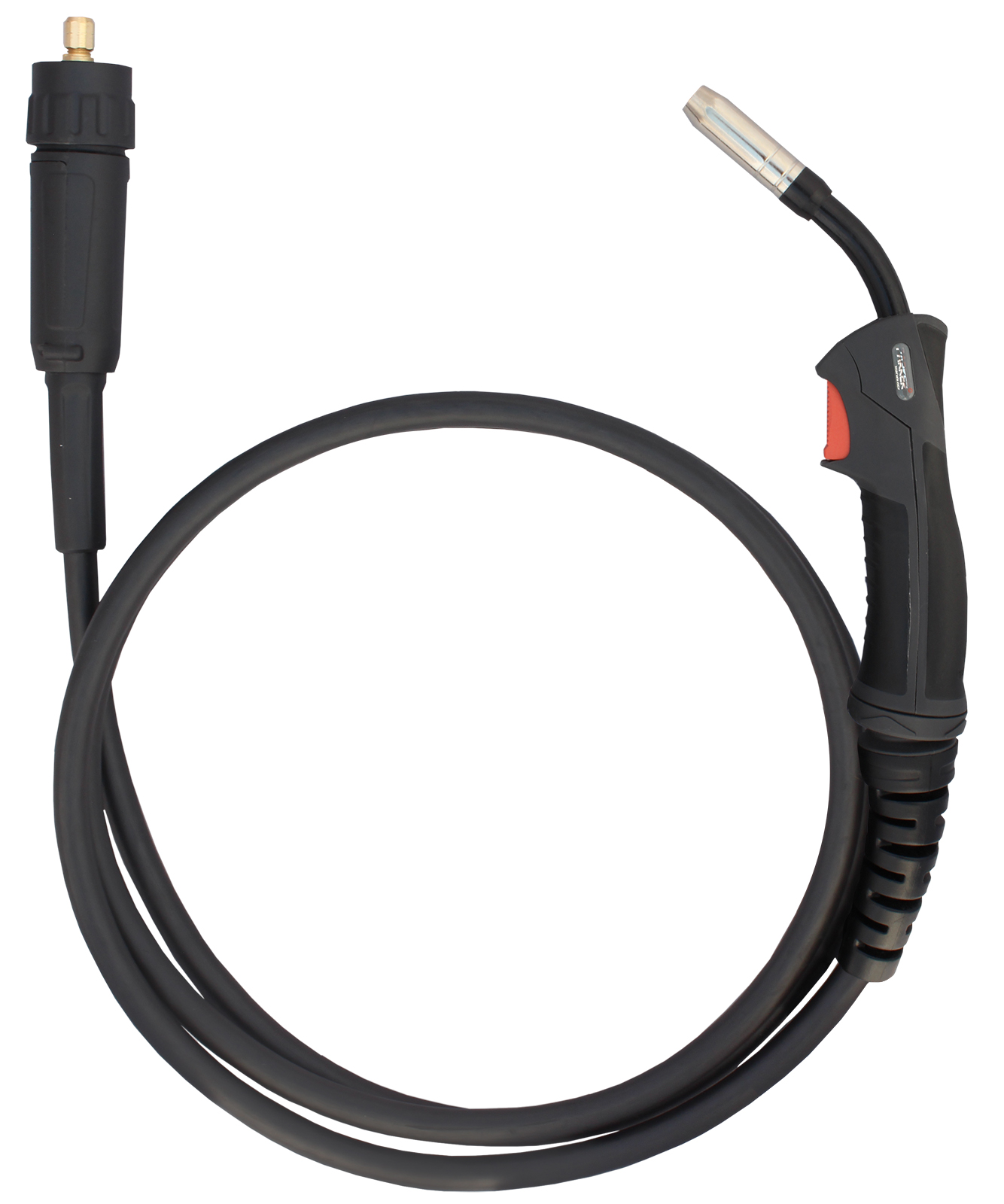
- Wire feeder: The wire is continuously fed from the spool through the feeder to the torch.
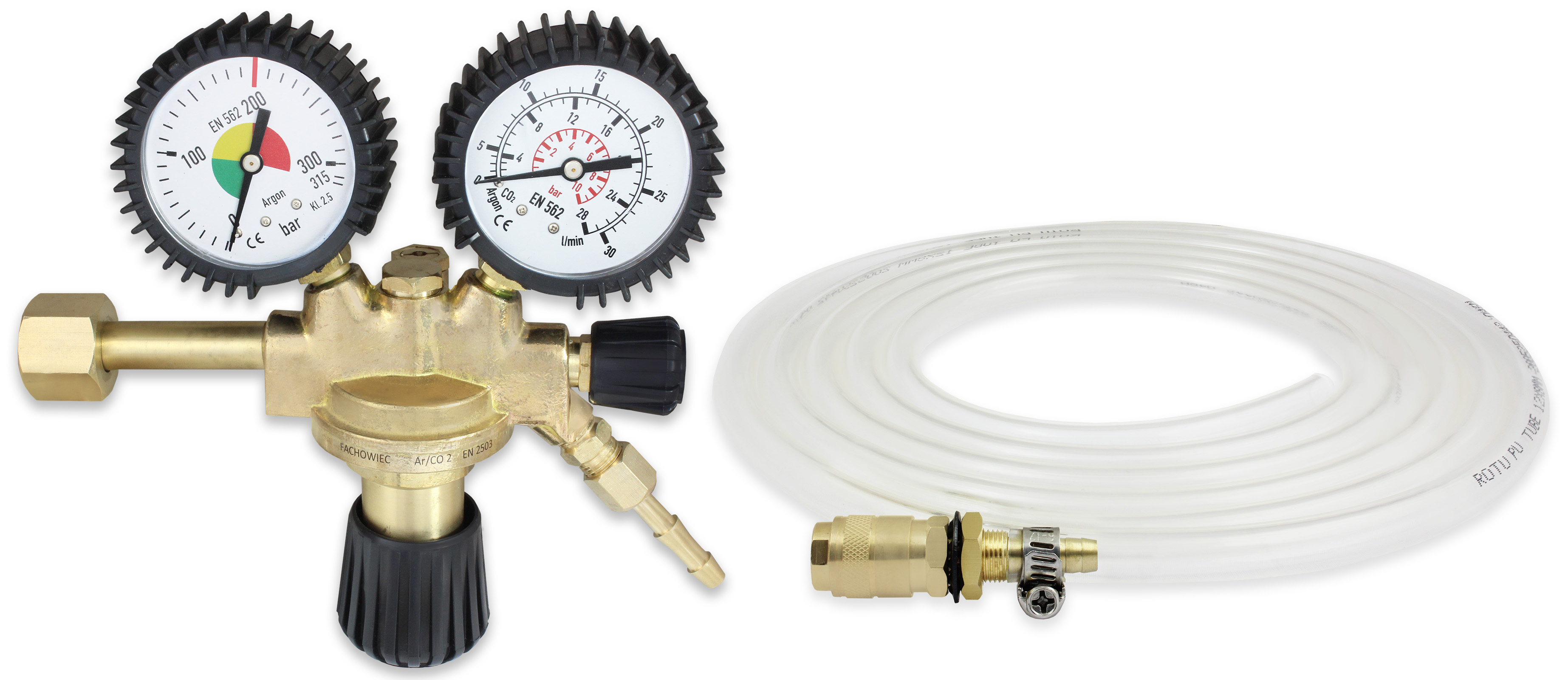
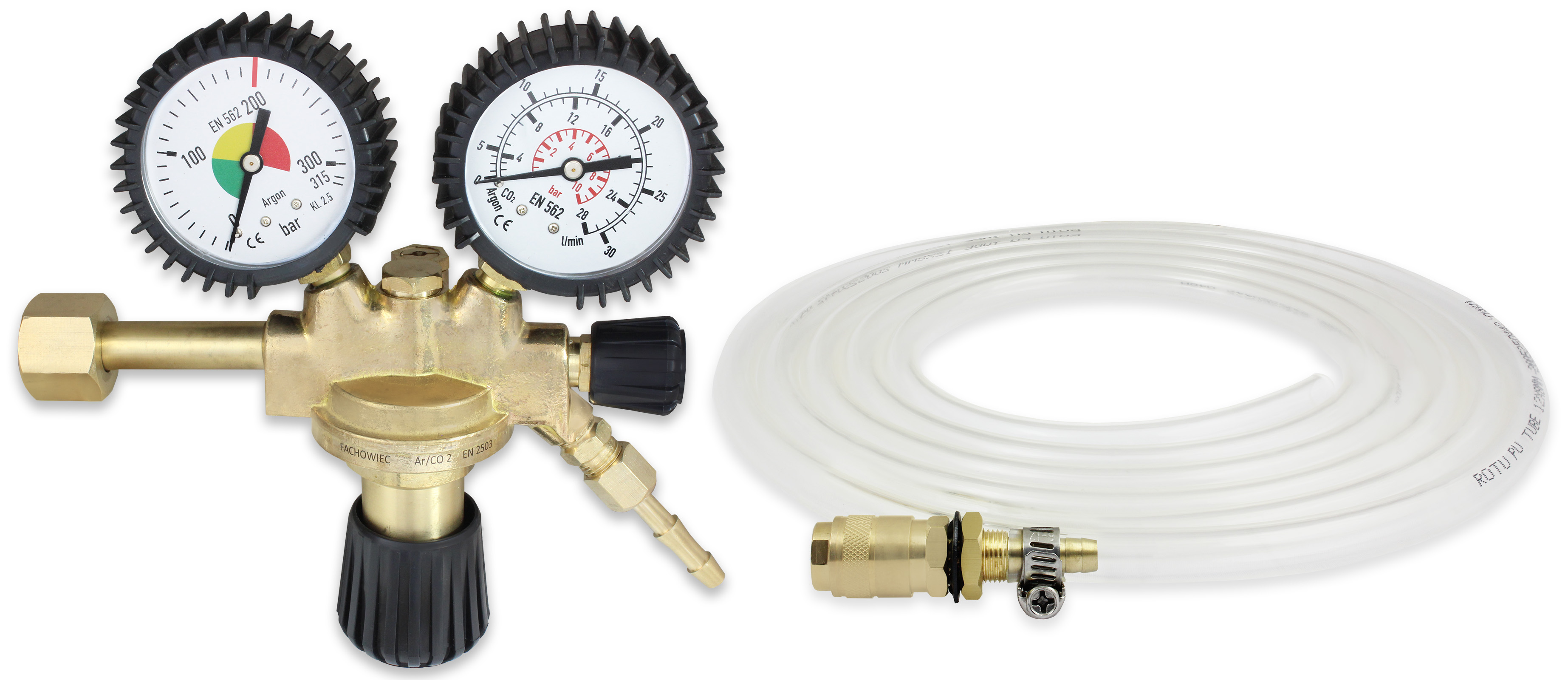
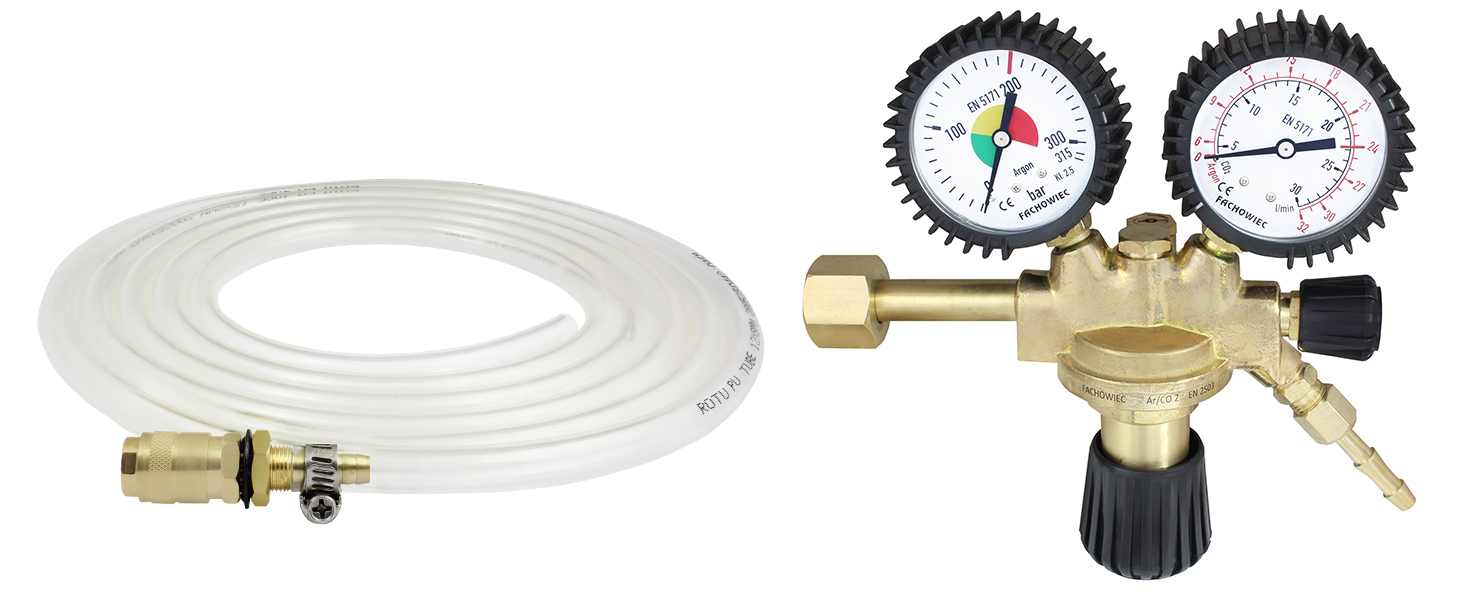
- Shielding gas: At the moment of arc ignition, the welded area is shielded by a stream of gas (inert in MIG, active in MAG), which protects the molten metal from the atmosphere.
- Formation of the weld: The molten wire and base material create a liquid welding pool, which solidifies into a weld.
- MMA method:
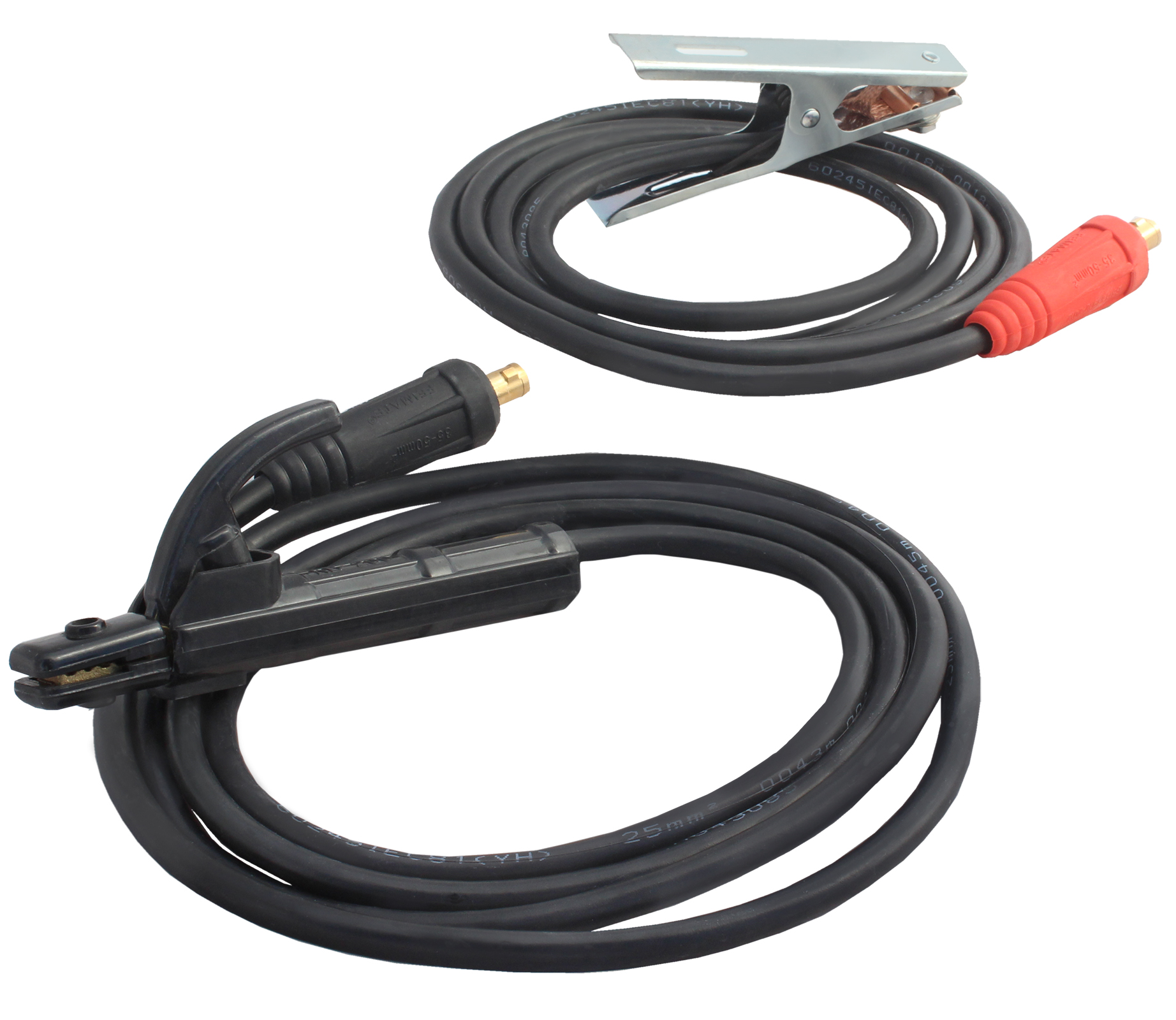
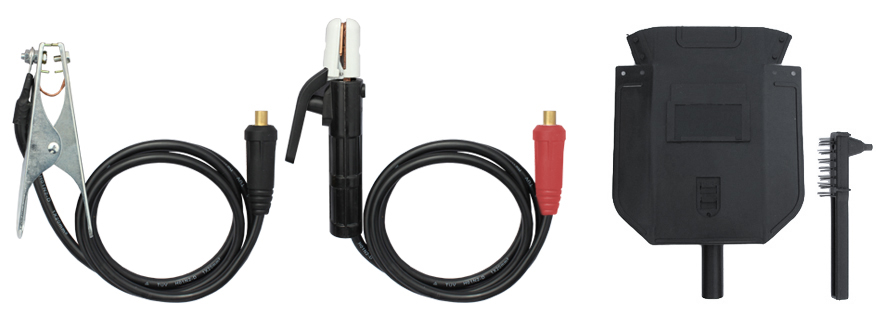
- Coated electrode: This method uses a coated electrode, which has a metal core and a coating.
- Arc and gas: After igniting the arc between the electrode and the workpiece, the coating of the electrode melts and releases shielding gas.
- Weld and slag: The molten metal from the electrode forms the weld, and the remnants of the coating create a layer of slag that protects the solidifying weld.
- Continuous shortening of the electrode: Unlike the MIG/MAG method, the electrode in the MMA method shortens as it melts, and the welder must maintain a constant distance from the workpiece.
Multifunctionality of the device
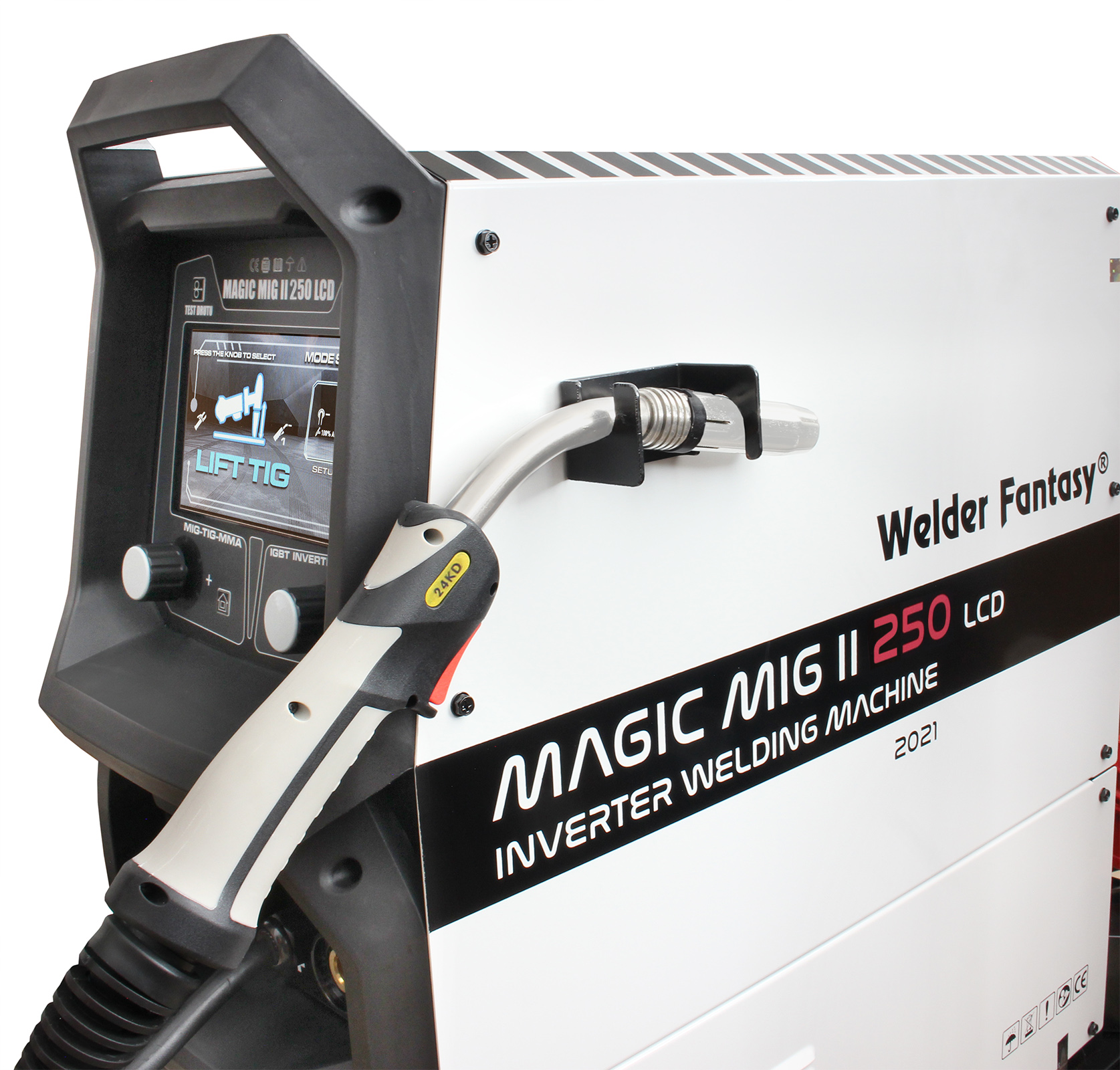
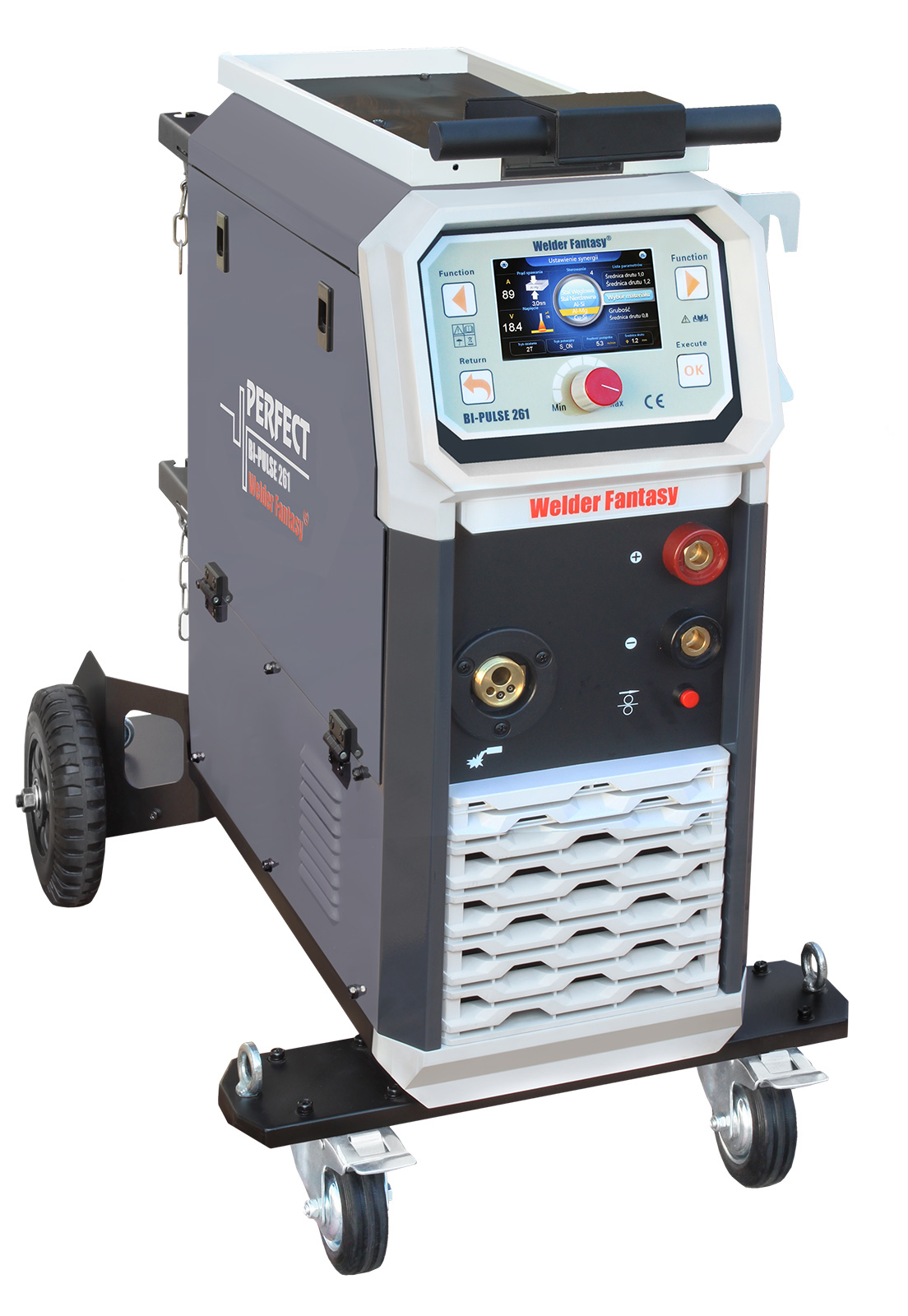
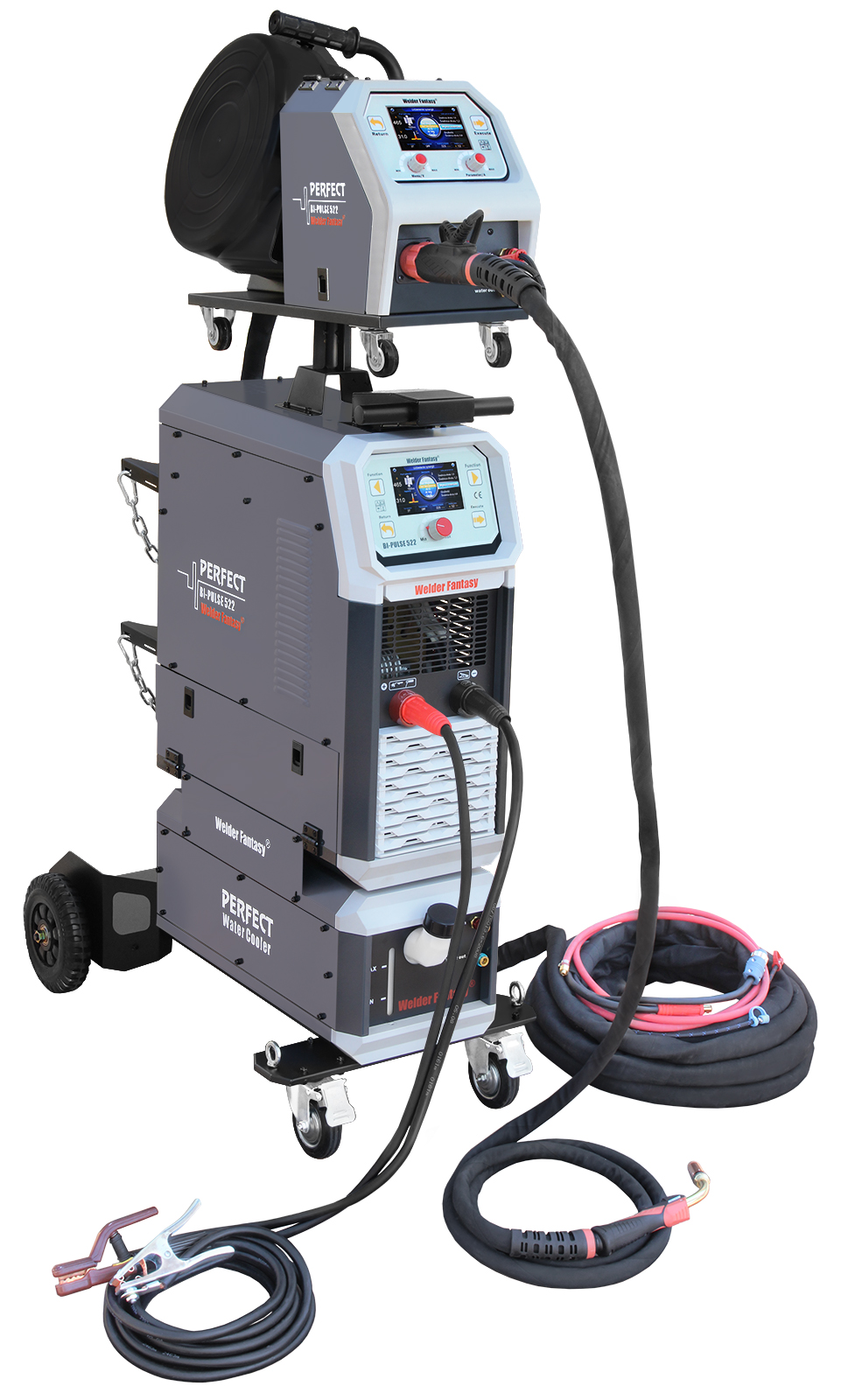
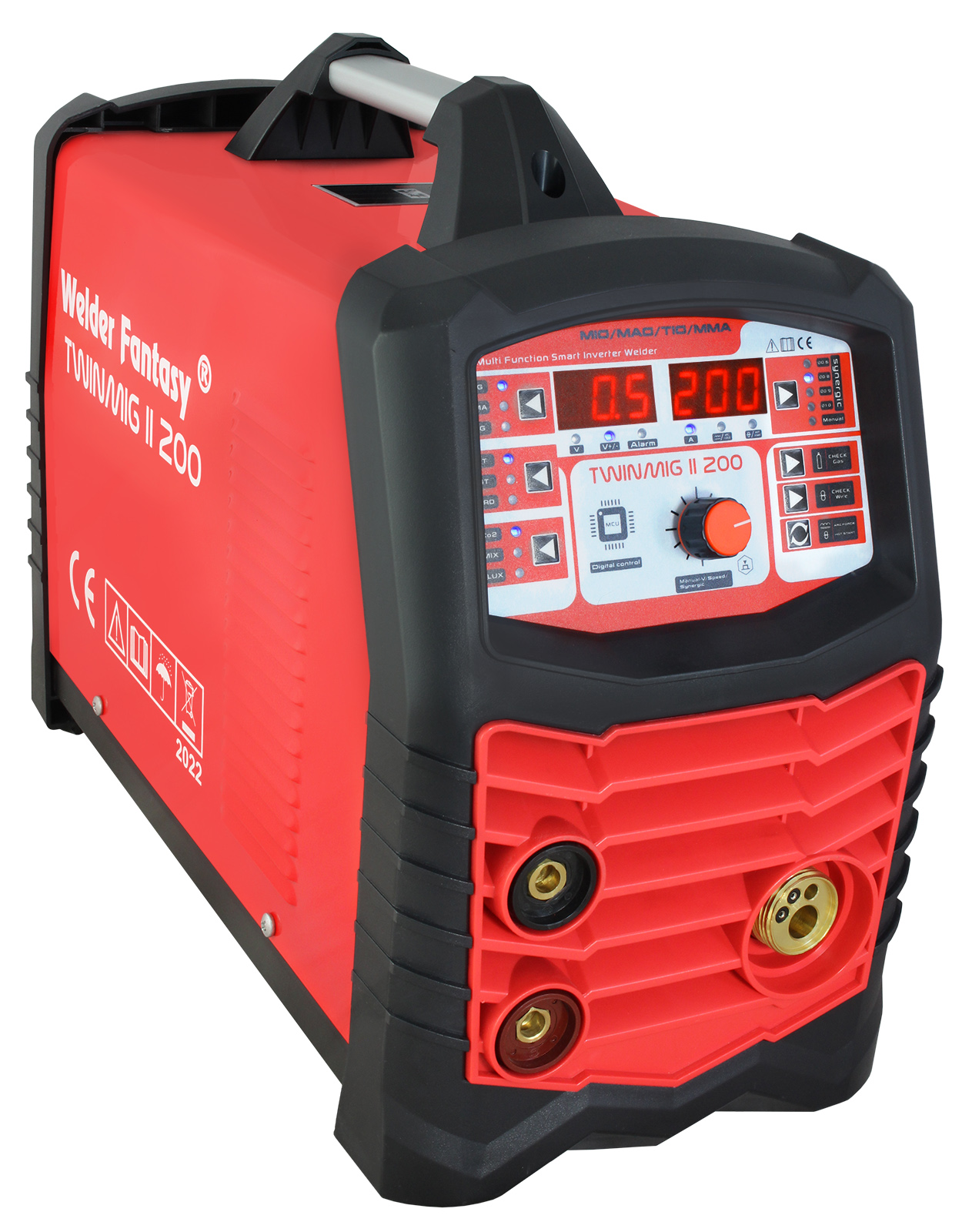
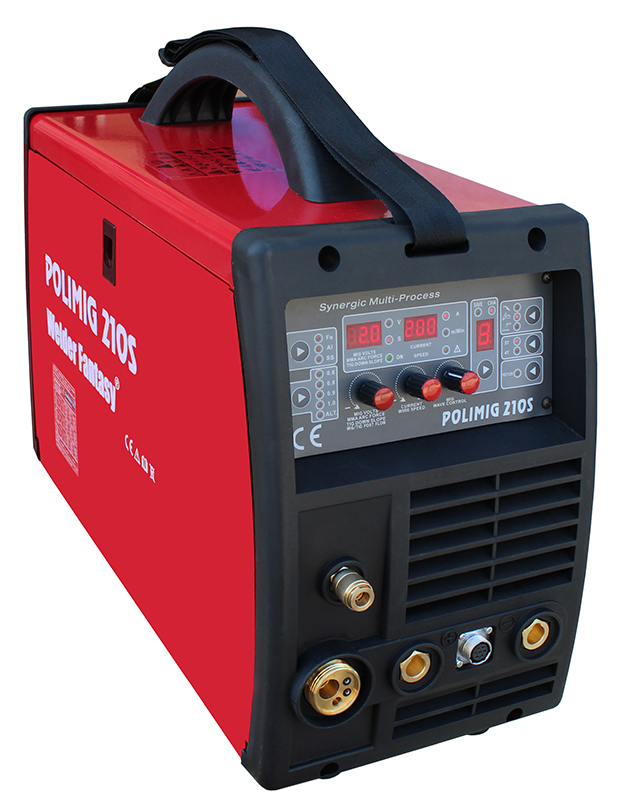
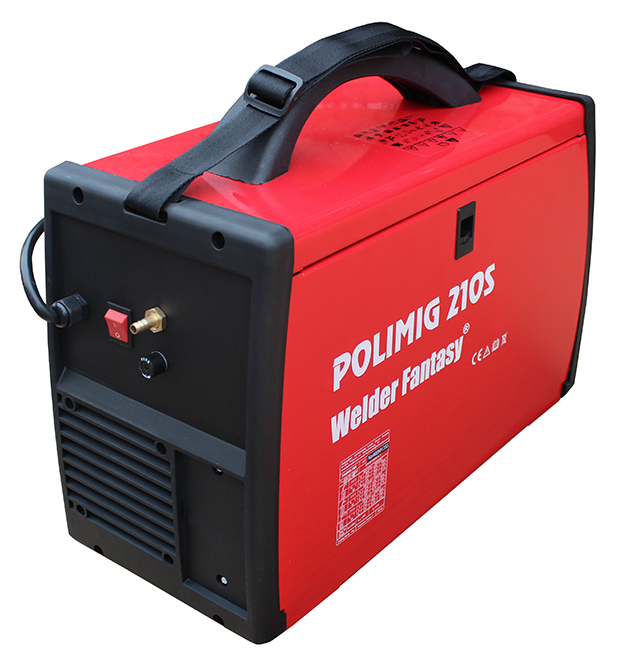
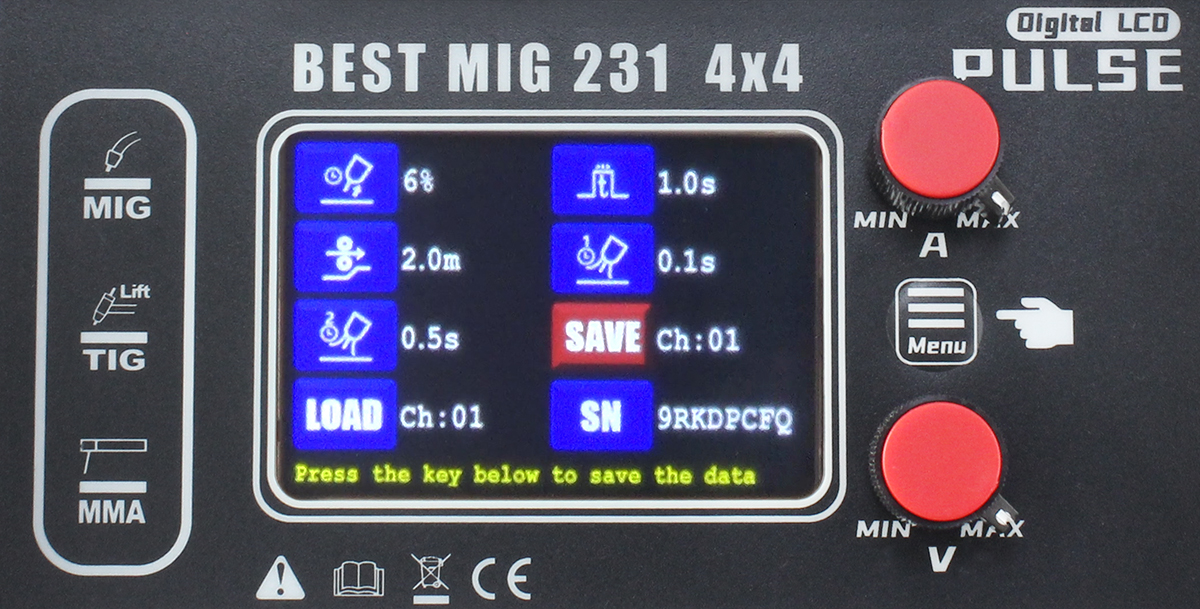
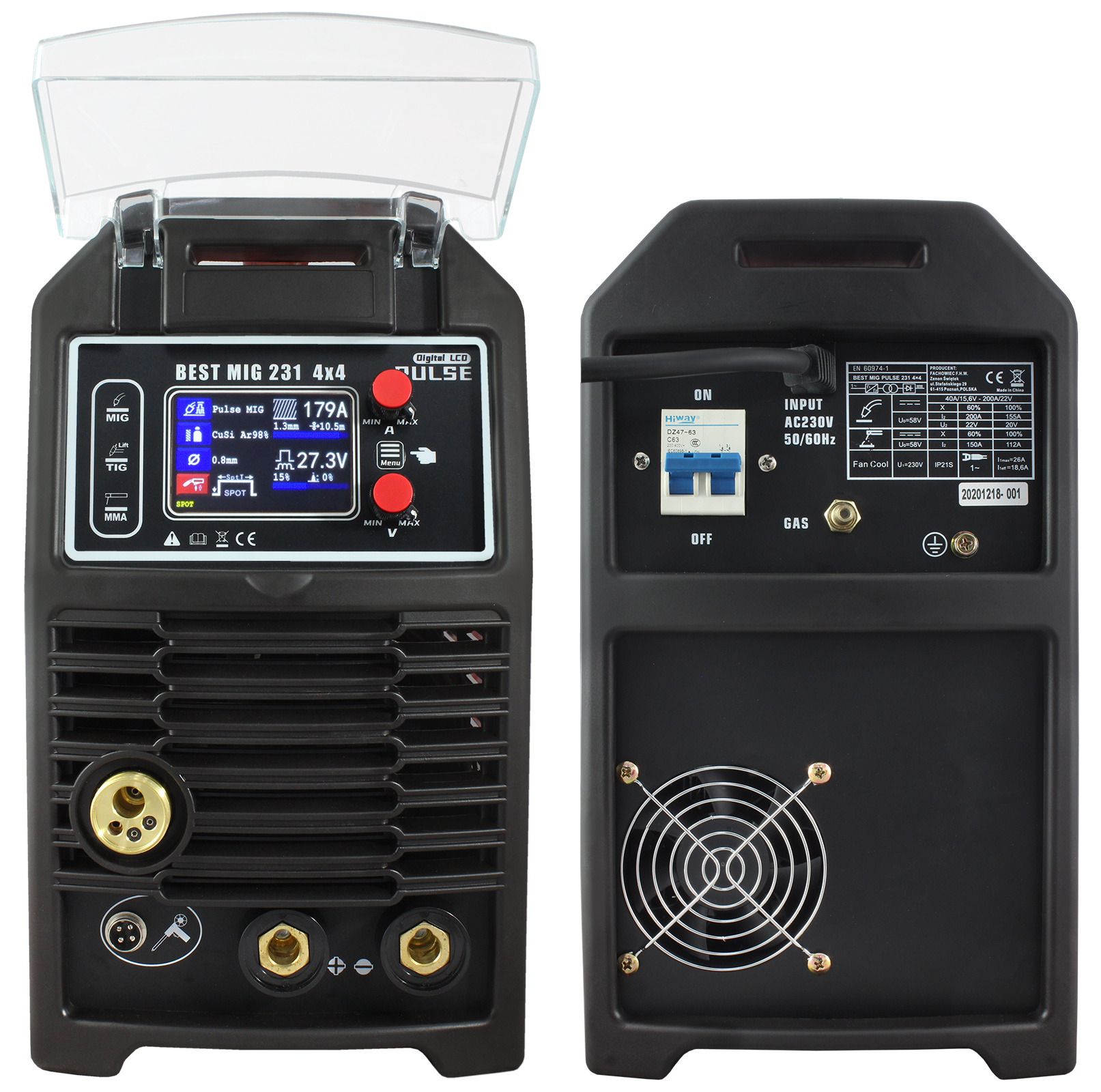
The MIG/MAG welder with MMA function combines two technologies in one device:
- Allows welding with wire:
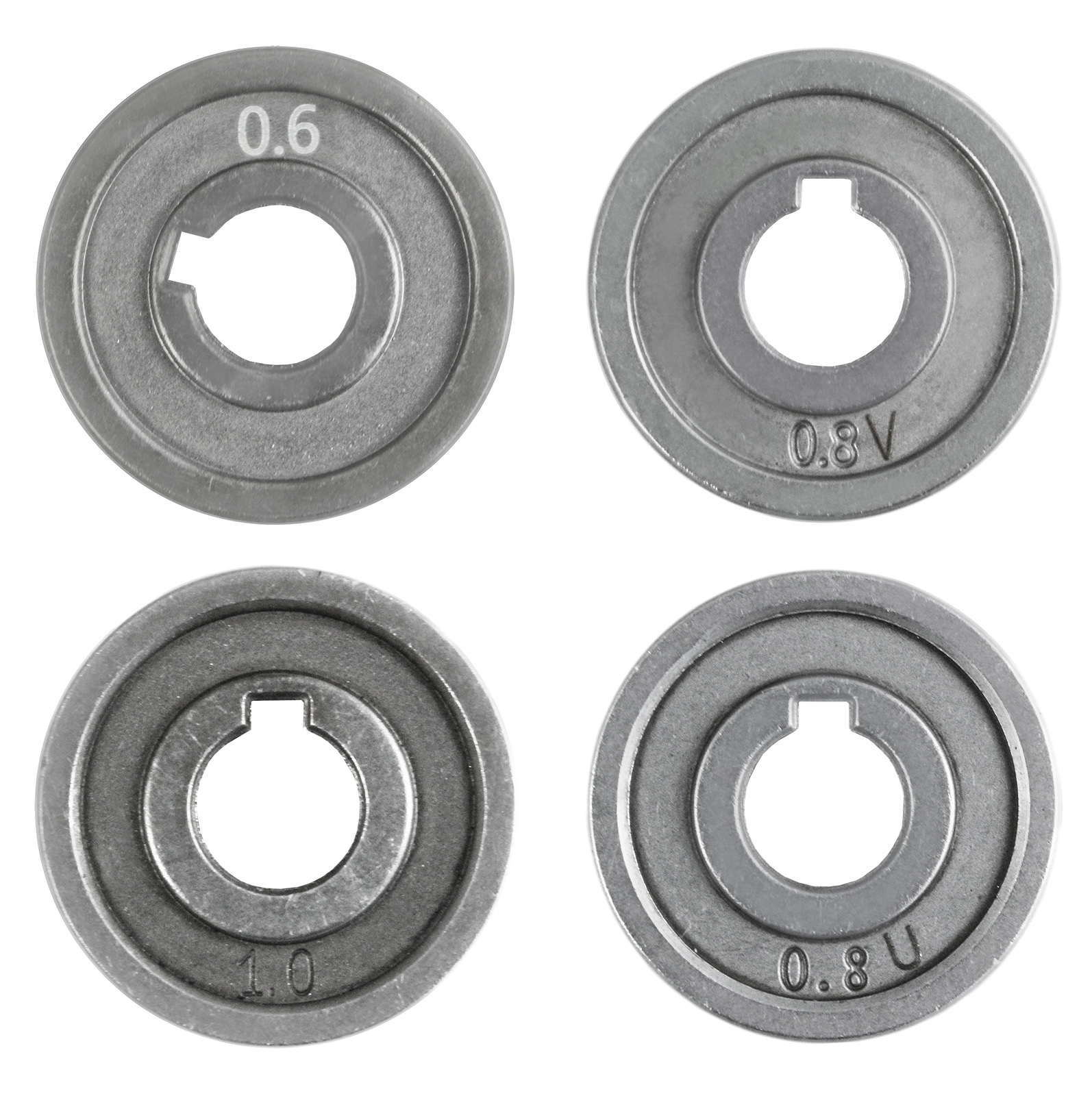
- Enables working with various types of wires, both standard with gas shielding and self-shielding (not requiring gas – selected models).
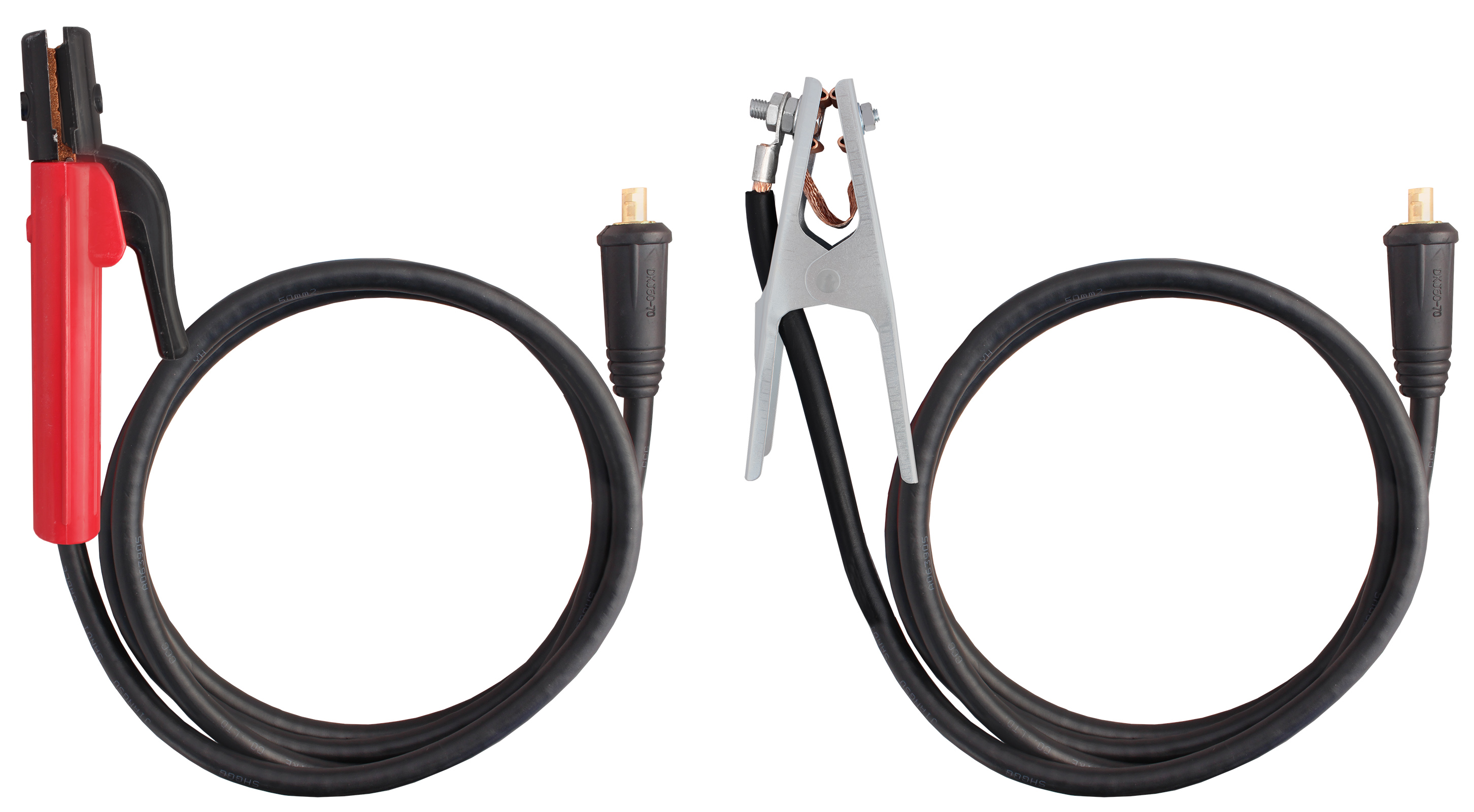
- Provides the possibility of welding with an electrode:
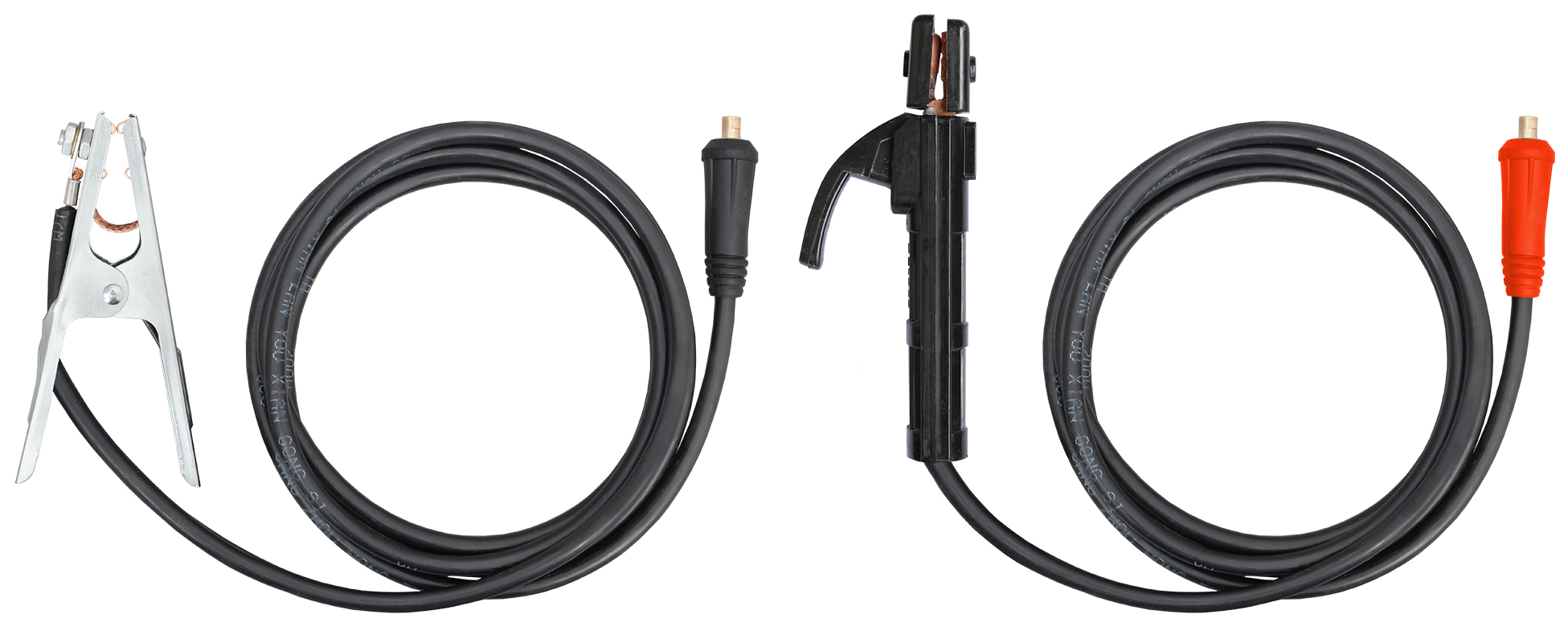
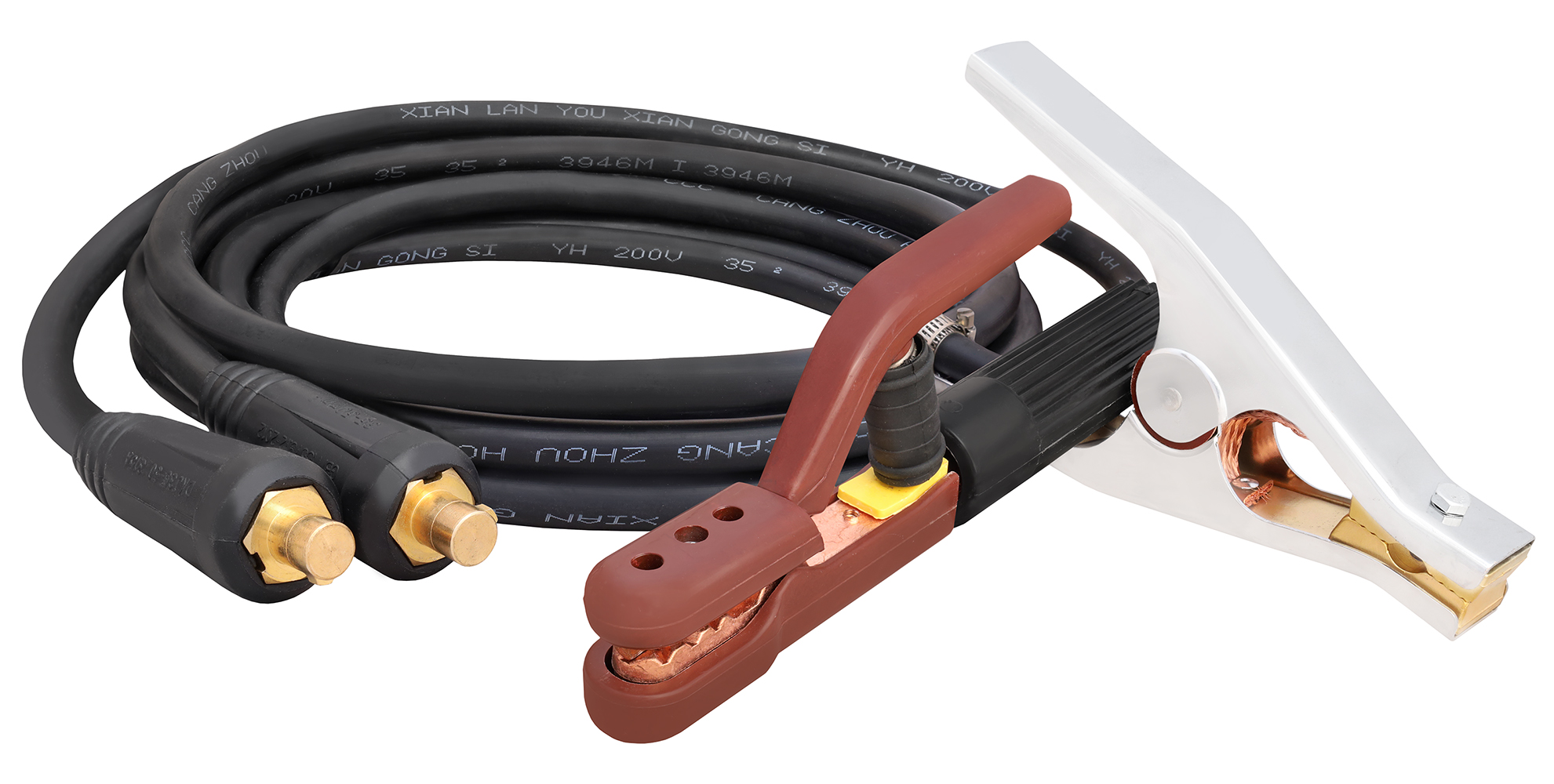
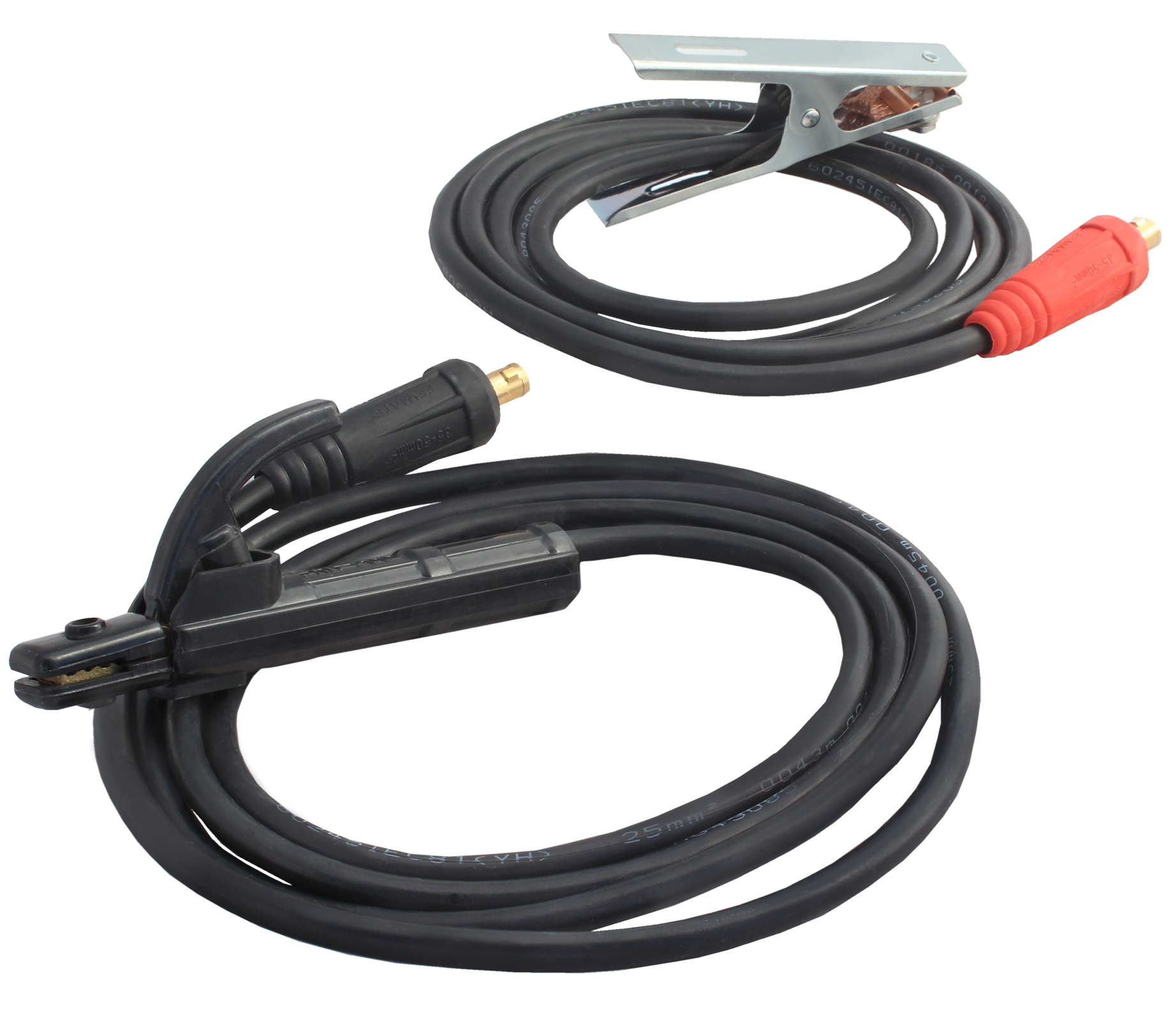
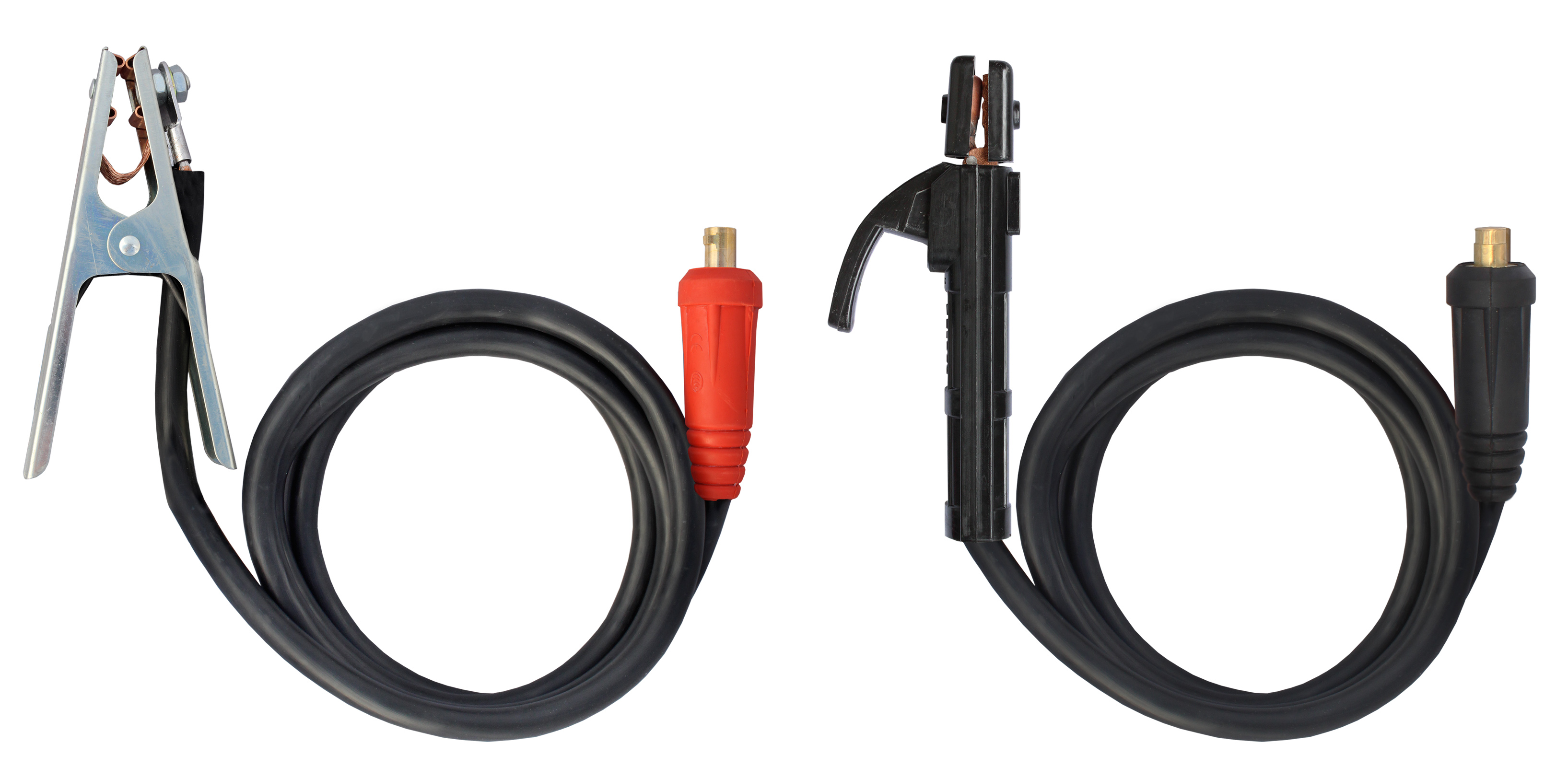
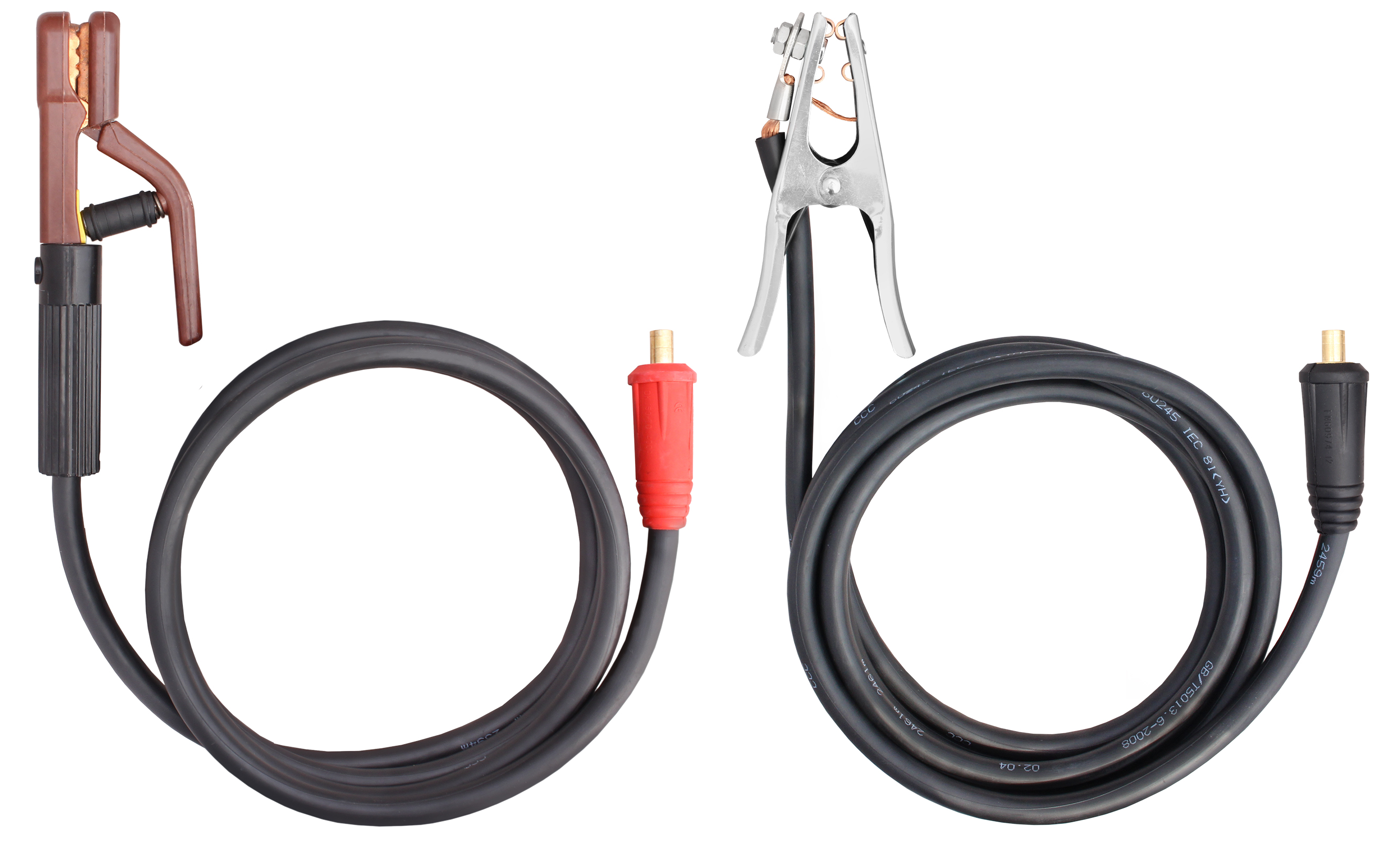
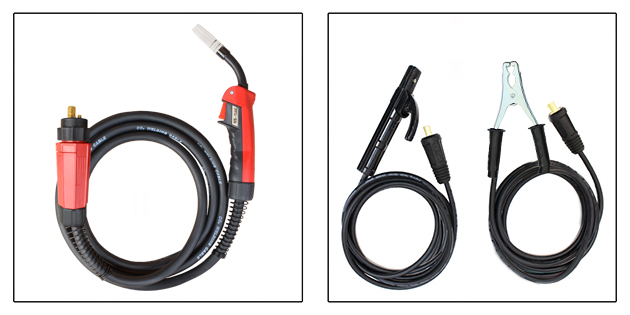
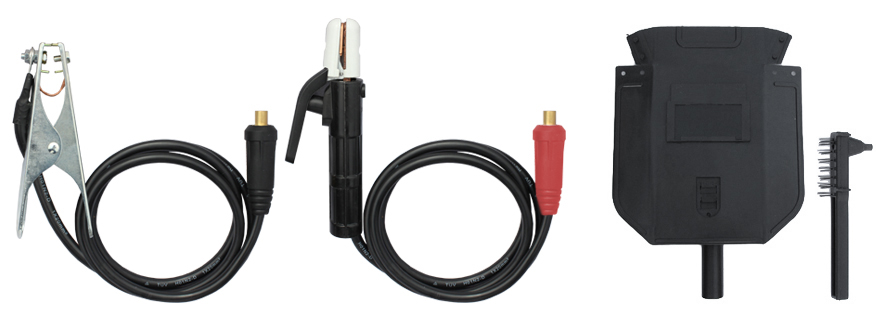
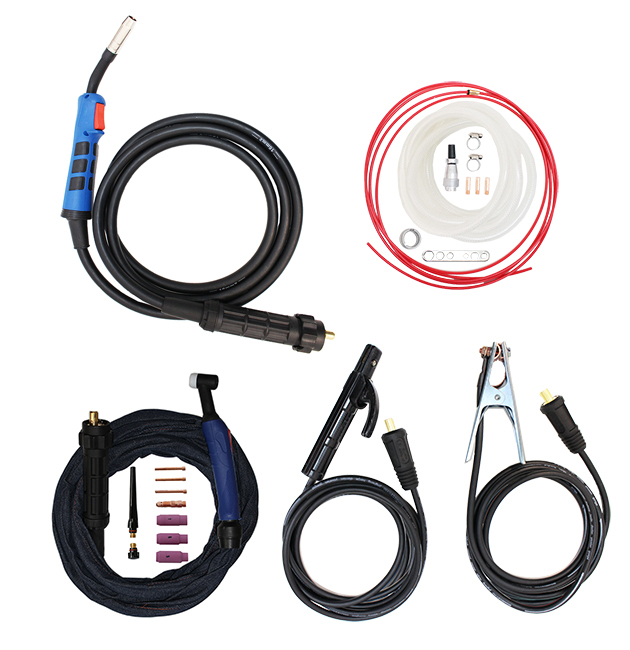
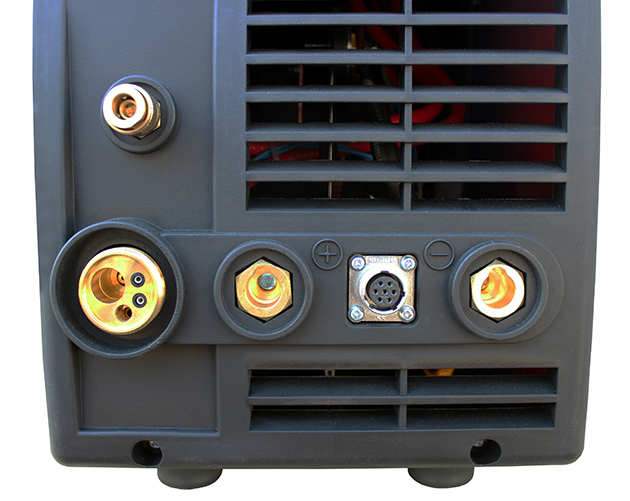
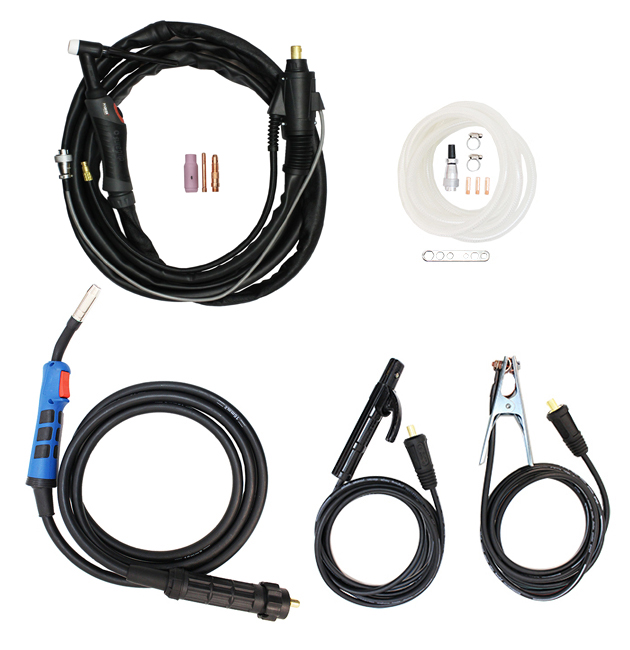
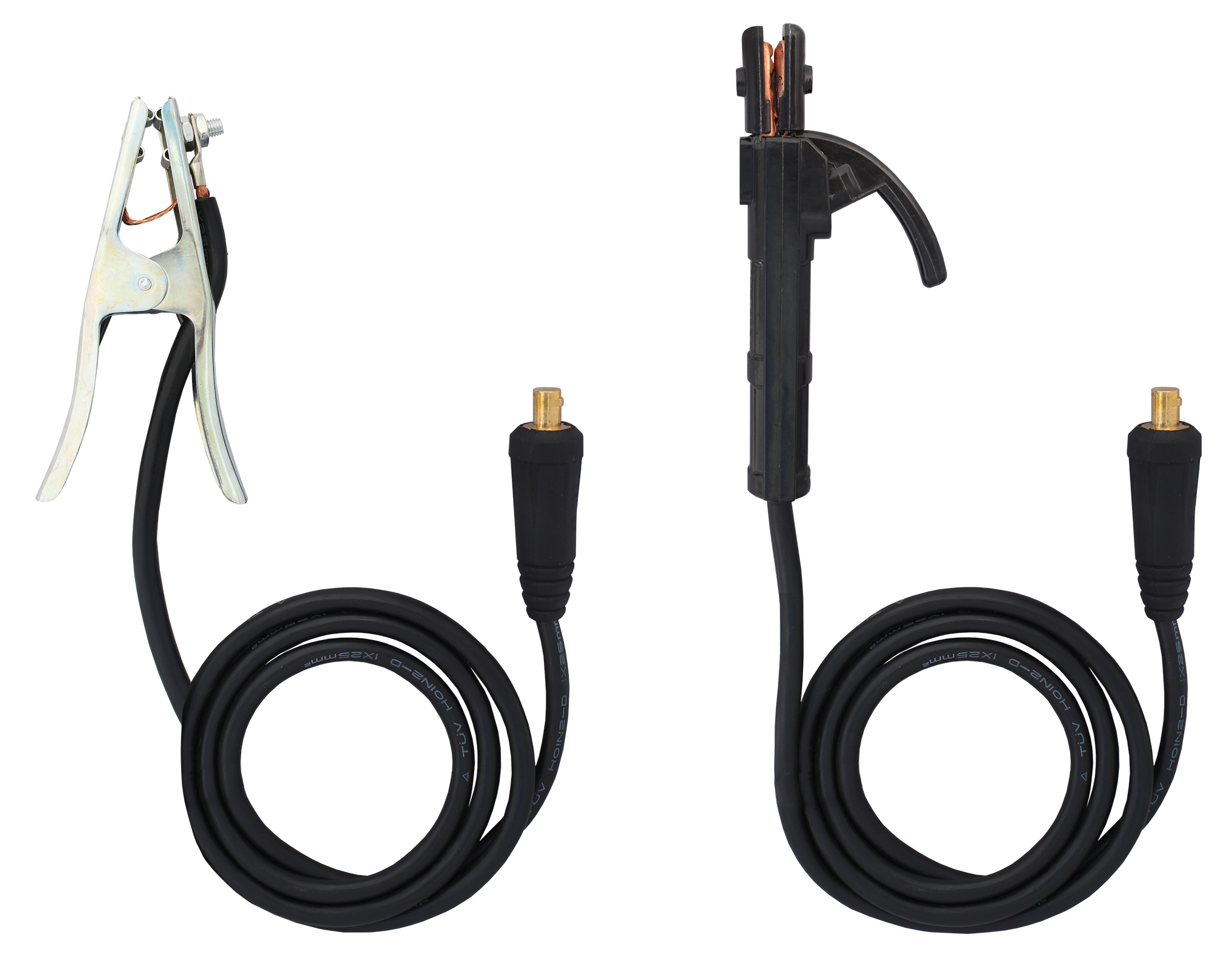
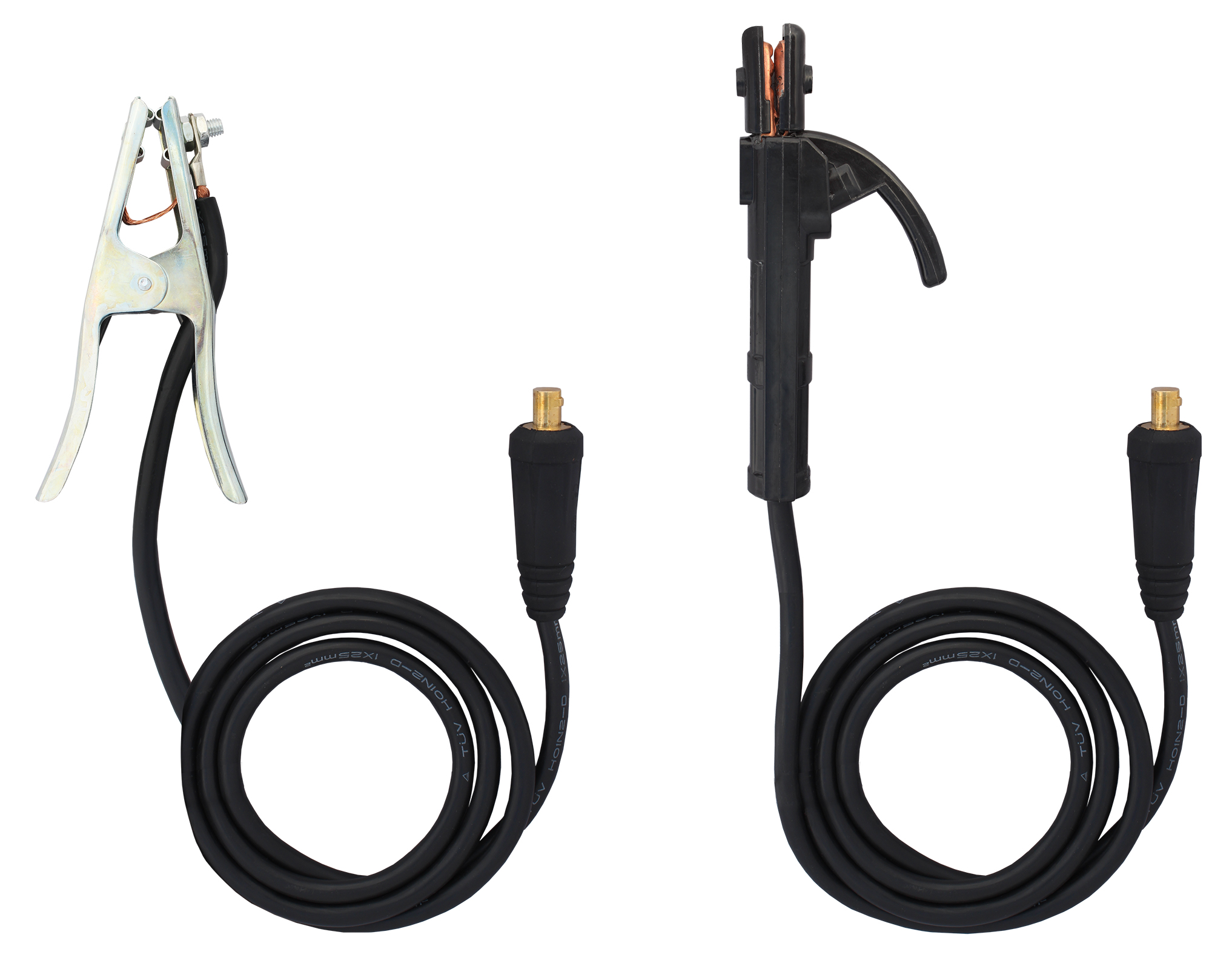
When connecting classic welding cables, the welder operates like an electrode welder, which is useful in various conditions.
For advanced users:
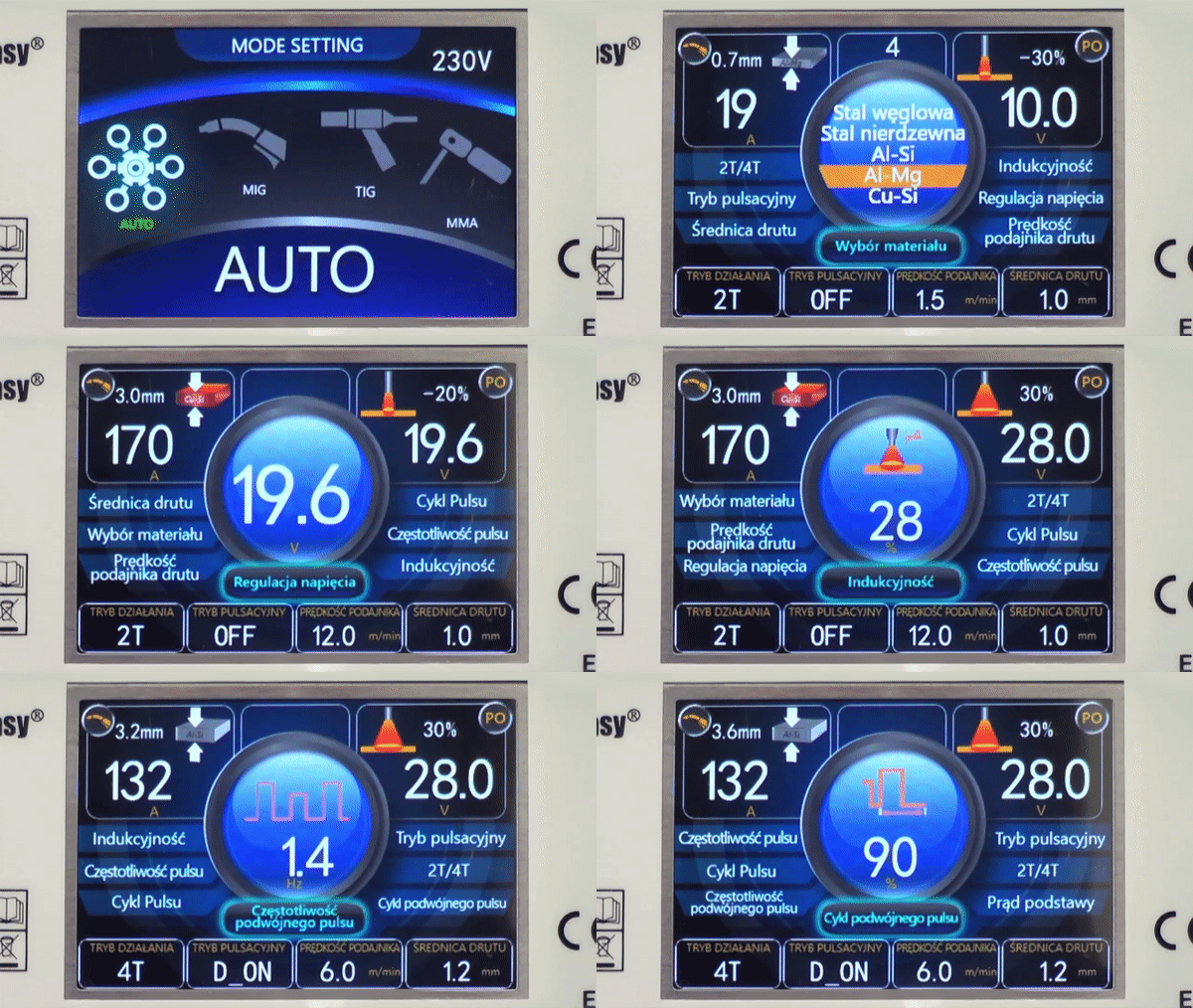
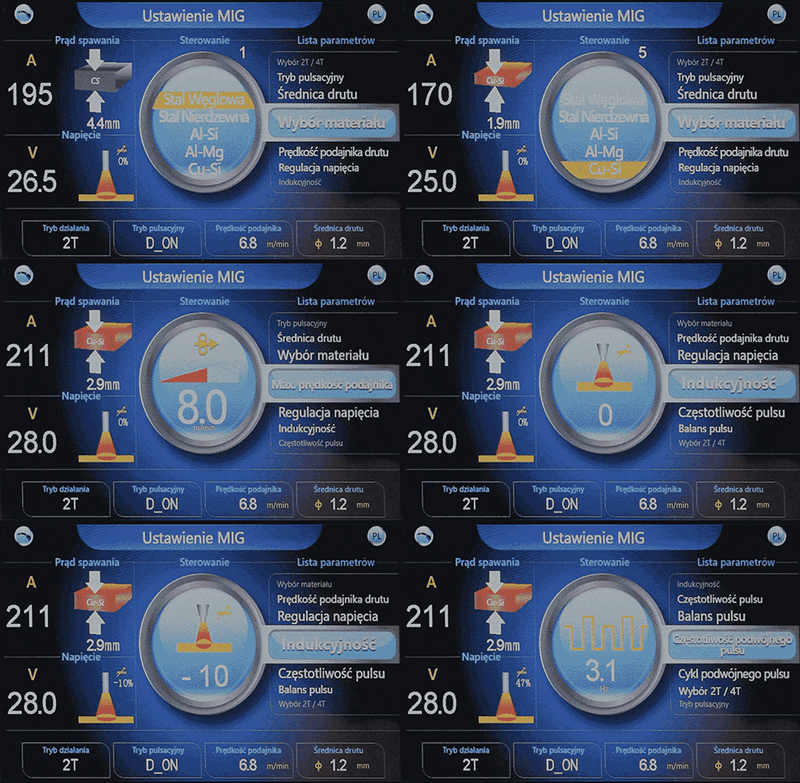
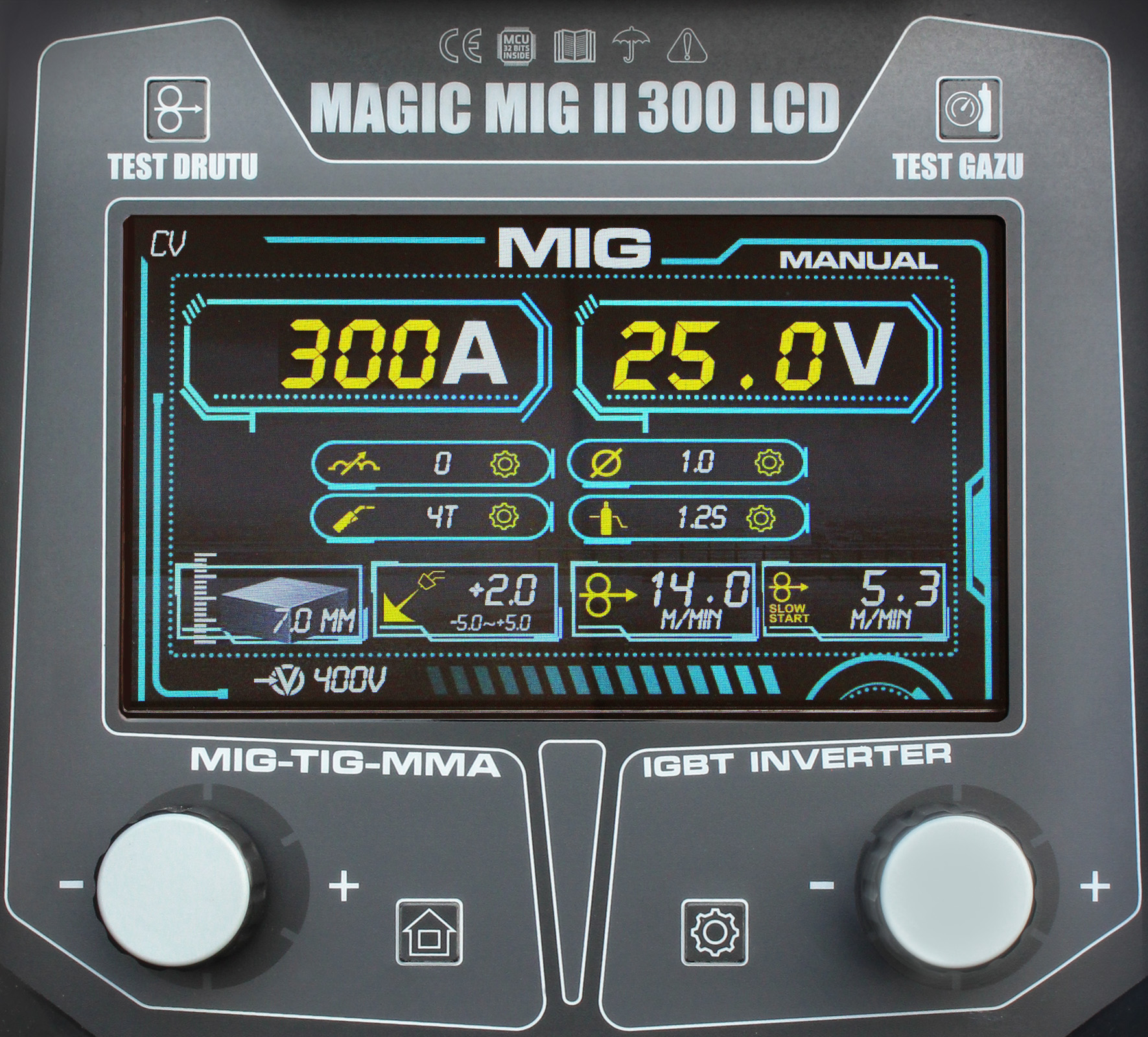
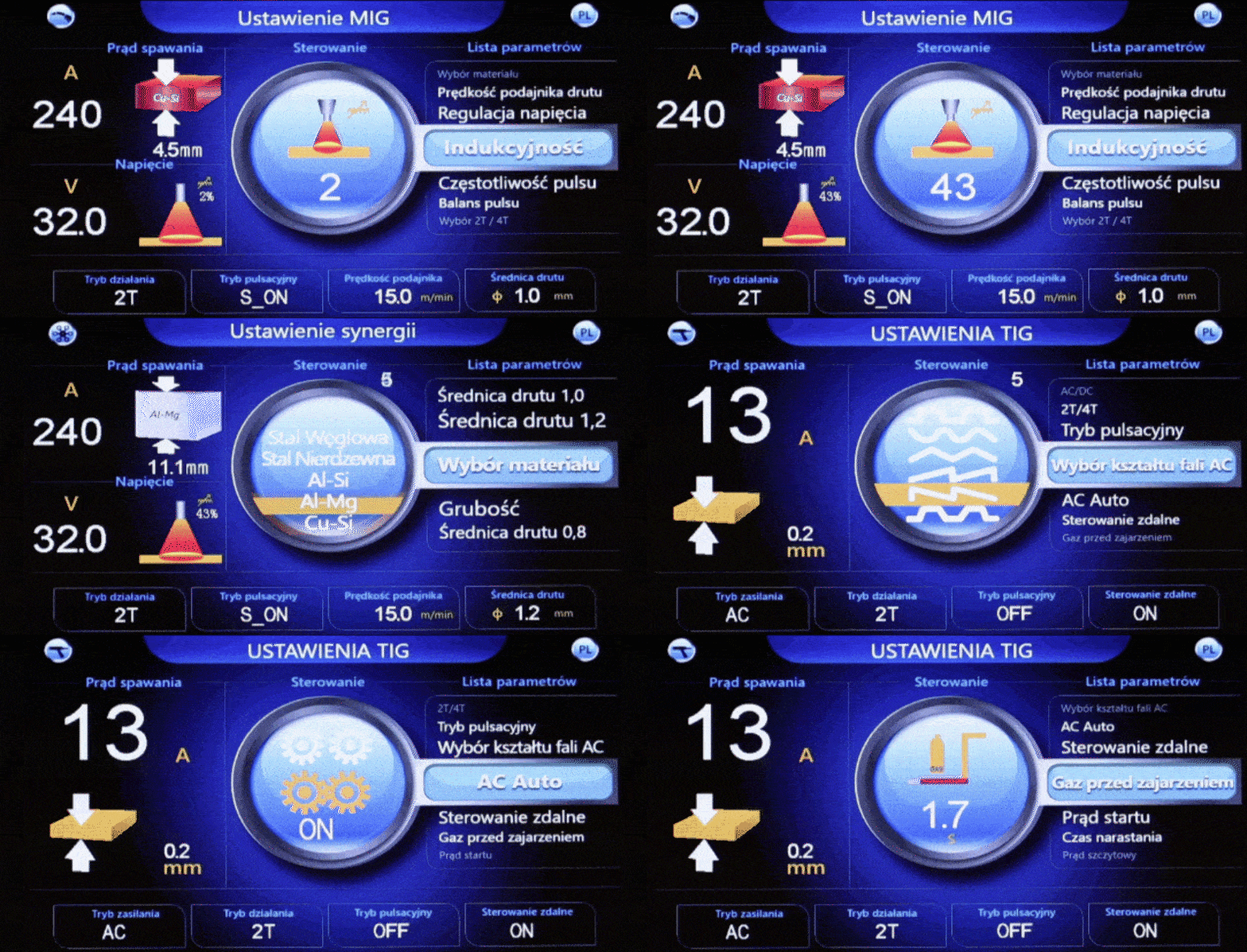
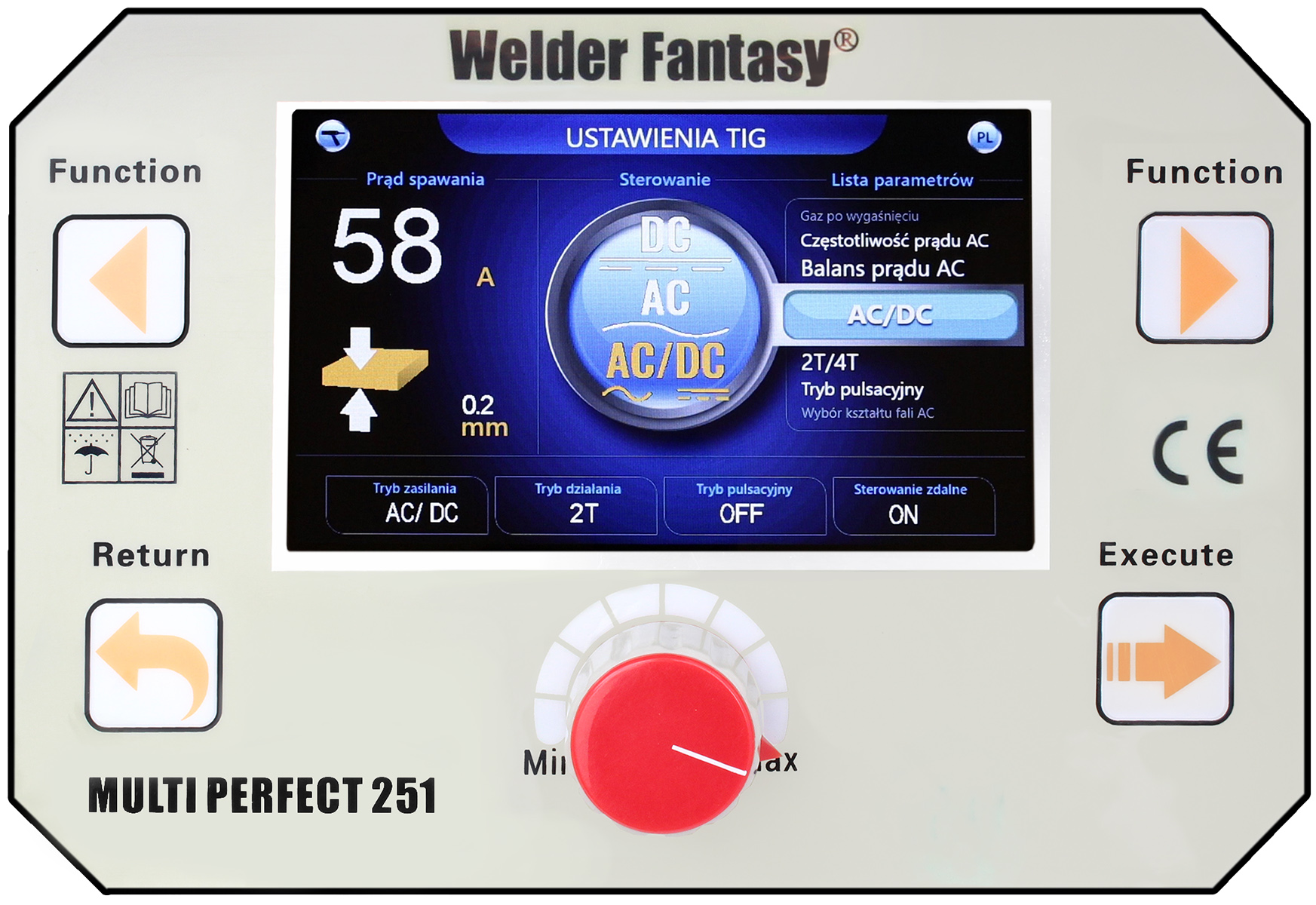
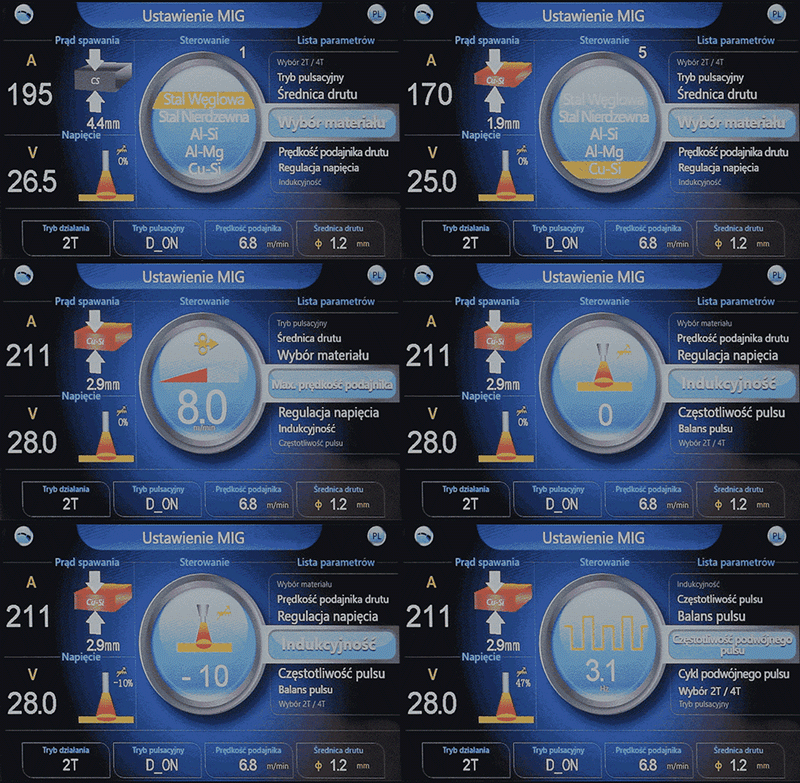
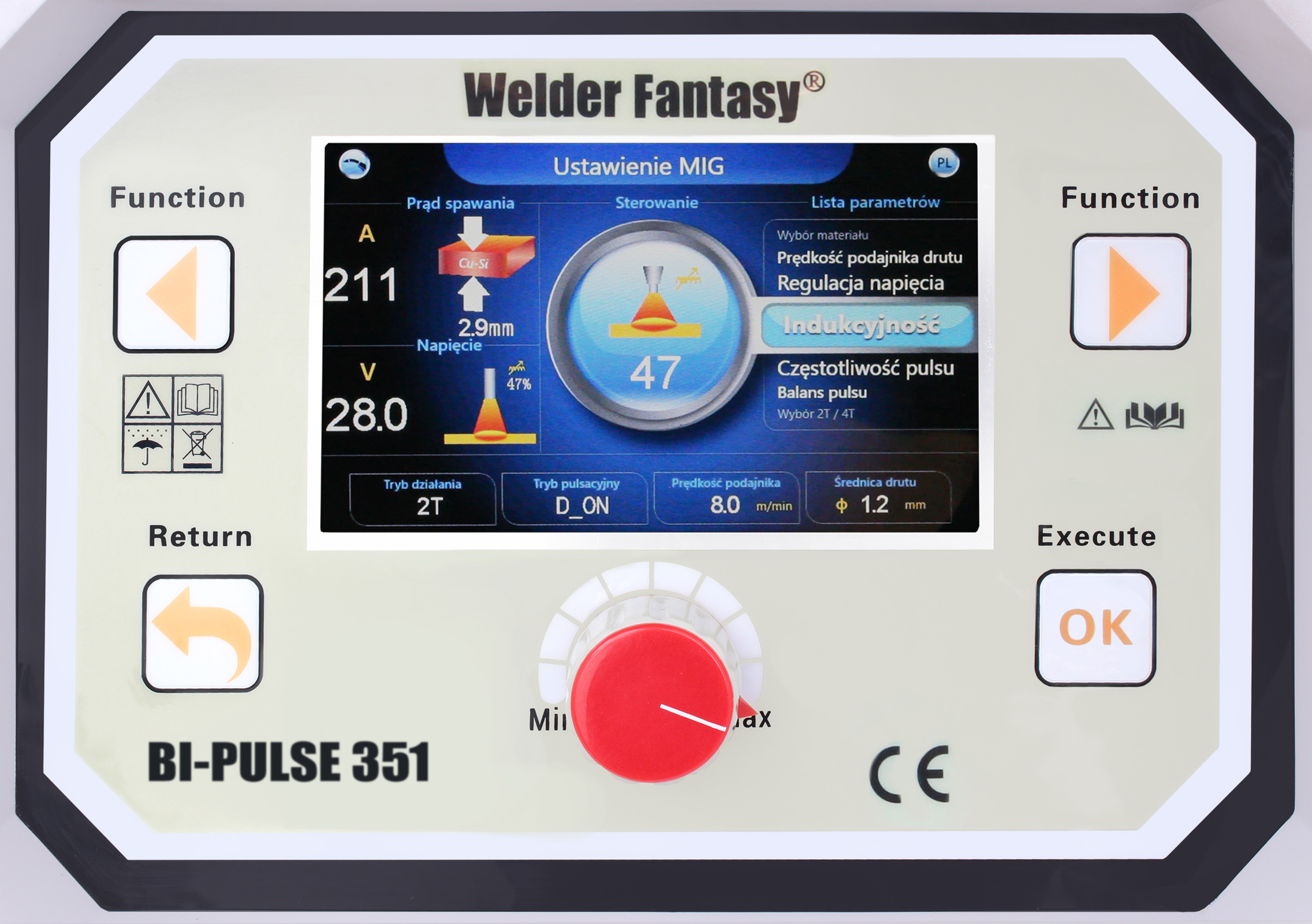
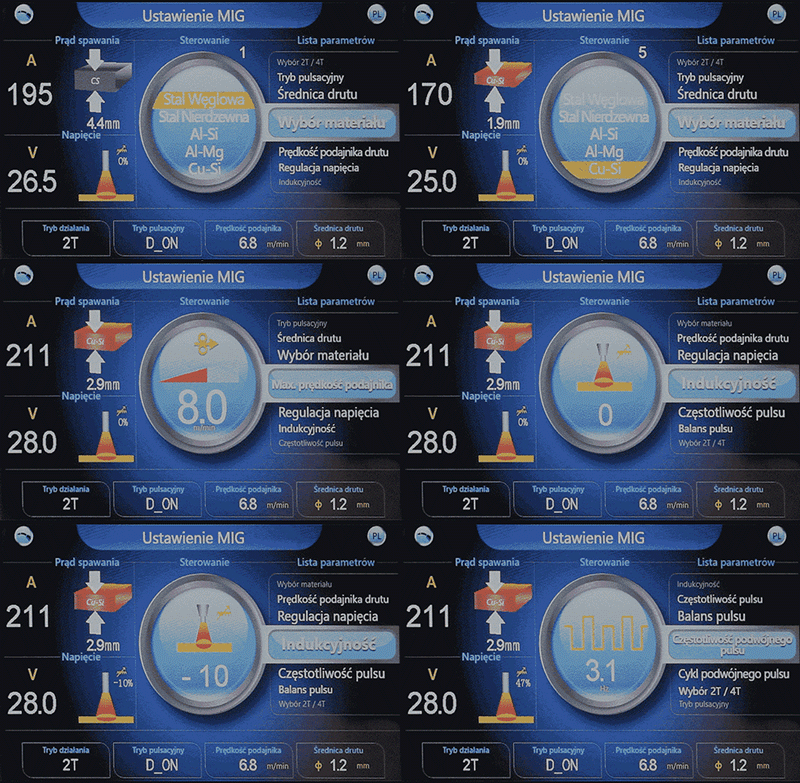
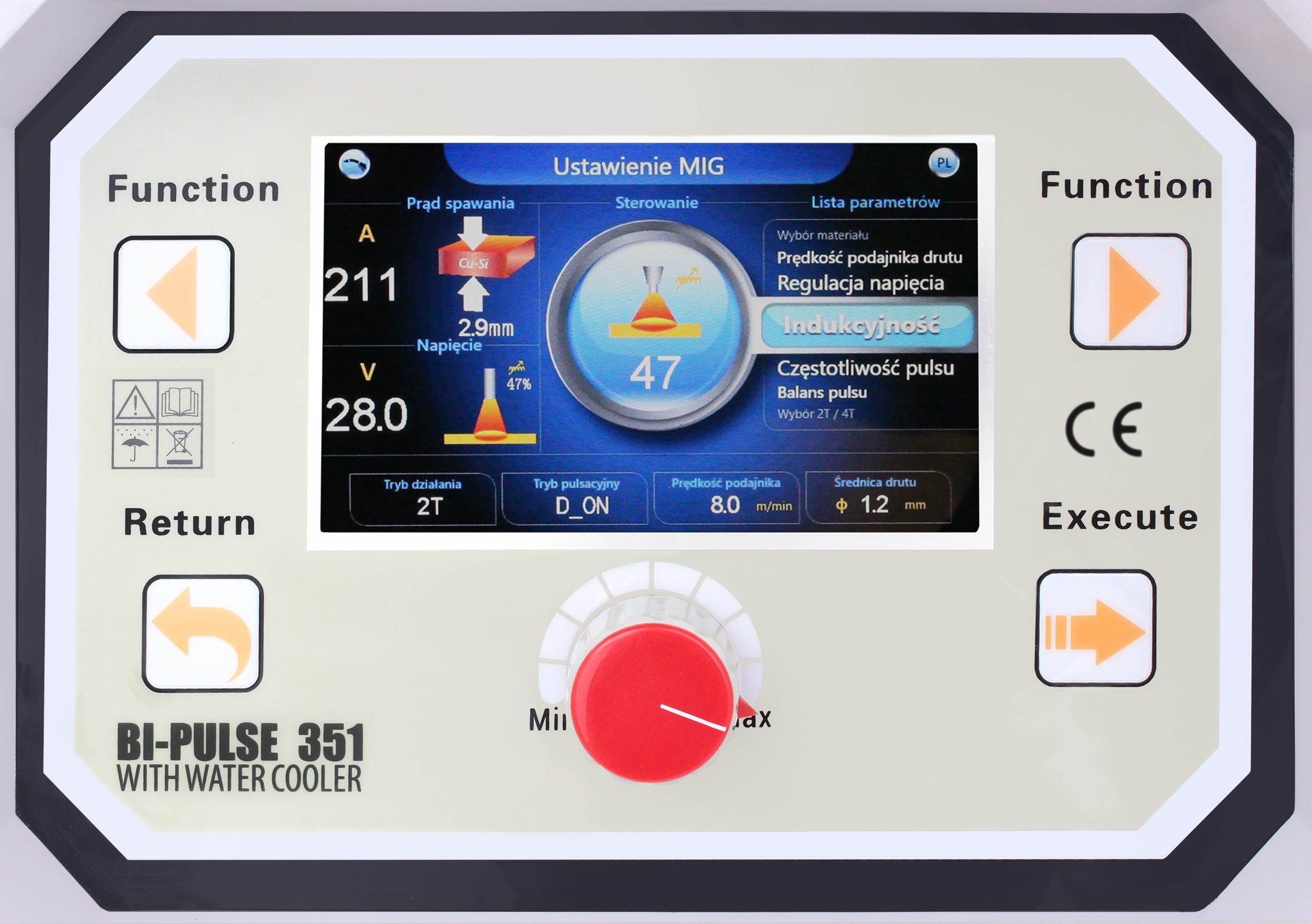
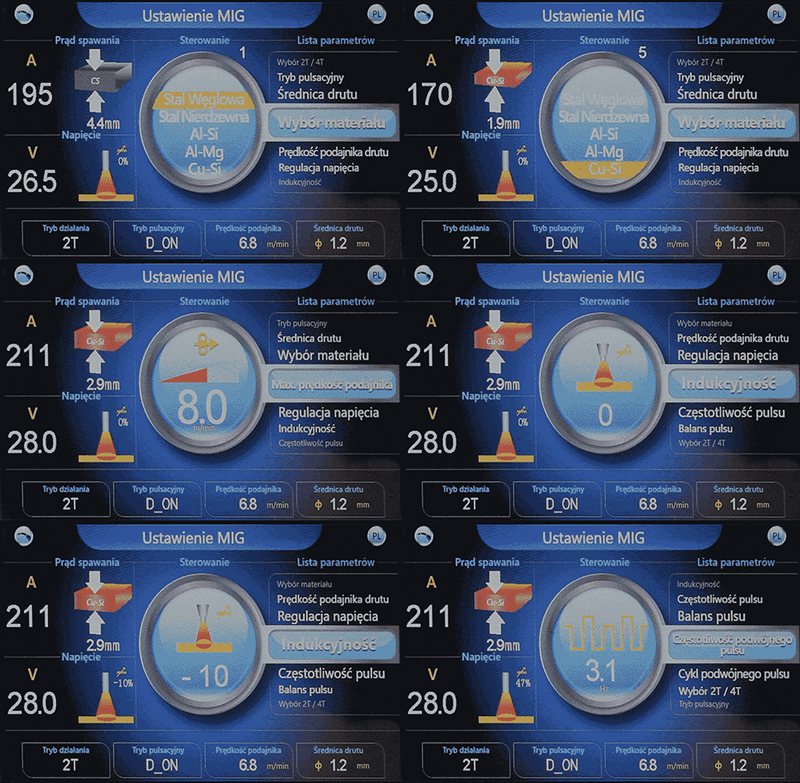
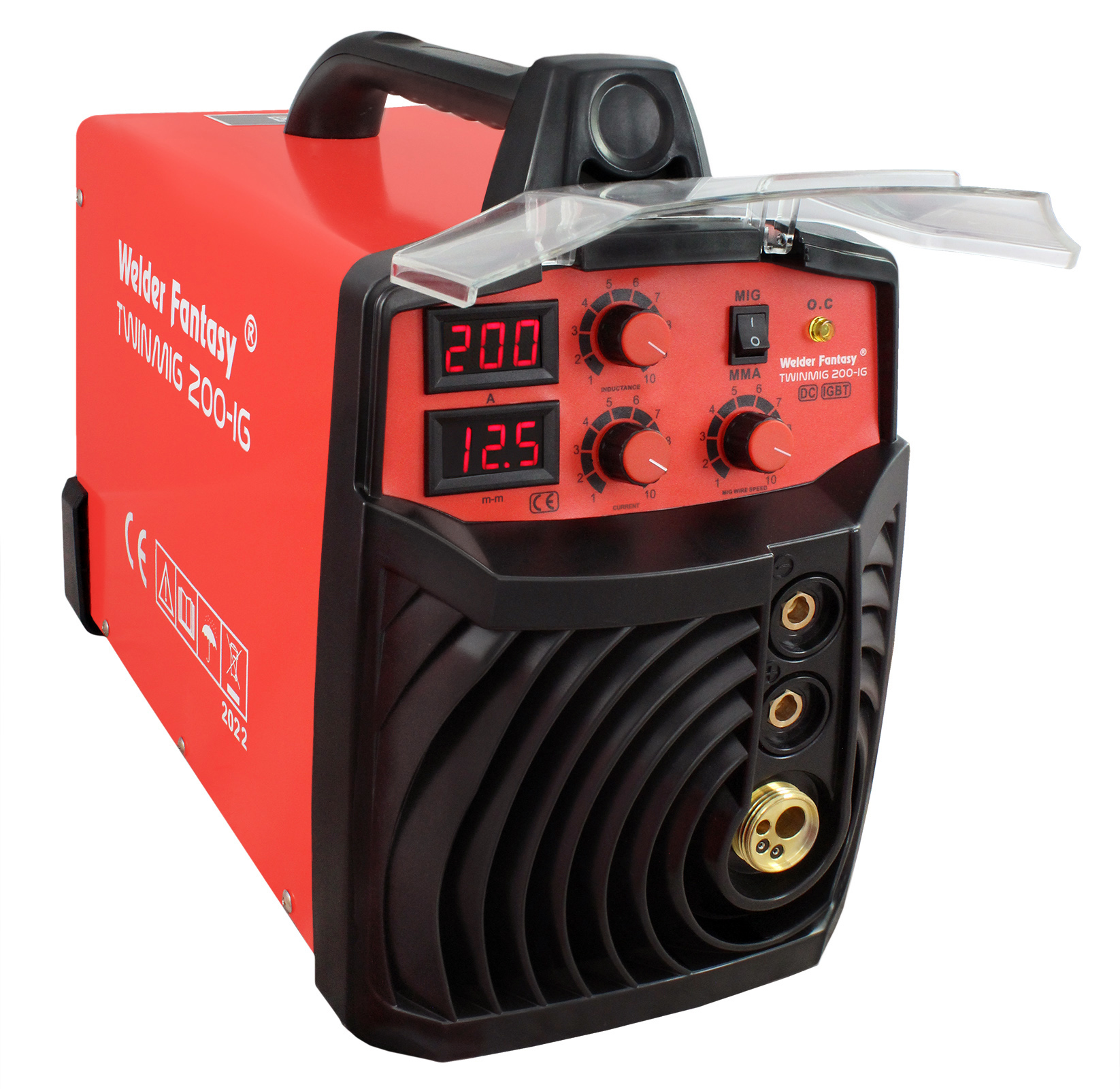
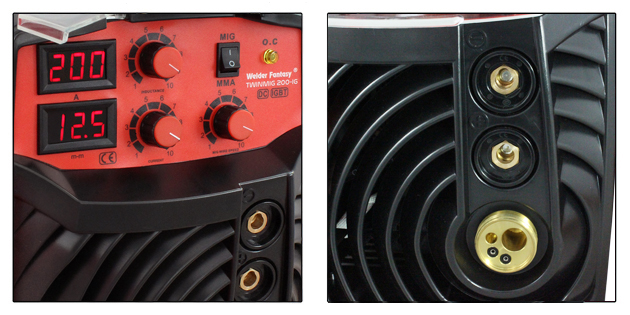
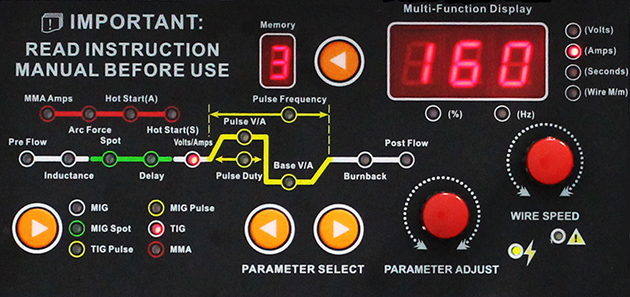
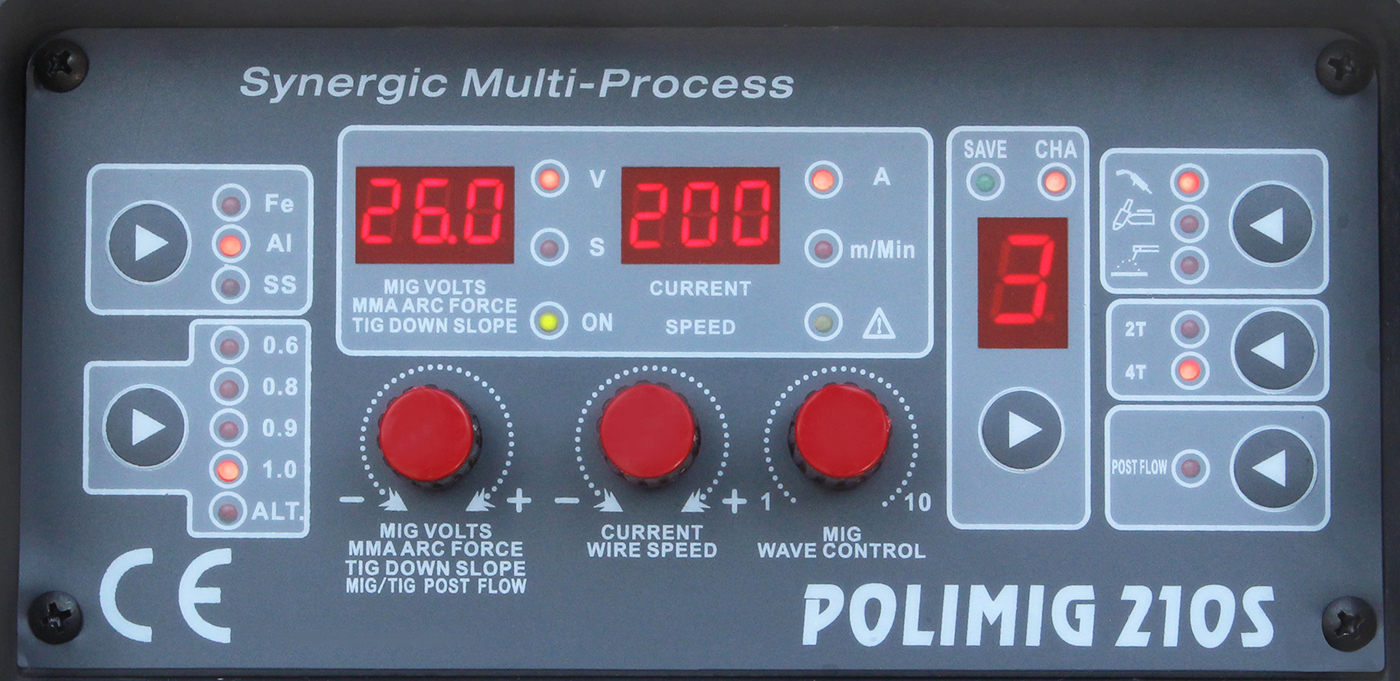
The device is versatile and offers control over parameters such as inductance or voltage, allowing for welding of various materials and sheets.
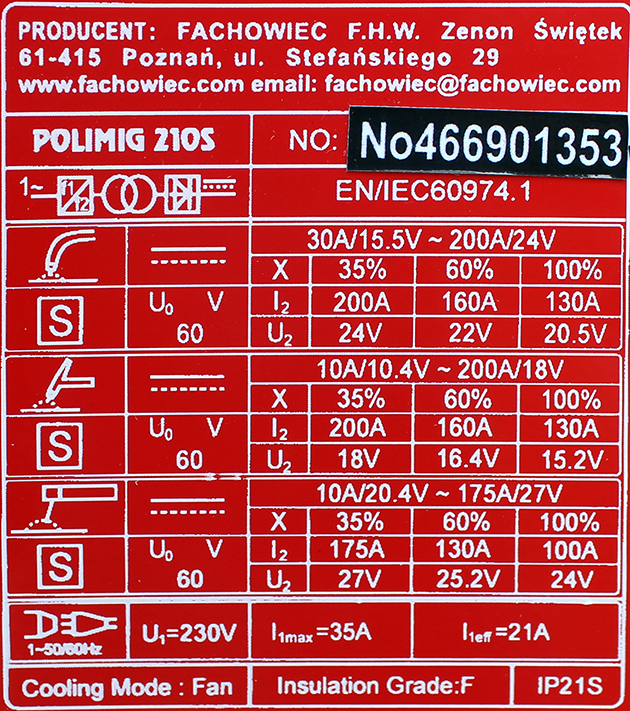
When choosing a MIG/MAG welder with MMA function, key criteria include: welding current (e.g., 160-200A for MMA, a wider range for MIG/MAG depending on the material), duty cycle (e.g., 60%), power supply (most often 230V), the ability to weld with different wires (e.g., with gas shields or FLUX cored wire), and additional features such as inductance adjustment or brazing, which increase the versatility of the device.
Criteria for choosing a MIG/MAG welder with MMA function:
- Welding current (Amperage):
MMA: Ideally 160-200 A or more for more demanding tasks.
MIG/MAG: Amperage depends on the thickness of the welded materials, but a range of 20-200 A is often found in universal models that are also suitable for finer work.
Indicates how long the device can operate under load in a given period. Check if the value (e.g., 60% at 120 A) is sufficient for your needs.
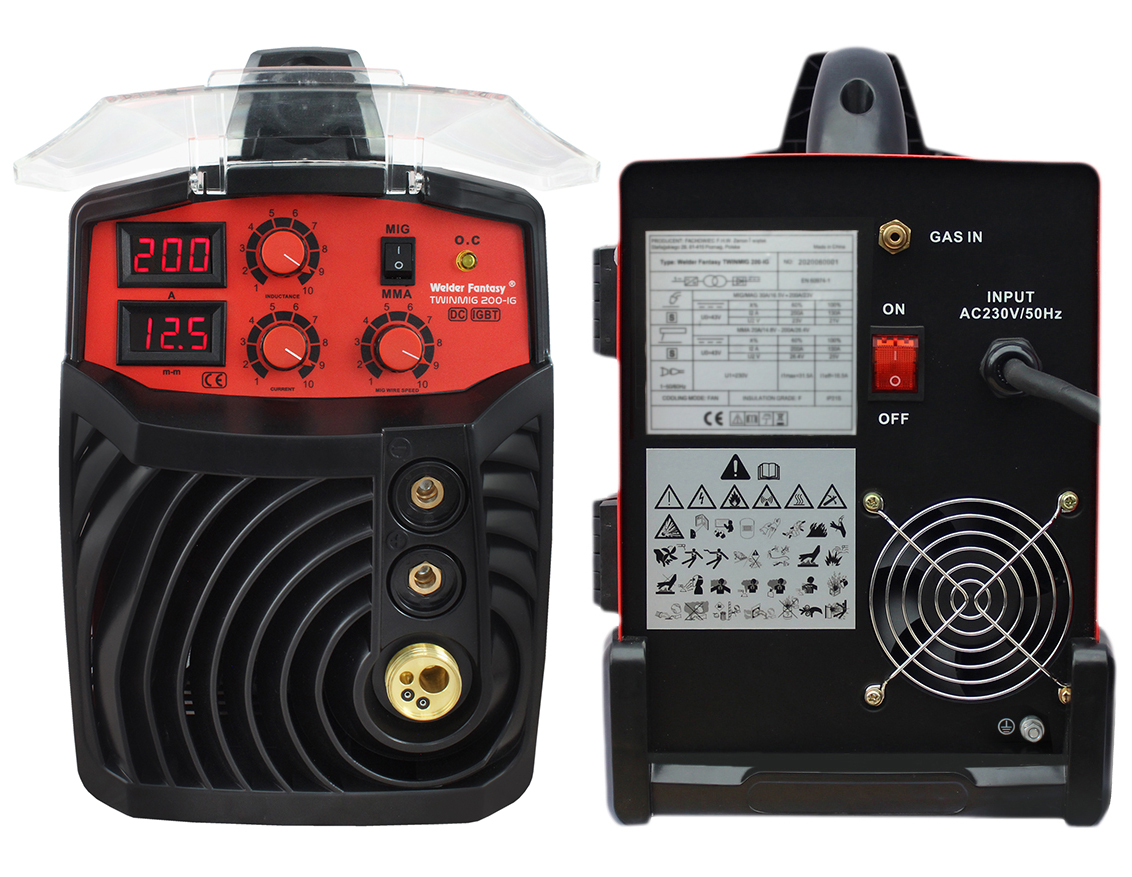
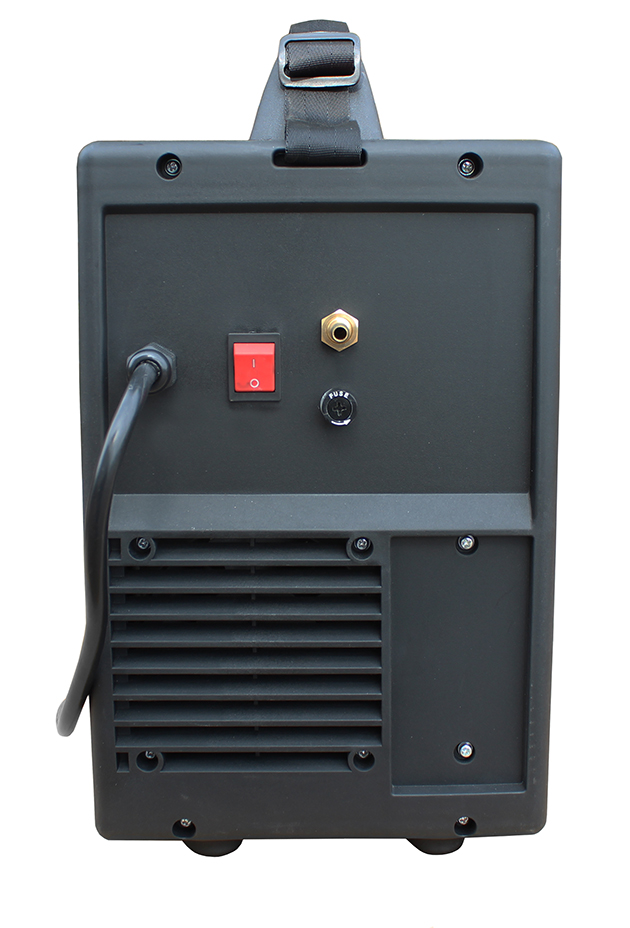
Most welders for home and workshop use operate on standard 230 V power supply, but check its protection in the network (e.g., 20 A).
Brazing: Allows welding of thin elements, e.g., body sheets.
Welding with FLUX cored wire: Allows welding without the need for a gas cylinder, increasing mobility.
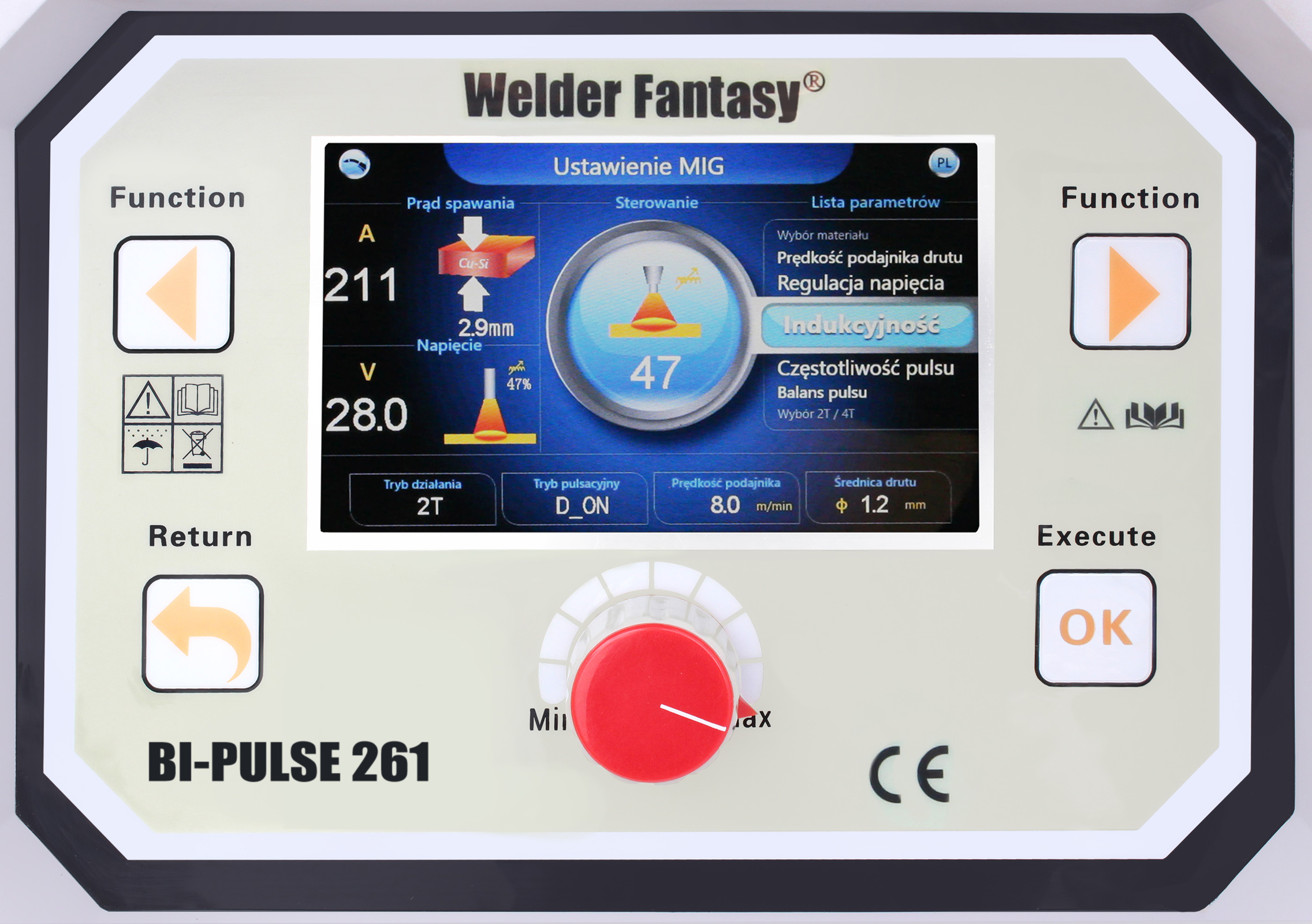
Inductance adjustment: Affects arc stability and the width of the welding pool.
Type of wire feeder: An internal wire feeder is standard, but check its quality.
Maximum spool weight: E.g., 5 kg (D200) is a popular size that allows for longer welding without replacement.
- Efficiency and durability:
Choose devices from reputable manufacturers.
What else to pay attention to when buying a MIG/MAG welder with MMA function?
Welders with MMA function are usually versatile and allow for welding of various materials.
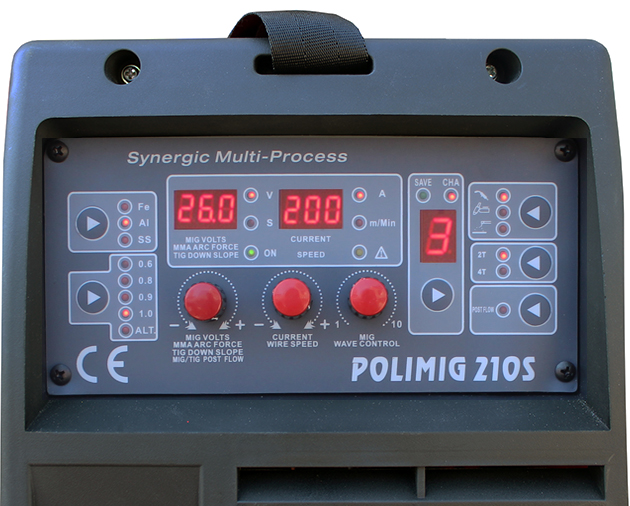
Modern IGBT transistors and intuitive controls make working with the welder easier.