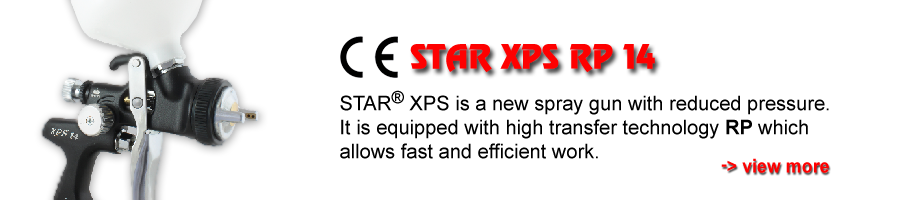
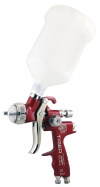
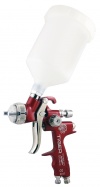
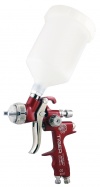
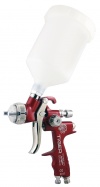
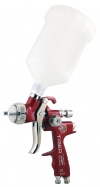
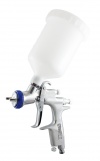
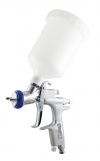
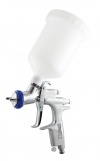
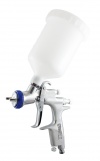
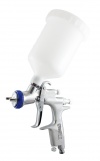
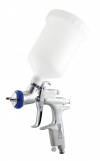
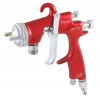
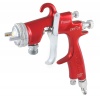
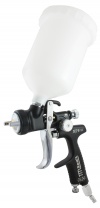
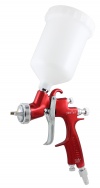
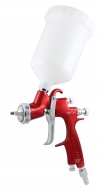
Construction of the RP gun:
- Body: Usually made of aluminum, often anodized to increase resistance to corrosion and wear.
- Air cap: Responsible for atomizing the paint, that is, breaking it into fine droplets, and directing the air stream with paint onto the painted surface.
- Nozzle and needle: Key components responsible for the shape and size of the paint stream. Replaceable nozzles allow adjusting the thickness of the stream for different tasks and materials.
- Air valve and adjustment: Allow controlling the pressure and amount of air supplied to the gun, which affects the paint spraying.
- Paint container: Can be placed on top (gravity-fed) or at the bottom of the gun.
- Trigger and handles: Provide ergonomics and control over the gun during operation.
Operating principle:
The RP gun, like other spray guns, uses compressed air to spray paint. The air draws paint from the container and directs it to the nozzle, where it is atomized and sprayed onto the painted surface. RP guns feature adjustable working pressure, allowing precise adjustment of spraying to the needs and type of painted material.
Advantages of RP guns:
- Lower paint consumption: Thanks to lower air consumption and better material transfer, RP guns allow saving on paint.
- Less overspray: Lower air consumption translates to less overspray in the workplace.
- High finish quality: Allow achieving a smooth and even paint coating.
- Precise spraying: Enable control over the shape and size of the paint stream.
- Versatility of application: Suitable for various types of paints, including water-based and clear coats.
- Ergonomics and comfort of work: Modern RP guns are designed with user comfort in mind, allowing for longer and more efficient work.
Choosing the right medium-pressure RP spray gun depends on many factors, including the type of paint, the surface to be painted, and user preferences. The most important features include: efficiency, transfer effectiveness, ergonomics, and ease of cleaning.
RP Technology (Reduced Pressure):
- RP guns feature medium pressure, offering a good compromise between efficiency and material savings.
- Transfer efficiency:
The higher the efficiency, the less paint ends up in "overspray" and the lower the material losses, which translates into savings.
Different paints (e.g., water-based, solvent-based) may require different nozzles and pressure settings, so it's worth checking the gun's specifications.
For large surfaces and speed of work, high-pressure guns are more suitable, while for precise work and material savings, HVLP or RP guns are better.
A good gun should be comfortable to hold and easy to operate, which affects work comfort and precision.
Regular cleaning of the gun is crucial for its longevity and maintaining good working parameters.
In summary, before choosing a spray gun, it is worth carefully analyzing your needs, budget, and preferences, and then comparing available models and their parameters. There is no single "best" gun, and the choice should be tailored to specific applications.