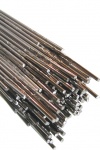
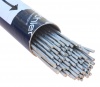
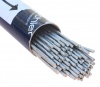
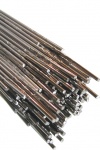
Are you looking for TIG welding rods with a diameter of 3.2 mm? We invite you to explore our offer, where you will find rods for welding carbon steels, low- and high-alloy steels and aluminium.
TIG welding rods with a diameter of 3.2 mm are used for filling joints when welding various materials, and their specific type depends on the material being welded – most commonly, these are rods made of stainless steel, rods for mild steel (non-alloyed), rods for aluminum, or rods for stainless and non-alloyed steel (e.g., 308L). In this size, they are used for thicker material or to create a stronger joint.
Types of 3.2 mm TIG welding rods
- Stainless steel rods (e.g., 316, 308): Purpose: Welding stainless steels in the food, chemical, petrochemical industries, and in the construction of heat exchangers and boilers.
- Mild steel rods (e.g., SG2, SG3): Purpose: Welding universal structural steels, steels for pressure vessel construction, and marine steels. SG3 rods have a higher silicon and manganese content, which increases the strength of the joint.
- Aluminum rods (e.g., AlMg, AlSi): Purpose: Welding various aluminum alloys.
- Rods for joining different grades of steel (e.g., 309L): Purpose: Welding different grades of steel together or as a buffer layer when overlaying carbon steel with stainless steel.
Why 3.2 mm diameter?
- Material thickness: Rods of this diameter are often used for welding thicker elements, where a larger amount of material is needed to fill the joint.
- Strength: Thicker rods allow for a stronger joint, which is crucial in many structural applications.
How to choose?
To choose the right 3.2 mm TIG rod, consider the type of material being welded, its thickness, as well as the requirements for the joint and working conditions. A 3.2 mm diameter rod is suitable for thicker materials, and for specific alloys such as aluminum, stainless steel, or carbon steel, rods with appropriate additives should be selected, e.g., from the 4043 or 5356 series for aluminum or ER70S-6 for carbon steel.
Key factors to consider:
- Material thickness: A 3.2 mm rod is a good choice for thicker materials, from about 5 mm to 10 mm or more, as its larger diameter better fills the gap and allows for a joint with greater strength.
- Type of material being welded: Carbon steel: ER70S-6 rods are most commonly used, providing good strength.
- Stainless steel: Choose rods marked as 308L, 316L, or 309L, which provide corrosion resistance.
- Aluminum: Depending on the requirements, you can choose a rod from the 4043 series (for better weld fluidity) or 5356 (for greater mechanical strength).
- Joint requirements: Aesthetics: If aesthetics are important to you, choose high-quality rods free from contaminants.
- Strength: For load-bearing structures or frames where high strength is required, choose the appropriate grade of rod.
- Welding parameters: 3.2 mm diameter rods require a higher current intensity than thinner rods.
Check the manufacturer's recommendations on the packaging or in the instructions to select the appropriate parameters.