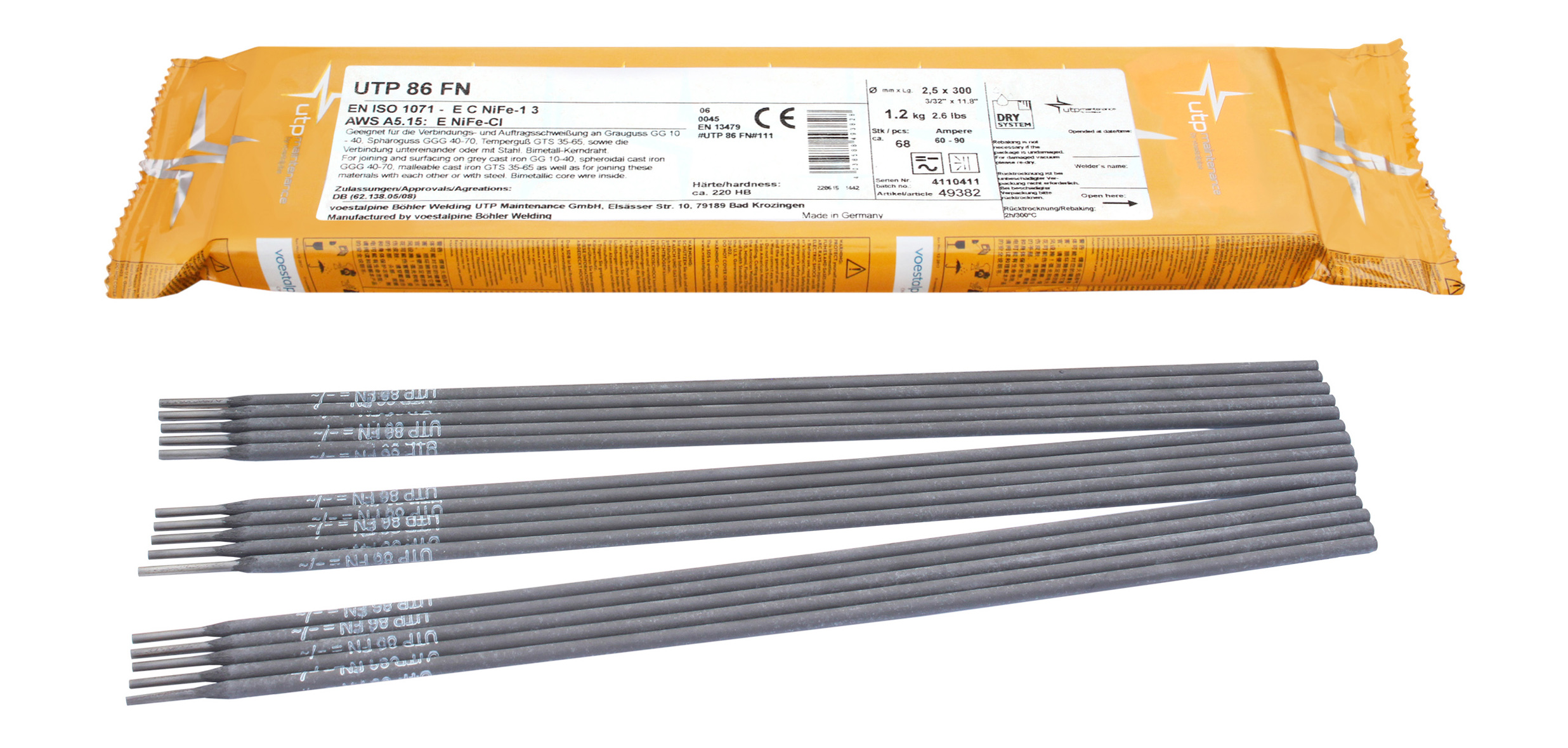
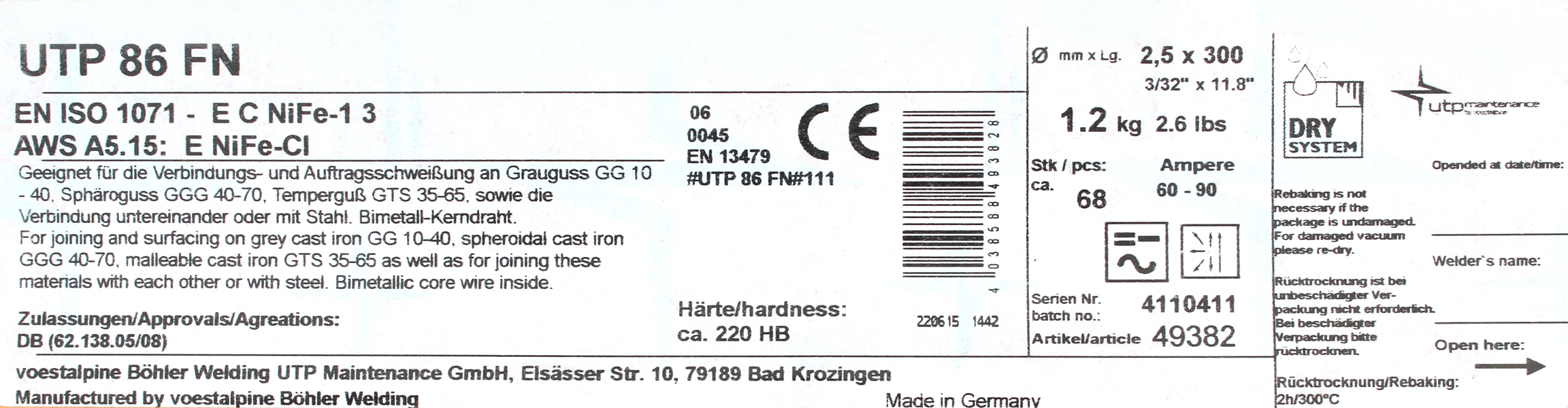
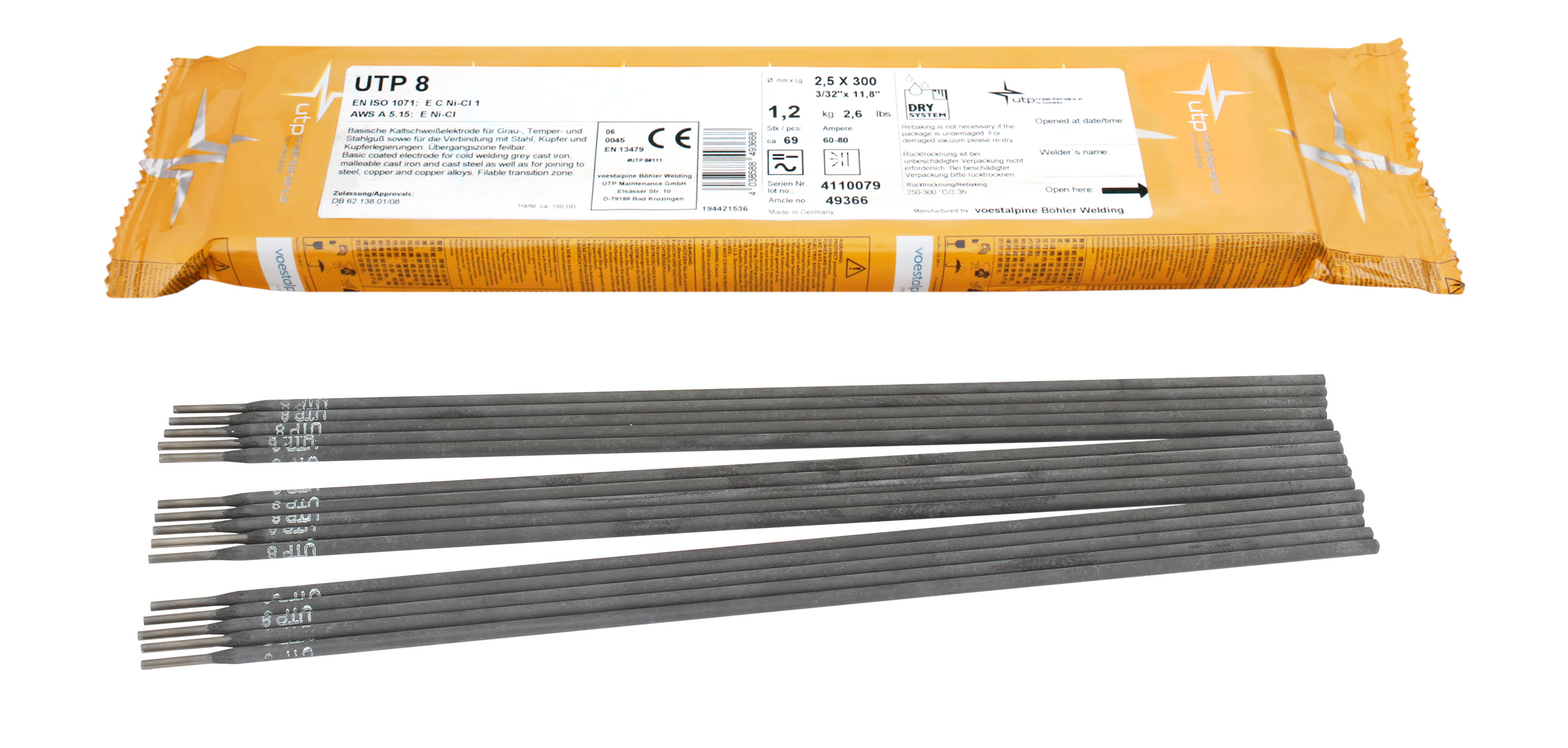
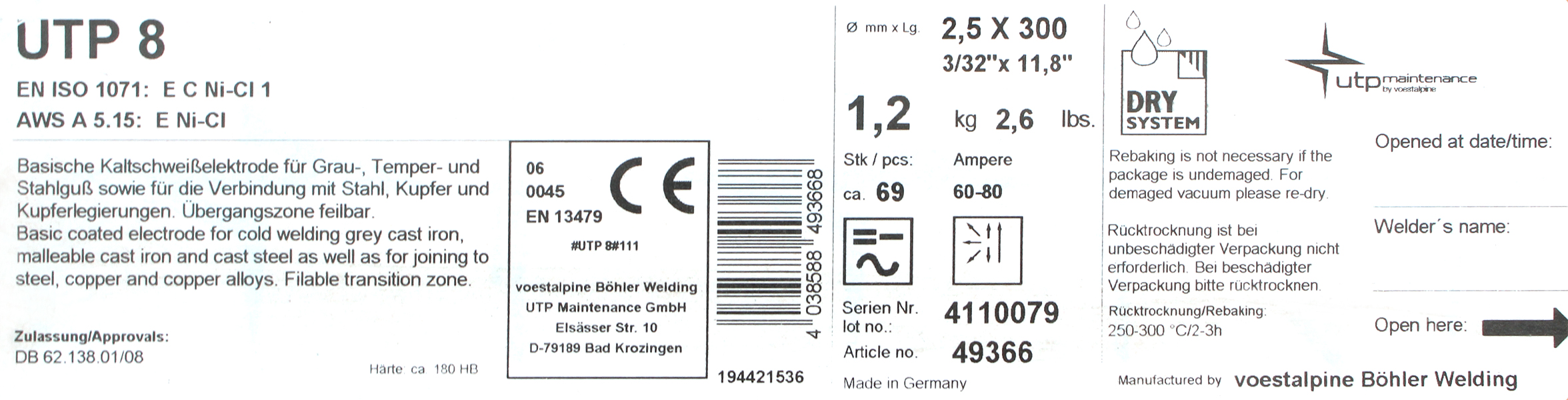
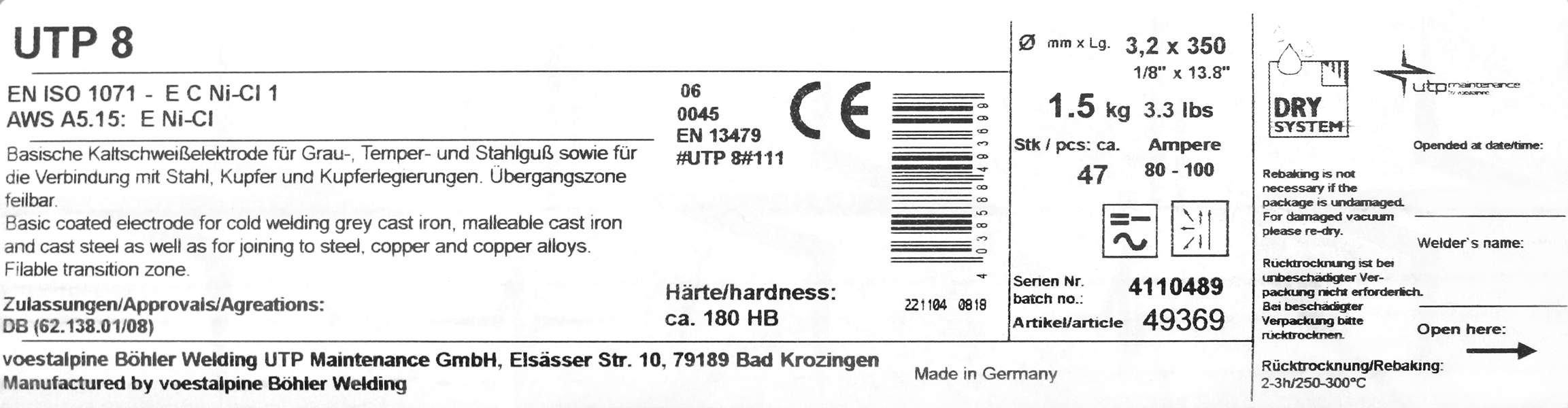
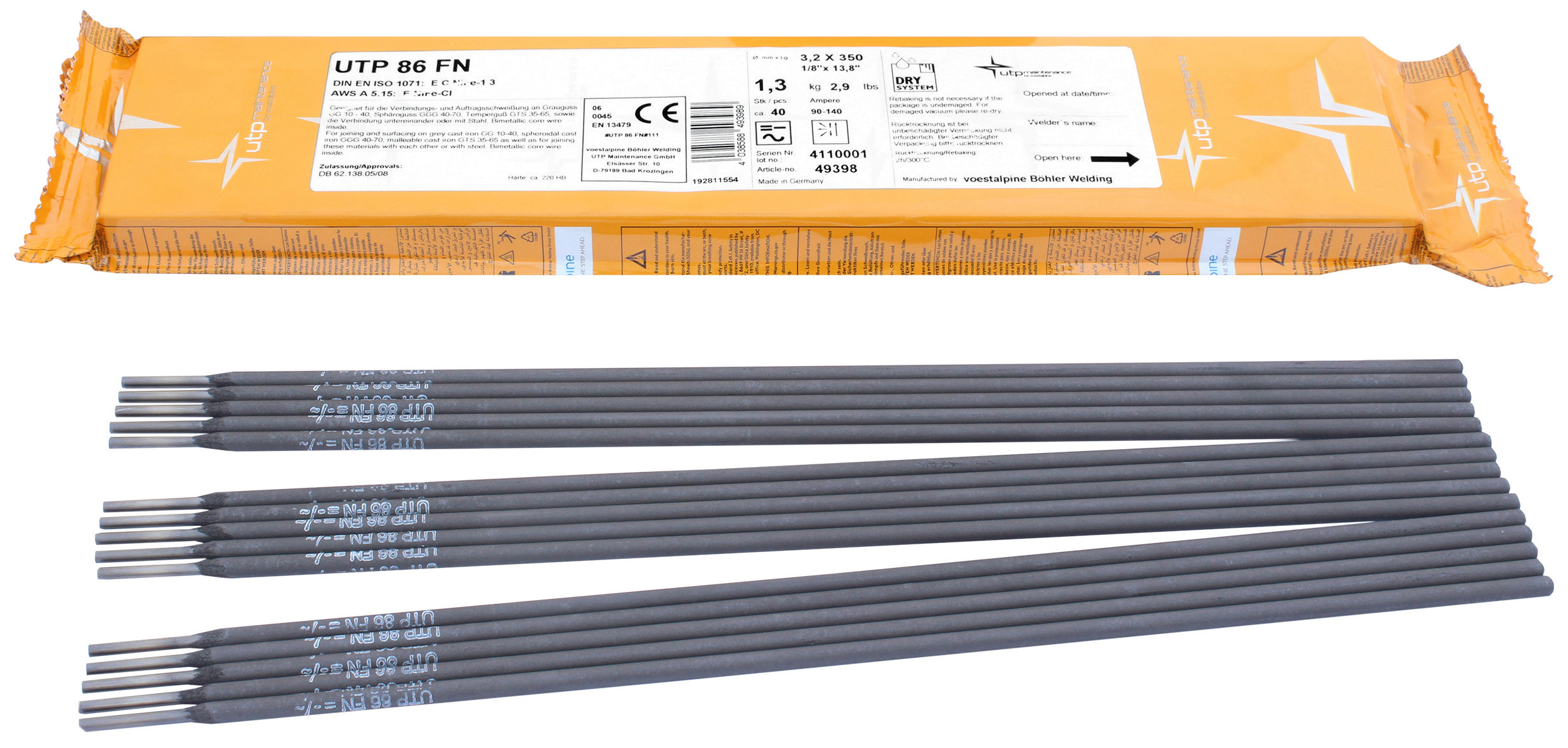
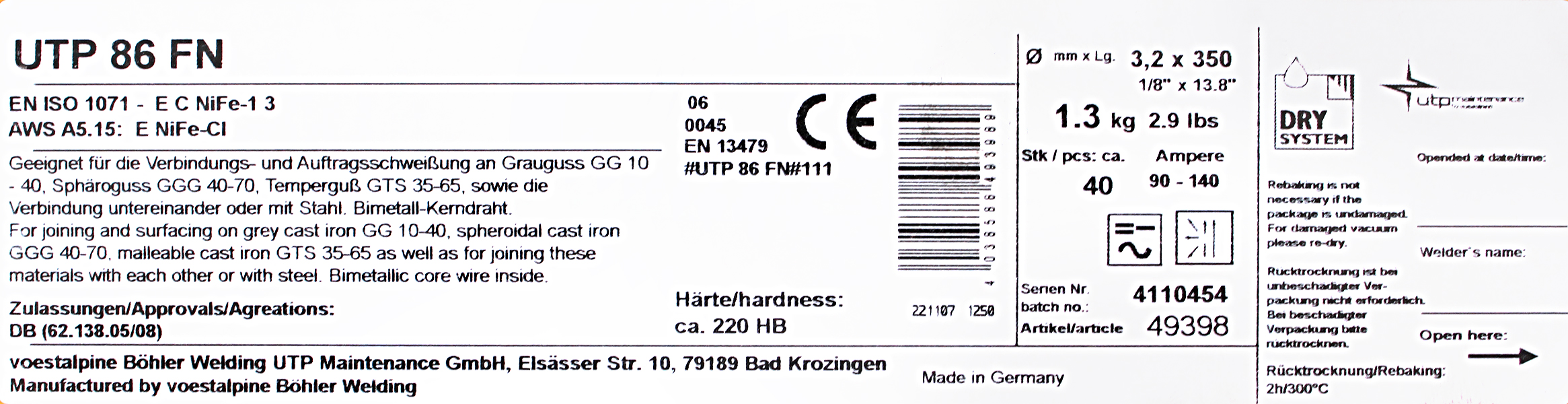
Types of electrodes for cast iron:
- Iron-nickel electrodes (e.g. OK 92.58):
They contain an iron-nickel alloy, which allows for welds with good strength and crack resistance. They are used for welding gray, ductile, and malleable cast iron, both cold and with slight preheating.
- Rutile-coated electrodes (e.g. OK 92.78):
They are characterized by ease of welding and a stable arc. They can be used for welding various types of cast iron, including gray and ductile.
Designed for repairing cast iron castings without the need to preheat the entire component. They contain an alloy that allows for welds with low shrinkage and minimal impact on the material structure.
Construction and operation of cast iron electrodes:
Like other coated electrodes, cast iron electrodes consist of a metal core and a coating.
Typically made of an iron alloy or iron-nickel alloy, suitable for welding cast iron.
Contains components that create a gas shield during welding, protecting the weld pool from atmospheric influences, as well as slag that must be removed after cooling.
Applications of cast iron electrodes:
These electrodes are used for repairing cast iron castings, welding machine parts, pipes, and cast iron structures.
Additional information:
Before welding, cast iron requires proper surface preparation, including the removal of contaminants and oxides.
After welding, it is recommended to avoid rapid cooling to prevent cracking.
- Choosing the right electrode:
The choice of the right electrode depends on the type of cast iron being welded, the strength requirements of the weld, and the welder's preferences.