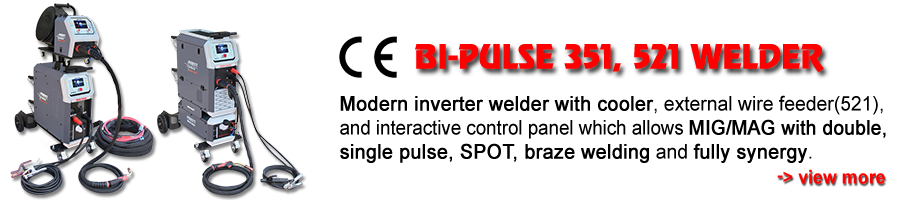
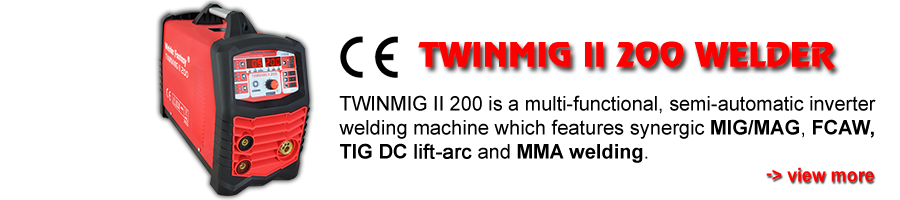
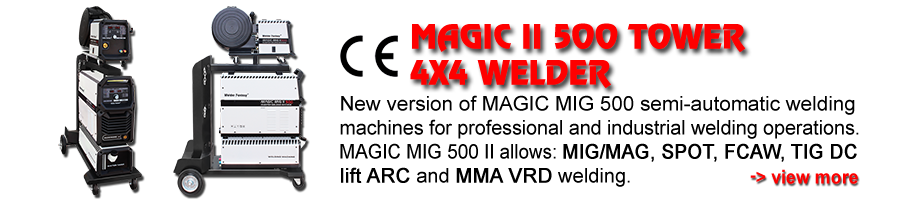
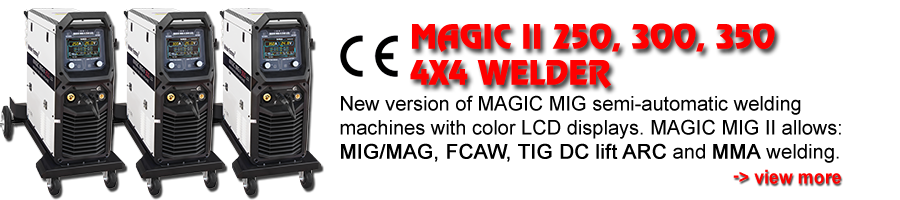
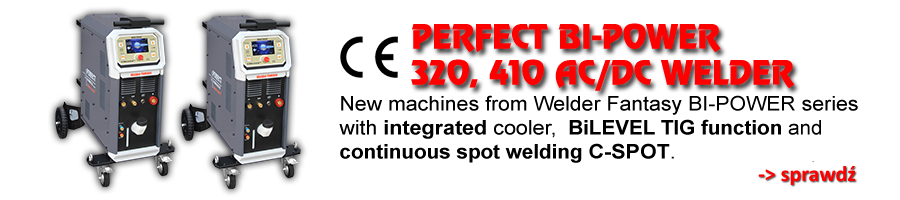
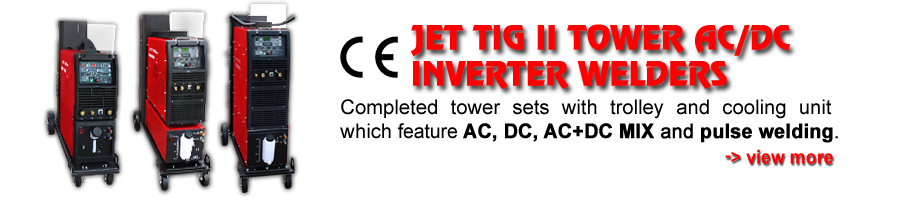
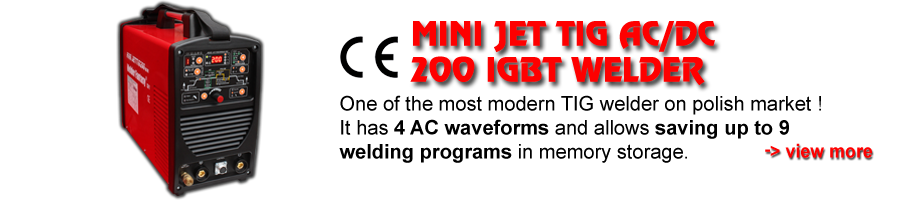
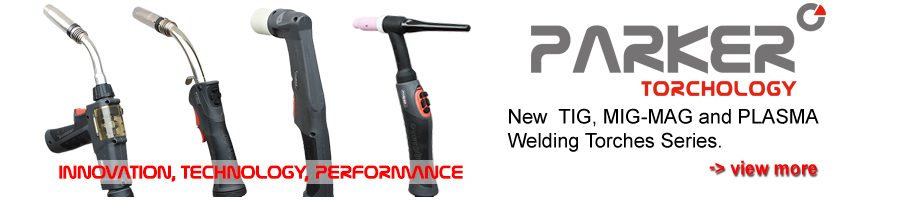
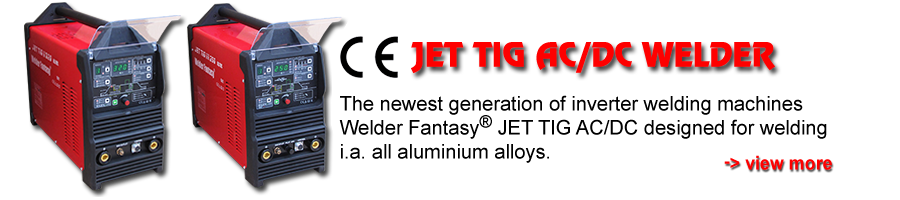
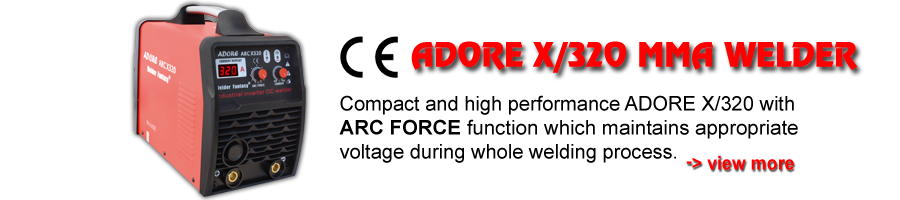
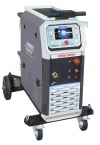
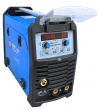
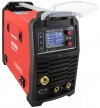
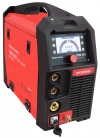
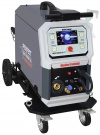
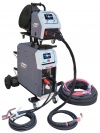
If you want to braze galvanized sheets professionally, here you will find machines that are ideal for working with different materials, increasing your efficiency and comfort. Our welders are distinguished by their robustness and ease of operation, which makes them an excellent choice for every user.
Key features of the soldering welder:
Ensures arc stability and precise control of welding parameters.
Essential for soldering, allows the process to be adjusted for thin sheets, which reduces the degree of their melting.
Enables the joining of galvanized sheets and other thin materials that would be damaged in traditional welding.
In soldering, wires based on copper (e.g., CuSi or CuAl) are used, and the process takes place under a gas shield.
- Minimal thermal destruction of the substrate:
Unlike traditional welding, soldering mainly focuses on melting the filler (solder), minimizing the melting of the joined materials.
Benefits of soldering:
- Protection of the zinc layer:
The process preserves the integrity of the zinc layer, which is crucial for the corrosion protection of galvanized sheets.
- Minimal thermal stresses:
Limiting the welding temperature reduces the risk of stresses that can lead to material deformation.
An aesthetic, smooth weld is created, eliminating the need for costly finishing work.
Avoids the emission of harmful zinc fumes that occur during welding at high temperatures.
Applications of MIG/MAG soldering:
- Joining galvanized sheets in the automotive industry and automotive bodywork.
- Repairs of bodies and structures made of thin sheets, where traditional welding would be inappropriate.
- Work requiring high aesthetics and corrosion resistance.