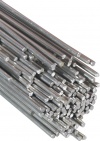
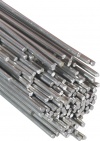
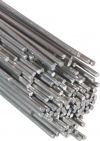
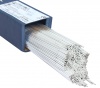
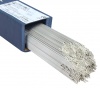
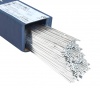
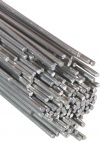
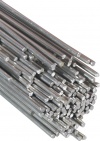
Description of TIG welding wires for aluminum:
- AlSi wire (e.g. ALSi5, ALSi12):
Contains silicon, which improves fluidity and wettability of the welded material, facilitating the joining of aluminum castings and reducing the risk of cracking. These wires are often used for welding ALSi and ALMg-Si alloys.
Contains magnesium, which provides high joint strength and crack resistance, especially in aluminum-magnesium alloys. These wires are popular in the shipbuilding, automotive, and chemical industries due to their corrosion resistance in marine environments.
Types of TIG welding wires for aluminum:
Universal wire for welding aluminum, good for general production.
High-strength wire designed for welding aluminum-magnesium alloys.
Wire with a high silicon content, used for welding aluminum alloys requiring good fluidity and crack resistance.
Wire with similar properties to ER4043, but with the addition of manganese, which improves joint strength.
Choosing the wire:
- Material thickness: Thinner wires (e.g. 1.0-1.2mm) are recommended for thin sheets, and thicker wires (e.g. 2.0mm and more) for thicker materials.
- Aluminum grade: The choice of wire should match the grade of the aluminum being welded.
- Application: Depending on the needs, a wire with appropriate properties such as strength, corrosion resistance, or joint fluidity can be selected.
Additional information:
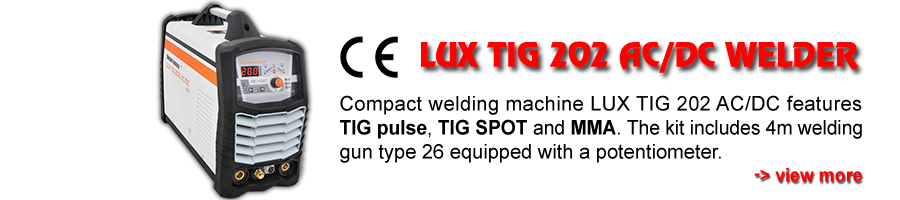
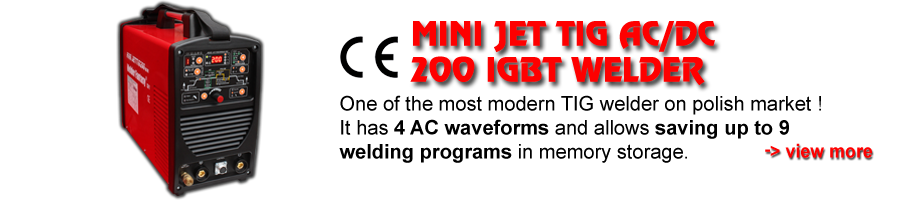
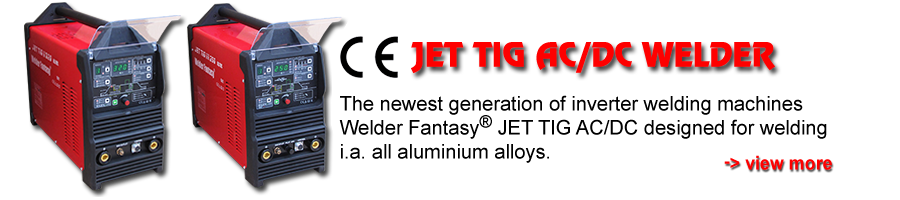
Welding aluminum using the TIG method requires the use of alternating current (AC).
It is important to properly prepare the surface for welding to remove oxides and contaminants.
The welding wire should be dry and free from contaminants.
When welding aluminum alloys containing magnesium, caution should be taken to avoid the formation of pores in the joint.