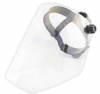
Face shields protect against mechanical (splinters, dust), chemical, and thermal factors, as well as radiation. They are made of polycarbonate or other plastics, creating a large protective visor attached to a headgear. Their purpose is to ensure the user's safety while working in hazardous conditions, such as construction, metallurgy, or welding.
Construction of face shields:
- Protective visor: The main element made of durable material, most often polycarbonate, which protects the face and eyes from injuries.
- Headgear: The way of attaching the shield, ensuring stable and secure placement on the head, often with the possibility of adjustment, e.g., on an elastic strap.
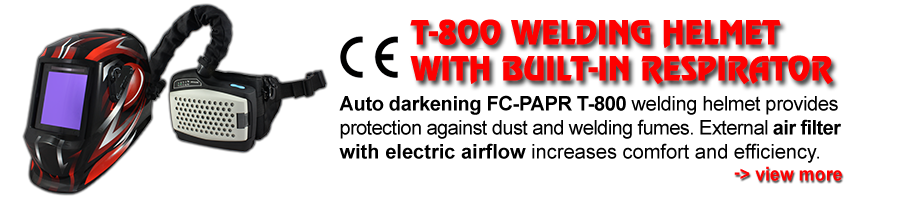
- Additional elements: Some shields may be equipped with protective filters (e.g., against radiation), metal meshes, ventilation systems, or are part of larger constructions, such as welding hoods.
Purpose of face shields:
- Protection against mechanical factors: They protect against splinters of solid bodies (e.g., when cutting, grinding) and droplets of liquids.
- Protection against thermal factors: They protect against high temperatures and splinters of molten metals, e.g., during locksmith work.
- Protection against radiation: Shields may contain filters that protect the eyes and face from harmful optical radiation, e.g., UV, IR.
- Protection against dust and gases: Although goggles are more airtight, face shields can protect against dust, and some types (e.g., hoods) against hazards in metallurgy.
- Protection against electrical hazards: Special shields can protect against electric arcs in short circuits.
Types of face shields:
- Protective visors: A visor covering the entire face, attached to the headgear.
- Welding shields: Hand-held shields with a visor and filter, protecting against sparks and radiation.
- Hoods: Protect the entire head and neck, used in industries requiring protection against high temperatures and splinters.
How to choose a face shield?
To choose a face shield, identify the type of hazard (e.g., splinters, dust) and select a shield that meets standards (e.g., EN 166). Pay attention to the material (e.g., polycarbonate) that ensures clarity and durability, as well as user comfort, e.g., the possibility of adjustment and fitting to the head.
1. Identify the hazard
- Mechanical splinters: Choose a shield with a transparent polycarbonate visor that protects the entire face from splinters and provides full visibility.
- Dust and particles: Look for shields with the option to mount filters, which increases protection and extends the life of the filters.
2. Check standards and certifications
Make sure the shield meets safety standards, e.g., EN 166. They guarantee the effectiveness of protection against specific hazards.
3. Pay attention to user comfort
- Adjustment: Choose shields with adjustable options that allow for a perfect fit to the head, which is crucial for comfort and effectiveness of protection.
- Weight: The shield should be lightweight to avoid discomfort, especially during prolonged wear.
- Ergonomic shape: An ergonomic design facilitates fitting and eliminates pressure, preventing chafing and discomfort.
4. Choose the right material
- Transparency: The material, e.g., polycarbonate, must be transparent to provide an unobstructed field of vision.
- Durability: The material should be resistant to fogging, cracking, damage, and scratching.
5. Consider compatibility
Check if the shield can work with other protective equipment, such as a helmet or half mask.