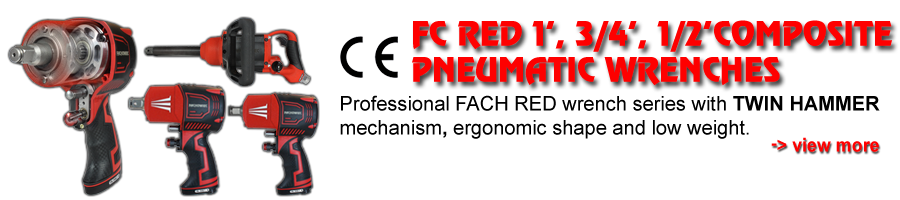
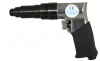
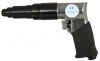
Description of the construction of a pneumatic pistol screwdriver:
- Pneumatic motor: Usually vane-type, powered by compressed air.
- Rotary head: The place for mounting sockets for screwing in and out.
- Direction switch: Allows changing the direction of rotation (screwing/unscrewing).
- Torque adjustment: Allows adjusting the tightening force to needs.
- Housing: Usually ergonomic, with a pistol grip for more comfortable operation.
Operating principle:
1. Power supply:
Compressed air is supplied from the compressor to the screwdriver through a pneumatic hose.
2. Drive:
Air drives the pneumatic motor, which rotates the drive shaft.
3. Power transmission:
The rotation of the shaft is transferred to the head with the socket, which rotates the screw.
4. Regulation and control:
The torque is controlled by a regulator, and in models with shut-off, the system automatically cuts off the air supply after reaching the set torque.
Advantages of pneumatic pistol screwdrivers:
- High efficiency: High power and torque, useful for heavier tasks.
- Compact design: Facilitates work in tight spaces.
- Lightweight: Less effort compared to heavier tools.
- Safety: No sparks, which is important in explosion-prone environments.
- Durability: Fewer components prone to wear, resulting in longer lifespan.
When choosing a pneumatic pistol screwdriver, pay attention to power, speed, type of socket attachment, weight, ergonomics, and additional features. Ensure that the tool is compatible with the compressor and meets the requirements of specific tasks.
Key aspects of choosing a pneumatic pistol screwdriver:
For tasks requiring high force (e.g., screwing into hard materials), choose a screwdriver with higher lower speeds. For lighter tasks, high-speed models are intended.
- Type of socket attachment:
Ensure that the chosen type fits your needs.
Lighter screwdrivers are more comfortable for prolonged use.
Some models offer speed adjustment or other features that may be useful for specific applications.
- Compatibility with the compressor:
Ensure that the screwdriver does not exceed the output of your compressor.
Choose reputable brands that offer good quality and durability of tools.
Additional information:
- Lubrication:
Remember to regularly lubricate the pneumatic screwdriver with special oil to ensure its proper operation and longer lifespan.
- Safety:
Pneumatic tools do not spark, which is an advantage, but remember to exercise caution while working.
- Working with a compressor:
Ensure that the compressor has sufficient power and output to operate the screwdriver.
- Maintenance:
Regularly check the condition of the air supply hose and other components of the screwdriver to avoid failures.