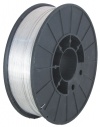
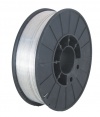
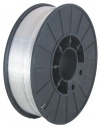
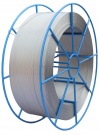
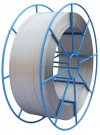
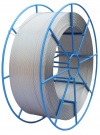
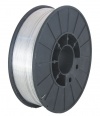
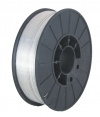
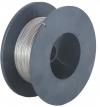
Description of MIG/MAG welding wire for aluminum:
Aluminum wires typically contain aluminum alloys with added silicon (AlSi) or magnesium (AlMg). The content of these elements affects the properties of the filler material, such as fluidity, strength, and crack resistance.
The selection of the appropriate wire diameter depends on the thickness of the welded elements. Popular diameters are 0.8 mm, 1.0 mm, and 1.2 mm.
For MIG/MAG welding of aluminum, shielding gases are used, most commonly argon or mixtures of argon with helium.
Aluminum wires are used in welding various aluminum structures, including in construction, shipbuilding, automotive, and chemical industries.
Types of welding wires for aluminum:
- AlMg wires (e.g., AlMg5):
Contain magnesium (e.g., 5% magnesium) and are used for welding aluminum alloys that require high strength and corrosion resistance, especially in marine environments.
- AlSi wires (e.g., AlSi5):
Contain silicon and are intended for welding aluminum alloys that contain up to 7% silicon. Silicon improves the fluidity of the weld pool and facilitates welding.
The choice of welding wire for aluminum depends on:
The selection of the appropriate wire depends on the chemical composition of the welded elements.
- Required strength of the weld:
AlMg wires provide higher weld strength, while AlSi wires may be more prone to cracking.
Consideration should be given to the thickness of the material, the welding position, and the type of shielding gas.
In structures exposed to marine environments, AlMg wires are recommended.
The choice of the appropriate wire depends on the chemical composition of the base material, the thickness of the material, the welding position, and the requirements for the weld.
During welding, it is essential to use shielding gas (e.g., argon).