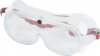
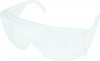
Types of protective glasses:
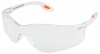
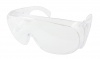
These are usually glasses with clear lenses made of polycarbonate or another durable material, protecting against impacts from small particles, splashes of solids, and liquids.
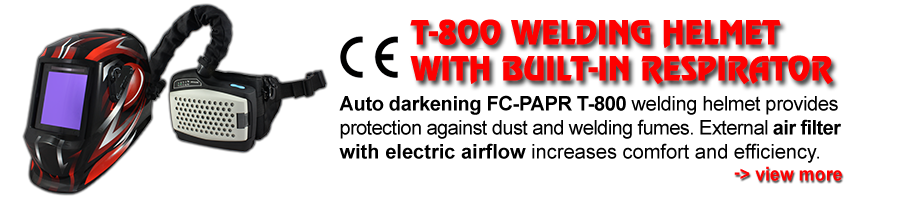
They provide protection against intense light, UV and IR radiation, as well as splashes, sparks, and metal droplets generated during welding.
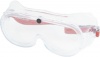
They feature better sealing and fit more closely to the face, providing protection against dust, chemical splashes, and even microorganisms.
Protective glasses with coatings:
- AS (Anti Scratch): Scratch-resistant coating.
- AF (Anti Fog): Anti-fog coating.
- AS/AF: Coating combining scratch resistance and anti-fog properties.
Protective glasses with filters:
They can be equipped with filters that protect against UV, IR radiation, as well as visible light of varying intensity (e.g., gray, mirrored).
Choosing protective glasses:
- Identify hazards:
- Identify potential hazards in the workplace, such as splashes, dust, chemicals, radiation, to select the appropriate type of protection.
Choose glasses that are comfortable and well-fitted to the shape of the face to ensure effective protection.
Make sure the glasses meet the appropriate safety standards and have the required markings.
- Consider additional features:
If needed, choose glasses with coatings that prevent fogging or scratching, or with filters tailored to specific conditions.
Examples of applications for protective glasses:
- Construction work: Safety glasses with side shields and anti-fog coatings.
- Welding work: Welding glasses with an automatic self-darkening filter or welding shields.
- Laboratory work: Safety goggles with chemical filters.
Outdoor work: Glasses with sun filters.