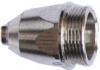
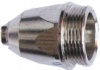
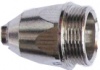
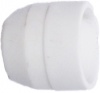
The P80 torch is used to guide the cutting plasma stream, and its construction includes a head, electrode, nozzle, and ceramic shield, working together to create a high-temperature plasma stream that melts metal. It is designed for cutting conductive metals such as steel, aluminum, and stainless steel, including contaminated or painted surfaces, and for use with more powerful plasma cutters.
Construction of the P80 torch:
- Torch and handle: The body of the torch, which contains all the key components and is used to hold it by the operator.
- Cable: Provides connection to the plasma power supply, conducting gas and current.
- Electrode: Generates an electric arc and is located inside the head.
- Cutting nozzle: Focuses the electric arc, creating a high-temperature plasma stream that melts and blows metal from the gap.
- Ceramic shield (of the torch): Protects the nozzle and electrode, and also serves as a distance-setting element from the material.
Purpose of the P80 torch:
- Professional metal cutting: This is a popular torch used in professional plasma cutters of medium power for cutting conductive metals.
- Cutting various materials: Allows cutting of mild steel, aluminum, and stainless steel.
- Working with diverse surfaces: It is effective for cutting painted, rusty, or dirty surfaces, eliminating the need for prior cleaning.
- Collaboration with stronger cutters: This is a standard often used in more efficient plasma cutters, adapted for intensive use.
To choose the right P80 torch for plasma cutting, you should check compatibility with the power of the cutter and its working specifications, and then match it to the material thickness and type of cutting.
It is important that the torch is properly supplied with working gas (most often air) and fits the cutter being used.
- Power of the cutter and matching the torch
Power of the cutter: The torch must be matched to the power of the cutter, for example, for models with a power of 80-100 A. A torch that is too weak may overheat, while one that is too strong may not be effective.
- Application specifics: Choose a torch that is intended for your type of cutting and materials. Different models are optimized for specific applications, such as cutting thin or thick sheets.
- Air: Many plasma cutters, especially in workshop applications, use compressed air to create plasma, so make sure the torch is adapted to work with the appropriate quality and pressure of air.
- Cutting parameters:
- Thickness of the material being cut:
- The torch is also selected based on the thickness of the material you will be cutting. Torches designed for thinner materials may have different specifications than those for thicker ones.
- Current intensity and height of the torch: Pay attention to cutting parameters such as current intensity and the height of the torch above the material, as they may influence the choice of torch.
- Ergonomics and work comfort
Ensure a comfortable grip: When purchasing a torch, it is worth paying attention to its ergonomics and fit to the hand, so that the work is comfortable and precise.