What are adsorption air dryers?
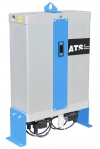
Adsorption air dryers are devices that remove moisture from the air through the process of adsorption, which means attracting and retaining water molecules on the surface of a special material called an adsorbent. Humid air flows through the adsorbent, and water molecules are retained on it, resulting in the drying of the air, which is then released back into the room. After some time, the adsorbent becomes saturated, so regeneration is necessary, during which moisture is removed from the adsorbent, for example, by heating.
Description and operation of adsorption dryers:
Adsorption dryers use special materials such as silica gel, molecular sieves, or activated clay, which have the ability to attract and retain water molecules on their surface.
Humid air flows through the adsorbent, and water molecules settle on its surface, separating from the air.
After the adsorbent becomes saturated with moisture, a regeneration process occurs, during which moisture is removed from the adsorbent. This can be cold or hot regeneration, depending on the design of the dryer.
Moisture is removed from the adsorbent using a stream of dry air, which is then discharged outside.
Moisture is removed from the adsorbent by heating it and then discharging it outside.
Application of adsorption dryers
Adsorption dryers are effective in removing moisture, especially in places where very high-quality air is required, such as plasma and laser cutting, painting, sandblasting, and other cleaning, controlling processes that use compressed air.
Adsorption dryers are characterized by the ability to achieve very low dew points, high efficiency at low temperatures, lack of refrigerants, and quiet operation.
They may be more expensive than condensation dryers, and the regeneration of the adsorbent may require additional energy.
In adsorption dryers, two or more adsorbents are often used to ensure continuous operation, where one adsorbent is regenerated while the other dries the air. Adsorption dryers are used for treating compressed air, where they remove moisture from pressurized air, providing dry air with very low moisture content.