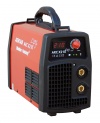
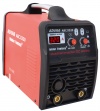
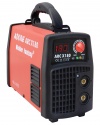
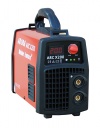
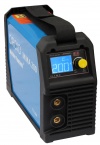
Construction of an electrode welder:
- Power source: Usually a transformer or inverter that lowers the voltage from the grid and increases the current intensity.
- Electrode holder cable: Conducts current to the electrode, which is held in the holder.
- Ground cable with clamp: Allows current to flow through the welded material.
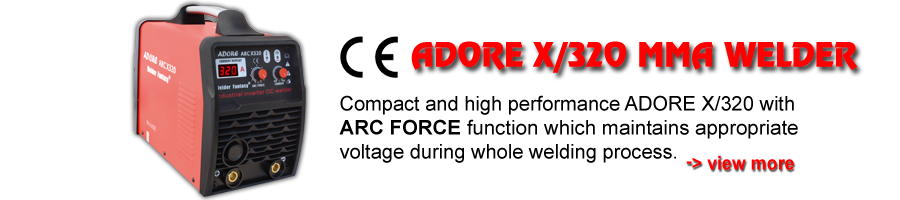
- Control elements: Knobs and buttons for adjusting welding parameters such as welding current, voltage, and additional functions (e.g., Hot Start, Arc Force).
Operation of the electrode welder:
1. Arc ignition:
When the electrode is brought close to the material and the spark is released, the electric arc is ignited.
2. Arc formation:
The arc melts the electrode and the material, creating a welding pool.
3. Welding:
The electrode is moved along the joint, and the electrode coating melts, creating a shielding gas that protects the molten metal from contamination.
4. Solidification:
After the arc subsides, the welding pool solidifies, creating a permanent connection.
Types of electrode welders:
- Transformer welders:
Older and heavier, but reliable. Current adjustment is made by changing the inductance of the transformer.
- Inverter welders:
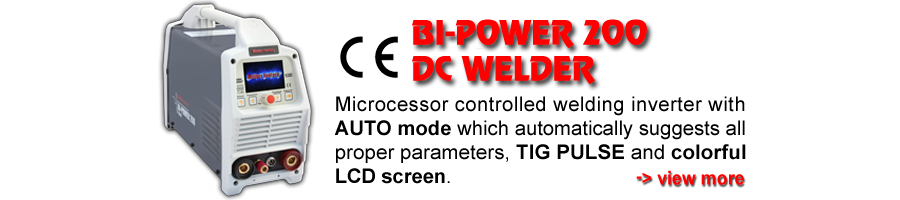
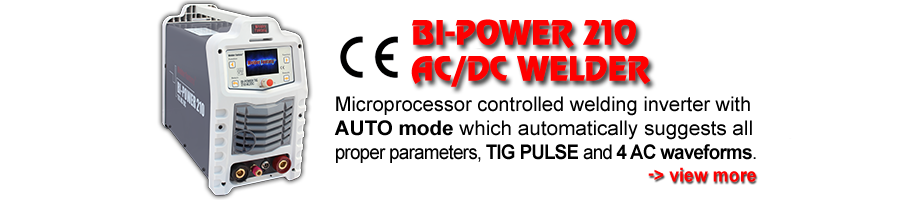
More modern, lighter, and more efficient. They use electronics to regulate the welding current, allowing for better control and lower energy consumption.
Additional features of electrode welders:
- Hot Start: Automatic increase of current at the beginning of welding, facilitating arc ignition.
- Arc Force: Adjustment of arc dynamics, preventing electrode sticking.
- Anti Stick: Automatic current shutdown in case of a short circuit with the electrode, preventing sticking.
Electrode welders are popular due to their versatility and ease of use, and modern inverter welders offer even greater efficiency and functionality.