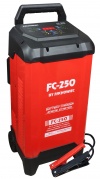
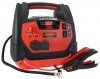
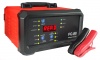
Operation description of the starter charger:
1. Battery charging:
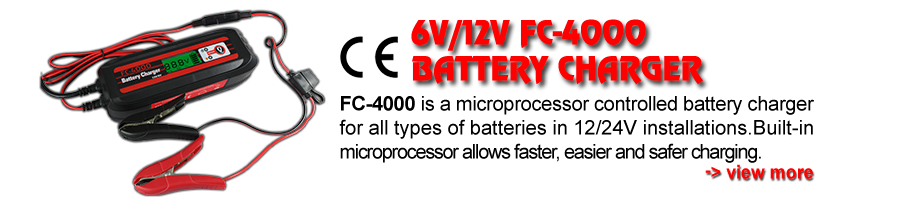
A starter charger, like a regular charger, converts alternating current from the outlet into direct current, which is necessary for charging lead-acid batteries.
2. Starting function:
At the moment of starting, the charger provides an additional, temporary surge of high current. This extra current assists in starting the engine when the battery is weak or completely discharged.
3. Mode switch:
Starter chargers usually have a switch that allows you to choose the operating mode – charging or starting.
4. Safety features:
Many models have protections against overheating, short circuits, and overcharging the battery, ensuring safe use.
Applications:
- Passenger and delivery vehicles:
Starter chargers are useful in workshops, at mechanics, and for drivers who want to ensure that they can quickly start the engine in case of battery problems.
- Motorcycles, boats, and other vehicles:
The starting function is particularly useful in vehicles that are used less frequently and may have battery issues.
A starter charger is an indispensable device in case of battery failure on the road or in situations where there is no possibility to connect to the electrical network.
Starter charger – which one to choose?
When choosing a starter charger, it is crucial to match it to the capacity and type of battery, as well as to the user's needs (e.g., occasional use vs. intensive operation). Attention should be paid to the starting current, output voltage, and additional features such as protections and indicators.
Key parameters of a starter charger:
- Starting current: Should be adjusted to the engine (gasoline or diesel) and conditions (hot/cold).
- Output voltage: Usually 12V for passenger cars, 24V for trucks.
- Battery capacity: The charger should support a battery of appropriate capacity (e.g., 40Ah, 60Ah, etc.).
- Battery type: Supported types (e.g., WET, GEL, AGM, LITHIUM).
- Protections: Against short circuits, reverse polarity, overheating.
- Additional features: Display, automatic shut-off, charging modes, regeneration function.
Additional tips when choosing:
- Waterproof class (IP): Important when using the charger outdoors.
- Solid housing and cables: Guarantee durability and safety.
- Ammeter: Facilitates monitoring the charging process.
- Ease of use: Simple-to-use models are ideal for less experienced users.
In summary, when choosing a starter charger, one should primarily consider the battery specifications and user needs, as well as pay attention to the quality of construction and additional features that enhance safety and user comfort.