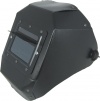
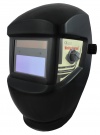
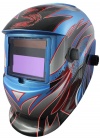
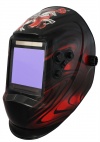
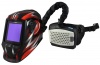
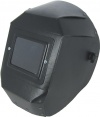
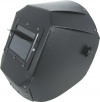
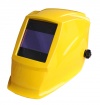
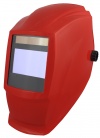
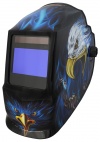
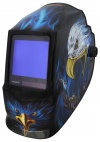
Types of welding helmets:
They have a fixed, tinted glass with a specific degree of shading. They are put on before starting to weld and lowered over the face, and after finishing work, they are removed. They are usually cheaper but require frequent lifting and lowering, which can hinder work, especially when welding with the MIG/MAG or TIG method.
- Automatic helmets (self-darkening):
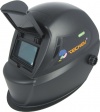
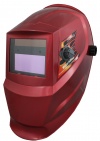
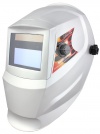
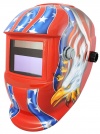
They have a filter that automatically darkens after the arc is ignited and lightens after it goes out. They allow for continuous welding without the need to lift and lower the helmet. They are more convenient to use and allow for free work, as well as protecting the eyes at all times. They are usually more expensive but offer greater comfort and safety.
Choosing a welding helmet:
For MMA welding or using a MIG welder, a passive helmet may be sufficient, but for more advanced work, especially with the TIG method, an automatic helmet is recommended.
For amateurs who weld occasionally, a passive helmet may be a good solution, but for professionals who weld regularly, an automatic helmet is more practical.
- Level of comfort and safety:
Automatic helmets provide greater comfort and safety due to automatic shading adjustment.
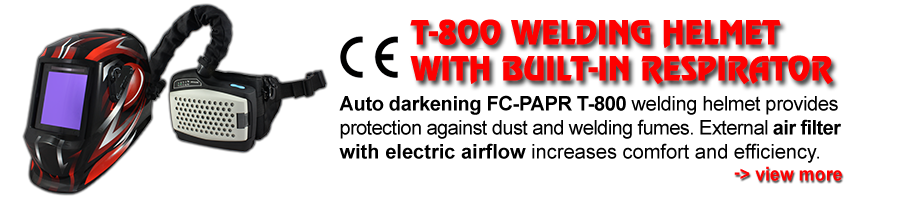
Some models of automatic helmets have additional features, such as an LCD display or ventilation, which can improve work comfort and safety.
Additional tips:
Before purchasing, it is worth checking whether the chosen helmet meets safety standards and has the appropriate certifications.
It is important to pay attention to the optical class of the helmet, which determines the quality of the image and work comfort.
Before first use, familiarize yourself with the user manual to properly set up and maintain the helmet.