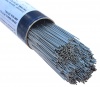
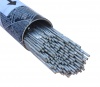
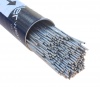
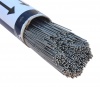
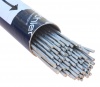
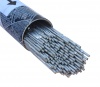
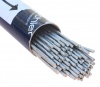
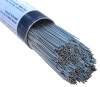
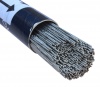
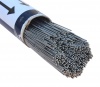
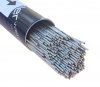
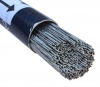
Key features of TIG chrome-nickel welding wire:
- Material:
Alloys of chromium and nickel, usually in the form of rods, with varying chemical compositions depending on the specific requirements of the welded material.
- Application:
Welding of stainless steels, including grades 18-8 (e.g., 304, 304L, 316, 316L) and other austenitic steels.
- Protection:
Welding in an inert gas shield (usually argon), which prevents oxidation of the weld metal and ensures high quality of the joint.
- Benefits:
- Corrosion resistance, including intergranular corrosion.
- High strength and ductility of the weld.
- Good weldability, including wettability and ease of forming the weld.
- Ability to weld different grades of stainless steel, including dissimilar steels.
Examples of applications:
- Chemical and food industry.
- Construction of cups, pipelines, and equipment.
- Welding of heat-resistant and cryogenic steels.
- Overlaying stainless layers on carbon steel.
Popular types of chrome-nickel TIG wires:
For welding 18-8 steel, with a silicon addition that improves weldability.
For welding 18-8 steel, as well as for joining stainless steels with non-alloyed steels, and for applying stainless overlays.
For welding stainless steels with increased molybdenum content, enhancing corrosion resistance in aggressive environments.
For welding hard-to-weld steels, heat-resistant steels, and for joining dissimilar steels.
The choice of the appropriate wire depends on the specific grade of the welded steel, the requirements for the weld, and the working conditions in which it will be used.