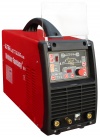
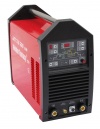
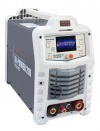
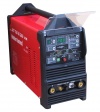
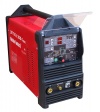
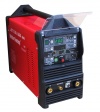
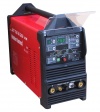
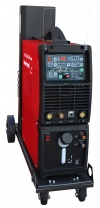
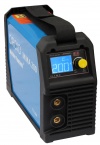
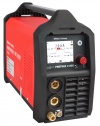
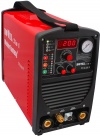
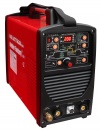
How does a TIG welder 300A with a cooler work?
1. Arc generation:
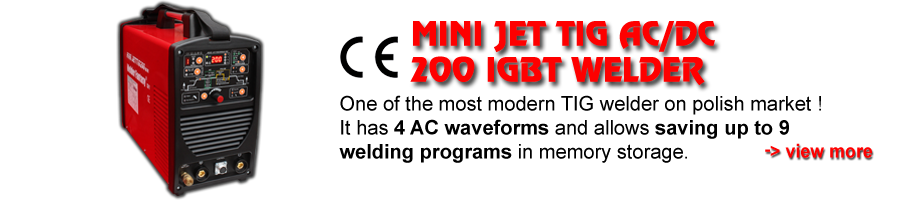
Electricity is drawn from the grid (usually 400V), converted into high-voltage current by the IGBT inverter, and supplied to a non-melting tungsten electrode.
2. Arc ignition:
The welding arc is created between the electrode and the workpiece. It can be ignited by scratching ("Lift Arc") or by high voltage ("HF").
3. Melting metals:
The high-temperature arc melts the base metal and, if necessary, the added material in the form of wire.
4. Gas shielding:
Inert gas (e.g., argon) is supplied through the torch, shielding the hot weld from oxidation and contamination from the air, ensuring the purity and quality of the joint.
5. Parameter adjustment:
The inverter welder allows precise control of the welding current, its duration, pulse frequency (in the case of pulsed welds), and gas flow time, enabling the process to be adapted to different materials and thicknesses.
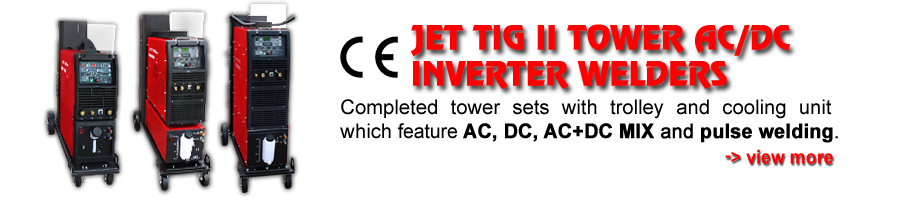
6. Coolant circulation:
The liquid circulates between the welding torch and the cooler, dissipating heat generated during welding.
7. Overheating protection:
The cooling system maintains constant low temperatures of the torch, protecting it from overheating and damage.
8. Increased efficiency:
The ability to operate continuously at high current without the risk of overheating allows for longer and more efficient work, especially in serial welding or long sessions.
Advantages of using a liquid cooler in TIG welders
Cooling prevents overheating, which increases the lifespan of the welder and torch.
Enables operation at high current (above 200 A), which is essential for effective welding of many materials.
Prevents the torch from heating up, increasing operator comfort during prolonged welding processes, as stated by RS Trader.
Stable welding parameters, resulting from maintaining optimal temperature, contribute to achieving better quality and cleaner welds.
Features and advantages of TIG welders up to 300A
- Inverter technology:
- High reliability and stable electric arc thanks to IGBT technology.
- High quality of welds:
The TIG method creates very clean and precise welds, ideal for challenging applications and metals such as stainless steel, copper, or aluminum.
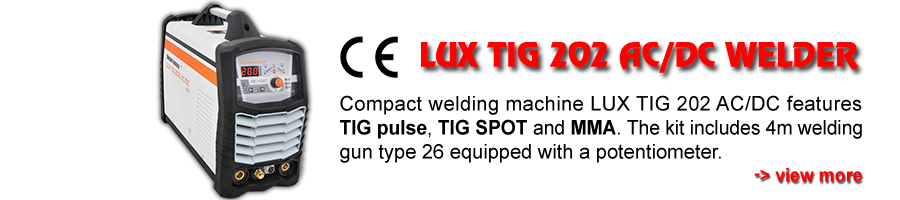
Many 300A models support both TIG AC (aluminum welding) and TIG DC (steel welding) methods, as well as MMA method.
Features such as PULS, AC balance adjustment, and AC frequency, HOT START, and ARC FORCE are available, enhancing work comfort and weld quality.