Accessories for welding helmets include spare parts such as auto-darkening filters (ADF) and lenses (outer and inner), as well as comfort and protection elements like headgear, sweatbands, PAPR air systems and their components. Protective covers and helmet shells are also available.
Spare parts and protective accessories
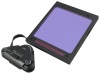
- Welding filters (ADF): Provide automatic darkening, available in various optical classes and number of sensors.
- Lenses: Internal and external, available in various sizes and thicknesses.
- Sweatbands and shields: Made from materials such as cotton, providing comfort and sweat absorption.
- Headgear and parts for them: Replaceable elements for adjusting the fit of the helmet to the welder's head.
- Helmet shells: The outer casing of the helmet.
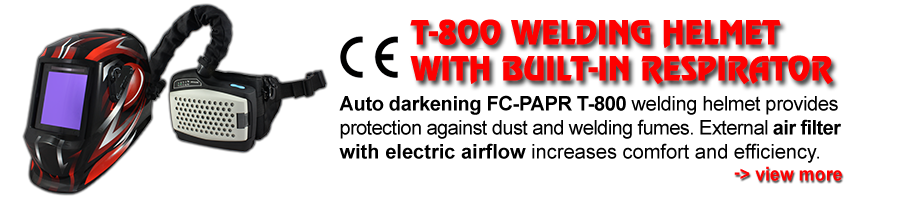
- PAPR system accessories: Spare parts for helmets with breathing apparatus, such as filters and shields.
Elements enhancing safety and comfort
- Head protection: In addition to helmets, special head protective clothing and safety glasses are also available.
- Oxygen systems: Welding helmets can work with ventilation systems (PAPR) that provide clean air.
- Additional protective accessories: Depending on needs, various accessories protecting the face and eyes are available.
How to choose the right accessories?
To choose the right accessories for welding helmets, they must be matched to the welding method, work parameters, and personal needs. It is crucial to select the appropriate optical filter according to the EN 379 standard (class 1/1/1/1 is the best), as well as to consider elements such as: number of sensors, functions (e.g., grinding, delay, sensitivity, natural colors), field of vision, and comfort (weight, fit, ventilation).
Matching to the method and parameters of welding
- MMA (shielded electrode): Simple passive or auto-darkening helmets with 2 sensors and a shade of 9-11 DIN are sufficient.
- MIG/MAG: Auto-darkening helmets with a larger field of view and adjustment of 9-13 DIN are recommended.
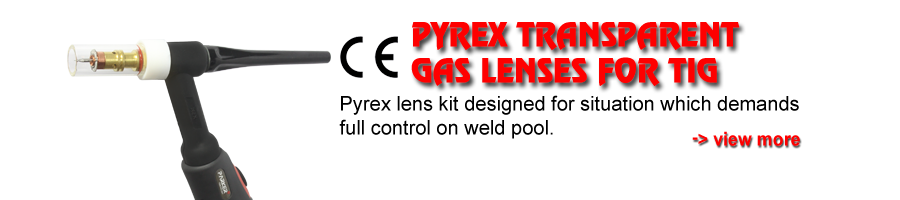
- TIG: Requires precision, so choose a model with 4 sensors, fast response time, and clear image, especially for low-current welding.
- Shade level: Adjust it depending on the welding method, current intensity, and lighting conditions.
Choosing accessories and functions
- Filters: Ensure that the optical filter meets the requirements of the EN 379 standard. The best choice is class 1/1/1/1, but lower classes, e.g., 1/1/1/2 or 1/2/1/2, are also suitable, especially for semi-professional applications.
- Sensors: The more sensors (usually from two to four), the more accurately they detect the arc, providing faster and more reliable darkening.
- Grinding function (Grind): Allows for the automatic darkening to be turned off, protecting the head during grinding without limiting visibility.
- Delay adjustment (Delay): Sets the time after which the filter returns to a clear state. Useful for people with sensitive eyesight.
- Sensitivity adjustment (Sensitivity): Allows you to adjust the sensitivity of the sensors, preventing accidental darkening (e.g., from light reflection).
- True Color function: Provides a more natural view of the welding pool, making precise work easier.
Comfort and fit
- Weight: Low weight is crucial, especially during prolonged work, to avoid neck pain and fatigue.
- Fit: A well-fitted band with adjustable circumference and depth, with soft materials touching the skin and sweatband, increases comfort.
- Ventilation: Ventilation systems in the helmet reduce fogging and improve work comfort.
Head fit: The ability to adjust the distance of the helmet from the face allows for better customization to individual needs.