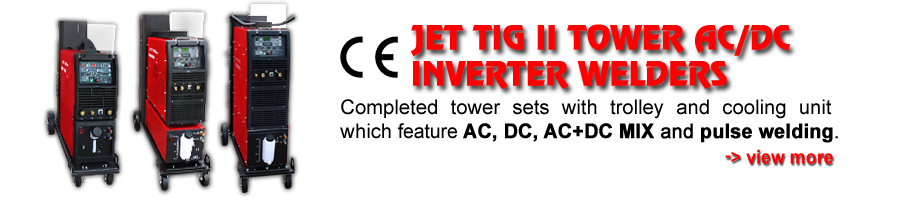
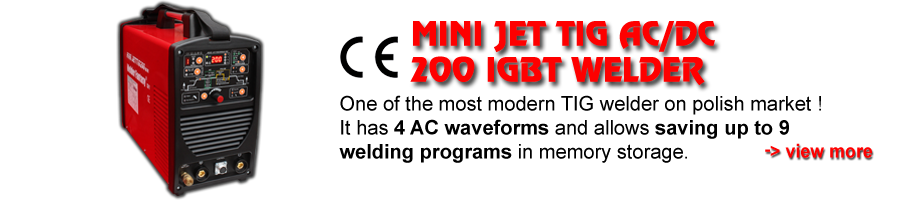
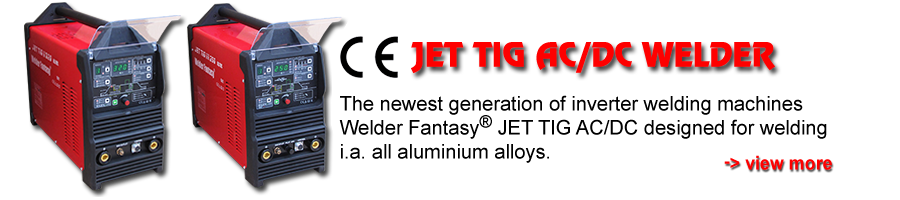
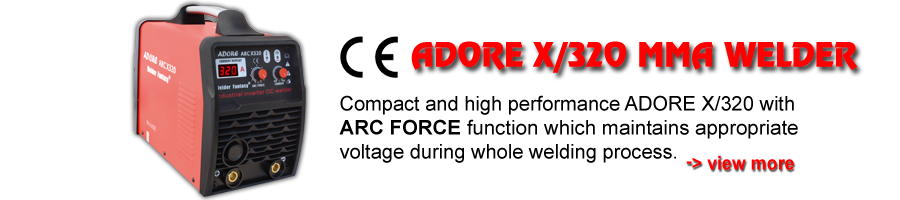
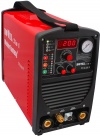
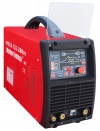
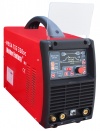
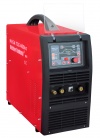
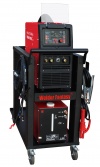
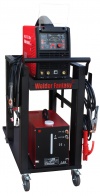
Description of the TIG DC welder:
- Non-melting tungsten electrode:
The basis of the TIG method is the tungsten electrode, which does not melt during the process and is used to ignite the arc.
The TIG DC welder powers the welding arc with a current of constant direction and value.
The protective inert gas (most often argon) surrounds the electrode and the weld pool, protecting them from oxidation and contamination from the air.
- Filler material and base:
The weld can be created without additional material or using a filler rod.
Direct current allows for precise control of the arc and temperature, which is crucial for achieving aesthetic and durable connections.
Additional features of TIG DC welders:
- HF start: Contactless arc ignition, which makes it easier to start welding, especially with delicate materials.
- Pulsed current: Allows for better arc focus and welding of thin materials without the risk of burning through.
- Mobility and weight:
If you will be frequently moving the welder, pay attention to its weight and compact dimensions.
Consider whether you need a welder powered by single-phase (230V) or three-phase (400V), depending on availability and work requirements.
Operating principle of the TIG DC welder:
1. Arc ignition:
The tungsten electrode is brought close to the material being welded, and then the device is activated. An electric arc is created between the electrode and the welded material.
2. Melting of the material:
The strong electric arc causes the surface of the welded material to melt, creating a liquid weld pool.
3. Adding filler (optional):
If necessary, the welder manually introduces a filler rod into the weld pool.
4. Gas shielding:
Inert gas protects the welding area and the electrode from contamination.
5. Forming the joint:
After welding is completed and the arc is removed, the weld pool solidifies, creating a durable connection.
Advantages of the TIG DC method:
- High quality: Provides very clean, aesthetic, and durable welds.
- Precision: Allows for accurate welding of thin materials and creating complex joints.
- Versatility: Ideal for welding steel, stainless steel, aluminum, and other metals.
- No slag: Welds do not require cleaning after welding.
The TIG DC welder is ideal for welding ferrous metals such as steel, stainless steel, as well as copper and its alloys. For welding aluminum, a TIG AC/DC welder is necessary, which offers alternating current (AC).