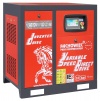
Construction and operation:
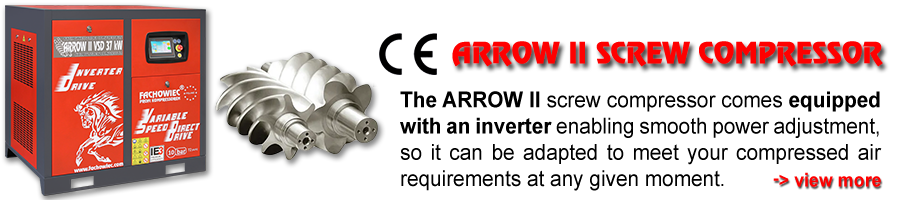
The heart of the compressor, where air compression occurs. Two screw rotors, driven by a motor, rotate in opposite directions, reducing the volume of the space between them, thereby compressing the air.
Typically an asynchronous motor that drives the screw rotors. In compressors with an inverter, the motor can operate at varying speeds, depending on the demand for compressed air.
An electronic device that regulates the motor speed. This allows for smooth adjustment of the compressor's performance and adapts it to the current demand for compressed air.
A cooling device that dissipates heat generated during air compression. Air or oil coolers are often used.
A device that removes moisture from the compressed air. Moisture can cause corrosion and reduce the quality of the compressed air.
Allows monitoring and adjusting the operating parameters of the compressor, such as pressure, efficiency, and temperature.
Operating principle:
- Air is drawn into the screw module through an air filter.
- In the screw module, the rotors rotate, reducing the volume of the space and compressing the air.
- The compressed air is cooled in the cooler and dried of moisture in the dryer.
- The compressed air goes to the tank or directly to the pneumatic system.
- The inverter regulates the motor speed, adjusting the compressor's performance to the demand for compressed air.
Advantages of screw compressors with inverters:
By regulating the motor speed, energy consumption is lower compared to fixed-speed compressors.
Smooth regulation of the motor speed eliminates sudden load and noise spikes, resulting in quieter operation of the device.
Reduced load on the motor and other components translates to a longer lifespan of the compressor.
Smooth operation and reduced load on mechanical parts decrease the risk of failure.
The ability to precisely adjust the operating parameters of the compressor ensures stable pressure and performance.