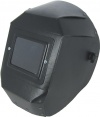
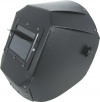
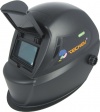
Our offer of welding helmets
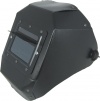
Our offer of welding helmets is a proposal for anyone who values safety, comfort, and effective protection while welding. Among the available models, you will find standard helmets that are characterized by durability and ease of use. This is an ideal solution for those seeking reliability in their daily work. For more demanding welders, we have prepared auto-darkening helmets that automatically adjust to the conditions while welding, ensuring uninterrupted visibility and user comfort.
With the appropriate variety of products offered, every welder will find something for themselves.
Here’s what distinguishes our offer of welding helmets:
● A variety of models tailored to the individual needs of users.
● Standard helmets for a traditional approach to welding.
● Modern auto-darkening helmets that provide automatic eye protection.
● Durability and quality of materials ensuring long-lasting use.
● User comfort thanks to ergonomic shapes.
Types of helmets
Welding helmets come in various types, tailored to the specific needs and requirements of welders. Here are the main types:
● Traditional welding helmets
Equipped with fixed protective filters that require manual lowering and raising. They are simple in construction and often chosen for less intensive welding tasks.
● Auto-darkening helmets
These modern models automatically adjust the filter's darkening level to the intensity of the welding arc, eliminating the need for manual maneuvering of the mask and allowing for continuous observation of the work area.
● Panoramic helmets
Characterized by a wide field of view, which facilitates control over the welded area and surroundings. Ideal for welders who need greater precision and comfort while working.
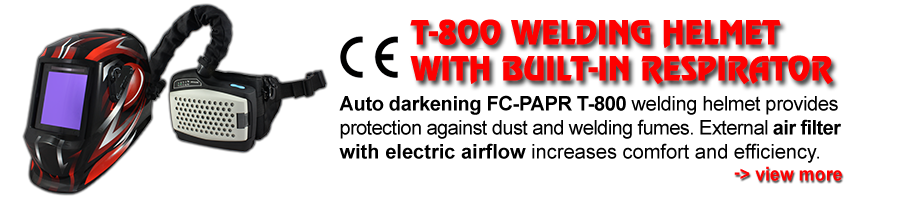
● Helmets with built-in PARP ventilation system
They have air filtering mechanisms, which is particularly useful in enclosed spaces or when working with materials that emit harmful gases and dust.
● Hybrid helmets
Combine the features of welding and grinding helmets, thanks to interchangeable protective lenses, making them a versatile solution for tasks requiring welding and metal processing.
Choosing the right type of helmet depends on the type of work performed, frequency of use, and the welder's preferences.
How to choose the right welding helmet?
When making a decision, it is worth paying attention to several important criteria. First of all, protection while welding is the most important aspect. The helmet should be equipped with appropriate protective filters that effectively block harmful UV and IR radiation. It is also worth noting the possibility of adjusting the darkening, which allows for adapting the level of protection to different welding methods. A good quality helmet will provide full protection not only for the eyes but also for the face and neck, minimizing the risk of burns.
Work comfort is another important element to consider when choosing a welding helmet. The helmet should be lightweight and ergonomic, allowing for prolonged use without additional strain on the neck and head. It is worth checking if the selected model has an adjustable strap that adapts to the head circumference, as well as ventilation that ensures proper airflow. A high-quality welding helmet provides not only reliable protection while welding but also maximum work comfort, which translates into efficiency and satisfaction for the welder.
How to take care of your welding helmet?
Taking care of your welding helmet, it is worth paying attention to regular maintenance of the welding equipment. First of all, after each use, the visor surface should be thoroughly cleaned to remove welding residues and enhance user comfort. Regular checks of the flexibility of the headband and the condition of the sun filters also contribute to their increased durability.
To ensure the helmet's effectiveness, the functioning of the auto-darkening system should be checked regularly. It is also advisable to protect the helmet from extreme temperatures and moisture, which can affect the durability of the equipment. Storing the equipment in a dry place and using a dedicated case are additional steps that will help extend the helmet's lifespan and increase its effectiveness during work.