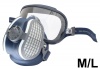
Types of dust masks:
- Disposable masks: Made of thin, soft filtering material, intended for single use.
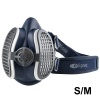
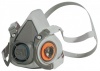
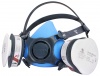
- Reusable masks: Made of plastics or rubber, with replaceable filters.
-
Filtration classes (FFP):
- FFP1: Filtration efficiency 80%, protect against dust and aerosols, but to a lesser extent than FFP2 and FFP3.
- FFP2: Filtration efficiency 94%, provide good protection against dust, smoke, and aerosols, often used as anti-smog masks.
- FFP3: Filtration efficiency 99%, offer the highest level of protection, including against highly toxic particles, often referred to as antiviral or antibacterial.
Additional markings on masks:
S: Indicates protection only against solid particles.
SL: Indicates protection against solid and liquid particles.
D: Indicates increased dust absorption, tested with dolomite dust.
C: Indicates additional dust absorption, tested with carbon dust.
Important features of dust masks:
Masks should fit properly to the face to ensure a tight seal and maximum protection.
One-way exhalation valves improve user comfort by facilitating breathing and preventing mask moisture.
Polypropylene fibers are commonly used to capture mechanical contaminants.
Some masks contain activated carbon, which additionally absorbs harmful chemicals and unpleasant odors.
Examples of applications for dust masks:
- Construction work: FFP2 or FFP3 masks depending on the type of dust.
- Welding: Masks with dust and gas filters
- Painting: Masks with paint filters.
- Household work: FFP2 masks for sanding, cutting wood, or painting.
- Chemical industry: FFP3 masks or full-face masks with filter absorbers.
Additional tips:
- Before choosing a mask, it is advisable to consult a safety expert to select the appropriate model for specific needs.
- Regularly check the condition of the mask and filters, replacing them according to the manufacturer's recommendations.
- Pay attention to user comfort, especially during prolonged use of the mask.
When choosing a dust mask, it is crucial to match it to the type and intensity of the hazard, as well as user comfort. FFP2 masks are a good choice for typical household applications, offering better protection than FFP1. In more demanding environments, such as the chemical or pharmaceutical industry or in construction work, it is worth considering FFP3 masks or masks with filter absorbers, which provide higher filtration. It is important that the mask fits well to the face, ensures comfortable breathing, and does not hinder communication.